


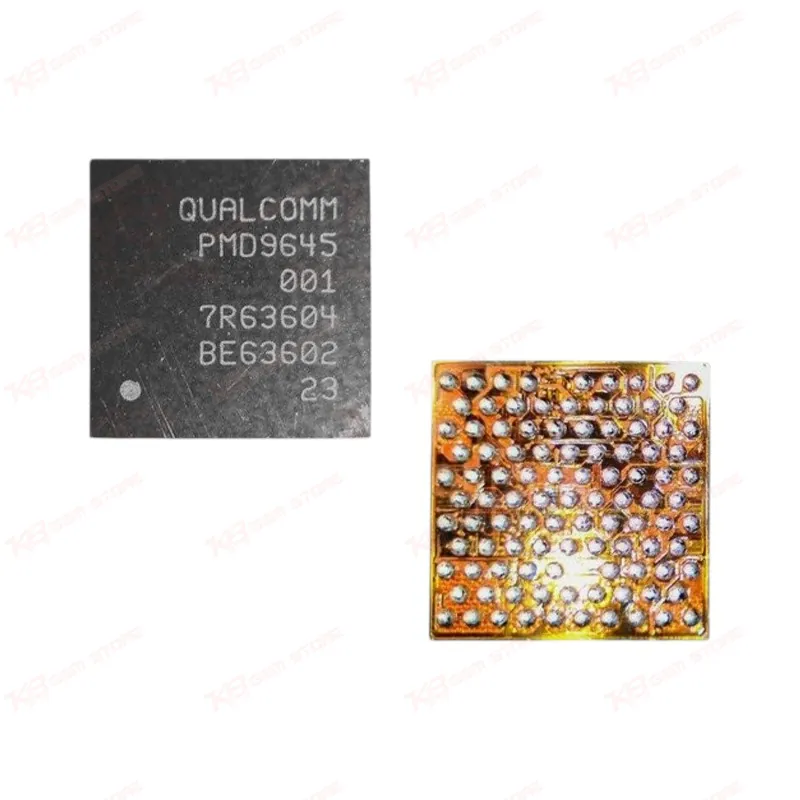
PMD9645 For iPhone 7 7plus Baseband IC
PMD9645 For iPhone 7 7plus Baseband IC
Regular price
Rs.600.00 PKR
Regular price
Sale price
Rs.600.00 PKR
Shipping calculated at checkout.
Quantity
Couldn't load pickup availability
The PMD9645 is the original Qualcomm baseband power management IC (BBPMU_RF) used in iPhone 7 and iPhone 7 Plus logic boards. This small 103-pin power IC regulates voltage supply to the baseband section, directly controlling network stability, signal detection, and modem power sequencing. Technicians replace this chip when a phone shows no service, drops network randomly, gets stuck searching, or goes dead after a failed flash attempt. Reflow or replacement demands hot air precision and a steady hand, since the pads sit close to other RF components. Stock this IC for your baseband and network-issue repair bench.
⚖️ Weight: 0.01 kg
SKU:MST-IC-33
- Safe & Secure Payment
- Fast Delivery
- WhatsApp Support


Description
FAQ
What is the product name?
The product name is the PMD9645 Baseband Power IC for iPhone 7 / 7 Plus.
What is the brand of this product?
The brand of this product is Qualcomm.
What is the model of this product?
The model marking on this product is PMD9645, board designation BBPMU_RF.
What is this product used for?
This product regulates power supply to the baseband processor and RF section on iPhone 7 / 7 Plus logic boards.
Which devices are compatible with this product?
This product is compatible with iPhone 7 and iPhone 7 Plus.
Who should use this product?
This product is suitable for mobile repair technicians, repair shops, service centers, and professional GSM technicians.
How many pins does the PMD9645 baseband power IC have?
The PMD9645 is a 103-pin small BGA package.
Can PMD9645 replacement fix a no-network or dead-after-flash issue on iPhone 7?
Yes, replacing a faulty PMD9645 can resolve no-network and dead-after-flash symptoms caused by a damaged baseband power rail, provided diagnostics confirm the fault is on this IC and not elsewhere on the board.