


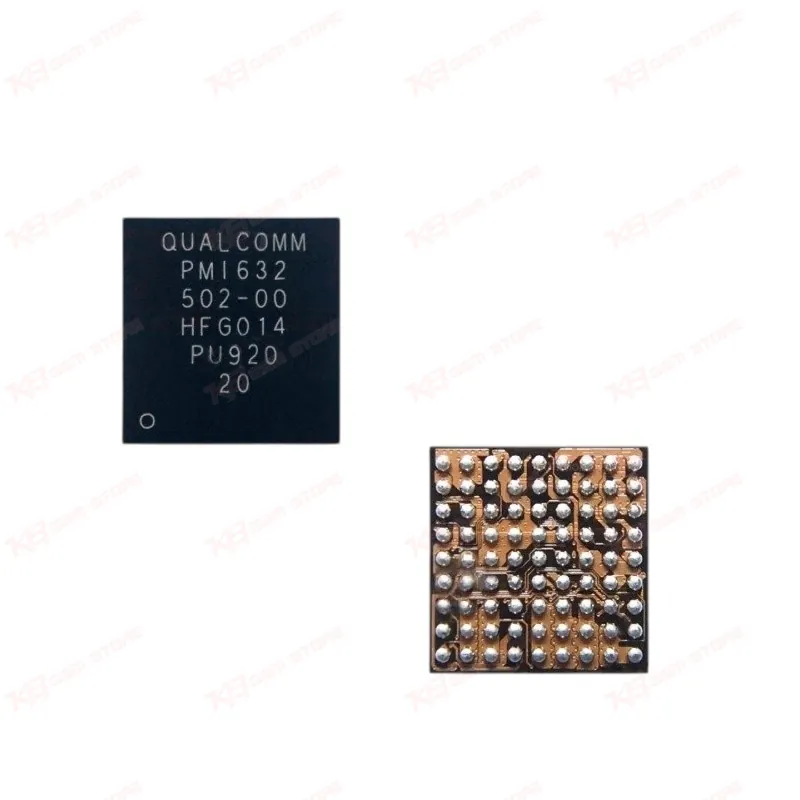
PMI632 502 Power IC Mobile Phone IC Chip
PMI632 502 Power IC Mobile Phone IC Chip
Regular price
Rs.200.00 PKR
Regular price
Sale price
Rs.200.00 PKR
Shipping calculated at checkout.
Quantity
Couldn't load pickup availability
The PMI632 502 is a Qualcomm power management IC (PMIC) used to regulate and distribute power across Snapdragon-based mobile boards. You use it to fix dead boards, charging faults, and power-rail issues caused by a damaged PMIC. Built on a TSMC 0.13 µm BCD process in a WLCSP package, this chip handles voltage regulation duties that keep the rest of the board alive. If your bench shows a phone that's dead after flash, stuck at hang-on-logo, or pulling zero current, the power IC is often the root cause — and this replacement gets that board back to a working state.
⚖️ Weight: 0.01 kg
SKU:MST-IC-38
- Safe & Secure Payment
- Fast Delivery
- WhatsApp Support


Description
FAQ
What is the product name?
The product name is PMI632 502 Power IC.
What is the brand of this product?
The brand of this product is Qualcomm.
What is the model of this product?
The model of this product is PMI632-502.
What is this product used for?
This product is used for board-level power management repair, including dead phone recovery, charging faults, and power rail diagnosis on Snapdragon-platform devices.
Which devices are compatible with this product?
This product is compatible with Qualcomm Snapdragon-platform smartphones that use the PMI632 series PMIC — confirm your exact board revision before ordering.
Who should use this product?
This product is suitable for mobile repair technicians, repair shops, service centers, and professional users.
Does this power IC fix a dead-after-flash phone?
Yes, when the dead-after-flash symptom is caused by a faulty power rail rather than corrupted firmware, replacing the PMI632 restores normal boot behavior.
What package type is the PMI632 502, and does it need reballing?
It's a WLCSP (wafer-level chip-scale package), which requires precise reballing and controlled hot air reflow rather than standard leaded soldering.