


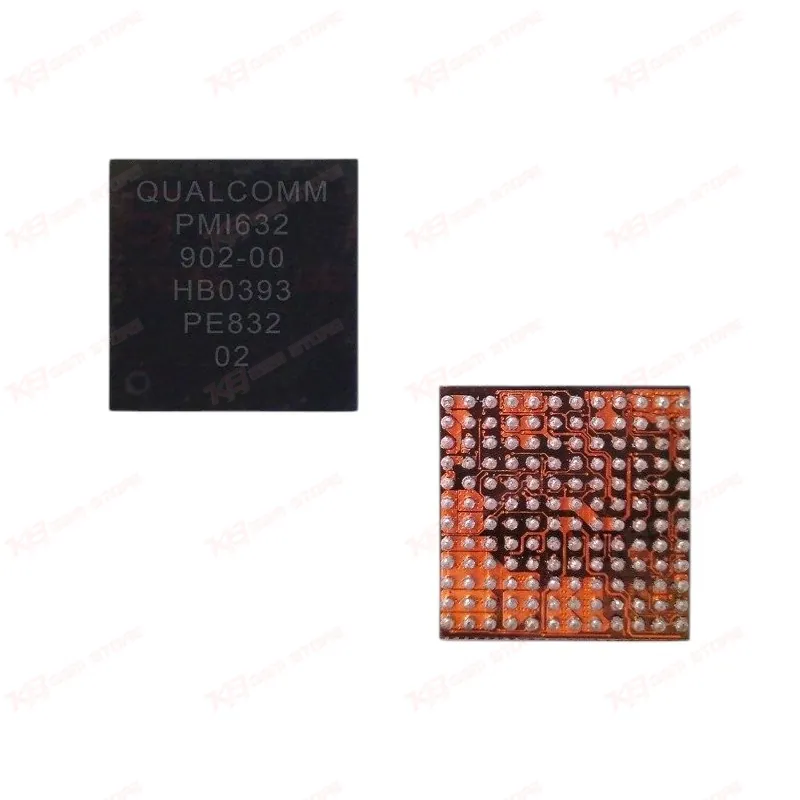
PMI632 902-00 Power IC Mobile phone IC chip
PMI632 902-00 Power IC Mobile phone IC chip
Regular price
Rs.180.00 PKR
Regular price
Sale price
Rs.180.00 PKR
Shipping calculated at checkout.
Quantity
Couldn't load pickup availability
The PMI632 902-00 is the Qualcomm power management IC (PMIC) responsible for voltage regulation and power distribution on Redmi 8, Redmi 8A, Redmi Note 8, and Redmi Note 8T boards. When a phone won't power on, stays dead after flashing, or drains the battery even while switched off, this IC is one of the first components a technician checks. It's a BGA package part meant for reflow or hot air rework on the board, not a plug-in module. Stock this one if you handle Redmi 8-series dead phone or no-power repairs regularly — it's a recurring fault on this chipset family.
⚖️ Weight: 0.01 kg
SKU:MST-IC-39
- Safe & Secure Payment
- Fast Delivery
- WhatsApp Support


Description
FAQ
What is the product name?
The product name is PMI632 902-00 Power IC.
What is the brand of this product?
The brand of this product is Qualcomm.
What is the model of this product?
The model of this product is PMI632-902-00.
What is this product used for?
This product is used to replace a faulty power management IC on Snapdragon 632-based boards, restoring power delivery to the processor and other board components.
Which devices are compatible with this product?
This product is compatible with Xiaomi Redmi 8, Redmi 8A, Redmi Note 8, and Redmi Note 8T.
Who should use this product?
This product is suitable for mobile repair technicians, repair shops, service centers, and professional users.
Does the PMI632 902-00 fix a Redmi 8 that stays dead after flashing?
In many cases yes — a dead-after-flash symptom on this chipset often traces back to a failed power rail from the PMI632, so replacing it resolves the fault once physical board damage has been ruled out.
Can the PMI632 902-00 be reworked with a standard hot air station?
Yes, it's a BGA package designed for hot air reballing, but it needs a proper stencil matched to its footprint and stable, even heat to avoid pad damage during removal.