


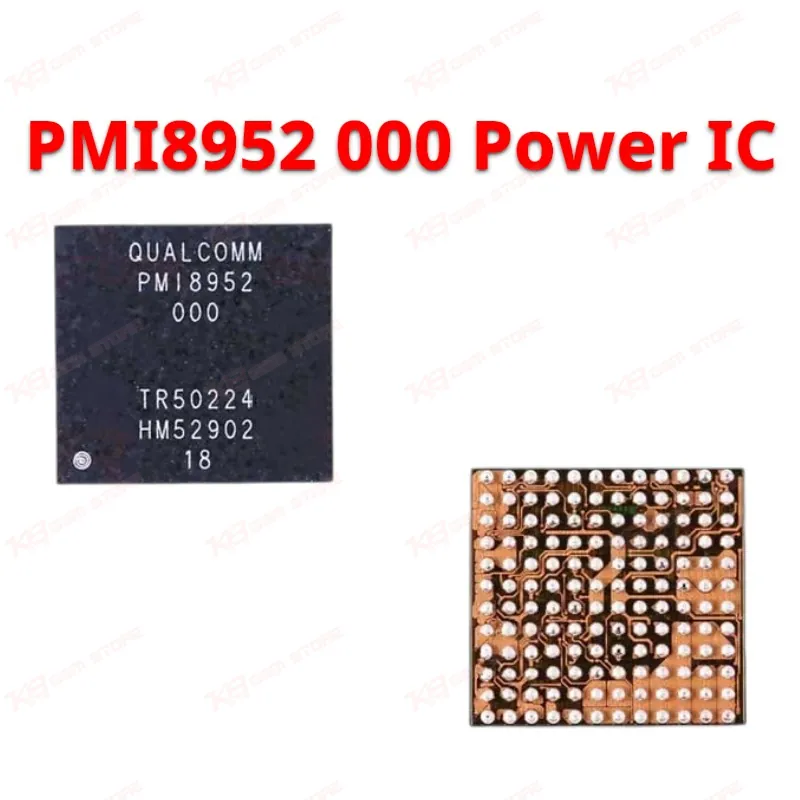
PMI8952 000 Power IC for Samsung, Oppo, Vivo, Xiaomi
PMI8952 000 Power IC for Samsung, Oppo, Vivo, Xiaomi
Regular price
Rs.200.00 PKR
Regular price
Sale price
Rs.200.00 PKR
Shipping calculated at checkout.
Quantity
Couldn't load pickup availability
The PMI8952-000 is a genuine Qualcomm power management IC built for the MSM8952 platform — the chipset family behind Snapdragon 617 and Snapdragon 425 boards. On your bench, it's the chip that controls battery charging, voltage regulation, and power sequencing before the CPU even boots. Technicians reach for it on dead-after-flash boards, no-charge complaints, and hang-on-logo faults after software checks are exhausted. Supplied as a genuine BGA chip, ready for reballing with your existing stencil and solder ball kit. Order the PMI8952-000 in Pakistan from KB GSM Store for reliable board-level repair stock.
⚖️ Weight: 0.01 kg
SKU:MST-IC-153
- Safe & Secure Payment
- Fast Delivery
- WhatsApp Support


Description
FAQ
What is the product name?
The product name is PMI8952-000 Power Management IC (PMIC).
What is the brand of this product?
The brand of this product is Qualcomm.
What is the model of this product?
The model of this product is PMI8952-000.
What is this product used for?
This IC manages battery charging, voltage regulation, and power sequencing on Qualcomm MSM8952-platform boards, and technicians use it to repair dead-after-flash, no-charge, and no-power faults.
Which devices are compatible with this product?
It's verified for MSM8952-platform boards, including the Oppo A57 (CPH1803), Xiaomi Redmi Note 4 and Note 4X, Mi A1, Lenovo K53a48, Lenovo Vibe K6 Plus, LG PM450, Nokia 6, and YotaPhone 3.
Who should use this product?
This product is suitable for mobile repair technicians, repair shops, service centers, and professional users.
Does the PMI8952-000 need reballing before mounting on the board?
Yes, it ships in bare BGA form, so you reball it with your stencil and solder ball kit before reflowing it onto the board.
Can the PMI8952-000 fix a board that's dead after flashing?
It can, when the dead-after-flash fault traces back to a damaged or shorted PMIC rather than a corrupted software partition — confirm with a continuity/current check first.