


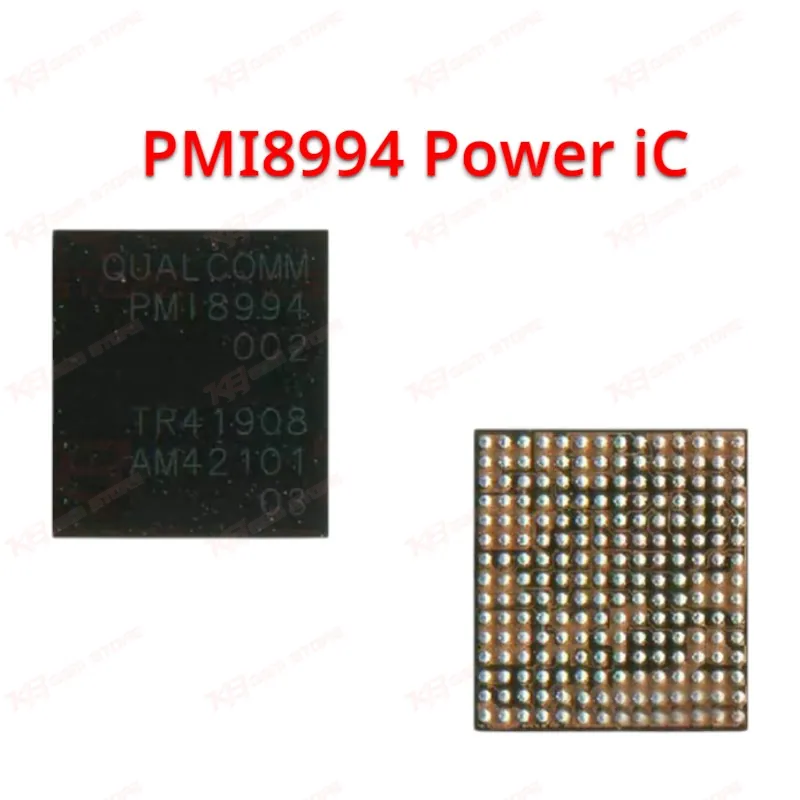
PMI8994 Power iC
PMI8994 Power iC
Regular price
Rs.200.00 PKR
Regular price
Sale price
Rs.200.00 PKR
Shipping calculated at checkout.
Quantity
Couldn't load pickup availability
The Qualcomm PMI8994 is a genuine power management IC (PMIC) built for Snapdragon 808/810 platform boards, including the HTC One M9 and LG G4. Working alongside the PM8994/PM8996 PMIC pair, it handles voltage regulation, general housekeeping, and user interface power support on the board. Technicians reach for this IC when a phone shows dead phone symptoms, no charging response, or hang on logo after a drop or liquid damage. Reflowing or replacing the PMI8994 restores stable power delivery across the board's rails. Keep one on your repair bench for Snapdragon 808/810 power faults.
⚖️ Weight: 0.01 kg
SKU:MST-IC-355
- Safe & Secure Payment
- Fast Delivery
- WhatsApp Support


Description
FAQ
What is the product name?
The product name is Qualcomm PMI8994 Power Management IC.
What is the brand of this product?
The brand of this product is Qualcomm.
What is the model of this product?
The model of this product is PMI8994.
What is this product used for?
This product is used for managing secondary voltage rails, general housekeeping, and user interface power support on Snapdragon 808/810 boards.
Which devices are compatible with this product?
This product is verified compatible with the HTC One M9 and LG G4, and fits the broader Snapdragon 808/810 (MSM8992/MSM8994) platform.
Who should use this product?
This product is suitable for mobile repair technicians, repair shops, service centers, and professional users.
Does the PMI8994 fix "no charging" or "dead phone" faults on the LG G4?
Yes, when the fault traces to this IC's solder joints or internal failure rather than the main PM8994/PM8996 PMIC, replacing the PMI8994 restores normal charging and power-on behavior.
Is the PMI8994 the same chip as the PM8994 used on these boards?
No, the PMI8994 is a separate companion PMIC that works alongside the PM8994/PM8996 pair — it doesn't replace the main power IC, it handles secondary rail and housekeeping functions.