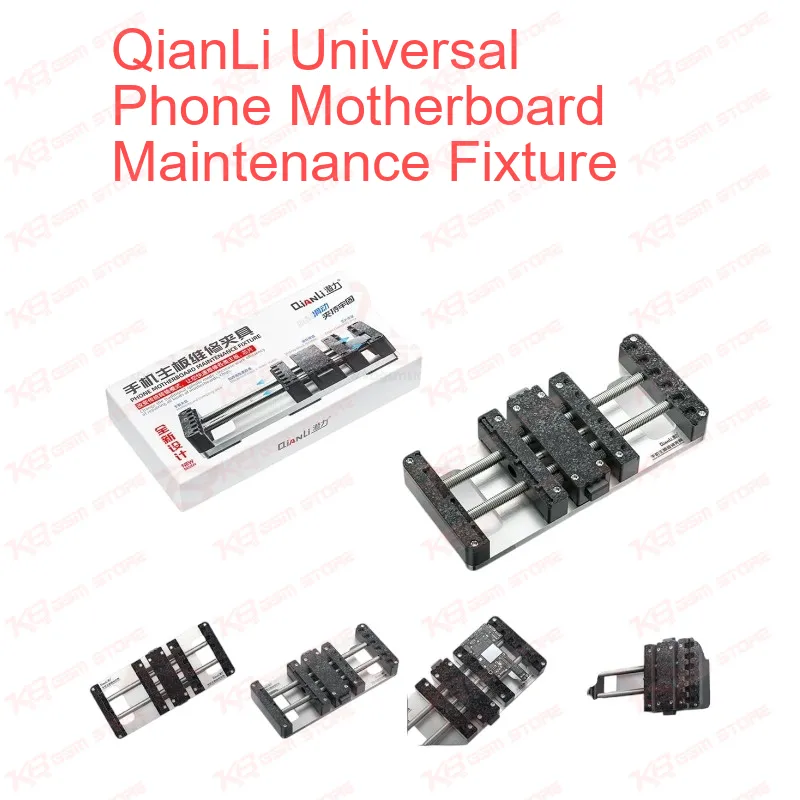
Working on a dead phone board without a proper holding fixture usually means one hand babysitting the PCB and one hand trying to solder, which is how boards get scratched or pads lift during IC change. The QianLi Universal Phone Motherboard Maintenance Fixture solves that by replacing the old spindle-clamp design with a fast sliding module you adjust left or right at will, then lock down tight around the board edge. Once clamped, the motherboard stays fixed in place through hot air rework, jumper lagana, dot matrix repair, or reballing, so you get both hands free to work the iron or the hot air gun without the board creeping. The clamping area itself is CNC machined, which means it sits flush and consistent against the motherboard rather than pinching at odd angles the way stamped or cast clamps often do, and that consistency matters when you are holding a board steady for BGA reballing or precision IC removal where even a small shift ruins the pads underneath. The base plate is built from 5mm stainless steel-304, a thickness and grade chosen for stability under repeated clamping pressure and for resistance to the heat and corrosion that build up on a busy repair bench over months of daily use. Sitting on top of that base, the fixture module itself is made from synthetic stone rather than plastic or standard alloy, and that choice is what lets the clamp sit directly next to hot air rework stations without softening, warping, or discoloring the way cheaper fixtures do after a few sessions near a heat gun. A hollow heat dissipation design in the module lets warmth escape instead of building up around the clamped board, which keeps the fixture cooler to handle and reduces the risk of heat transferring unevenly into a board you are trying to keep at a controlled temperature during chip reflow. Underneath, a resistant silicone footpad grips the workbench surface, so the fixture does not slide around while you are applying lateral pressure during soldering, board separation, or connector work, giving you a stable platform whether you are standing at a service center bench or a home repair setup. Because the fixture module is universal rather than shaped for one specific phone model, it supports a wide range of motherboard sizes, which is the practical difference between buying a separate holder for every device family you service and keeping one fixture on the bench that adapts to whatever board comes in that day, whether it is a small mid-range Android board or a larger flagship motherboard with dense component layout. This kind of universal clamping sits at the center of a typical PCB repair workflow: a technician pulls the board out after diagnosing a hardware fault, mounts it in the fixture to hold it steady, then moves through IC change, dead-after-flash troubleshooting, charging port rework, or Face ID dot matrix chip replacement without the board moving between steps. For shops handling FRP lock, pattern unlock, or software marna cases where the board itself is fine and only firmware work is needed, the fixture is less critical, but for anyone doing board-level hardware repair, hang-on-logo diagnosis, or network issue troubleshooting that requires IC-level access, having the board locked down changes how clean and repeatable the repair turns out. Pakistani repair shops running high daily volume benefit from a fixture like this specifically because it removes the guesswork of holding a board by hand while probing test points or reflowing a chip, cutting down on accidental damage that turns a simple repair into a bigger problem. The combination of a stainless steel base, a heat-resistant synthetic stone clamp module, CNC-machined precision, and a non-slip footpad makes this fixture suited for technicians who run soldering, reballing, and chip-level diagnostics as a regular part of their workshop, rather than occasional users who only need a holder once in a while.