


QM56020 Power IC
QM56020 Power IC
Regular price
Rs.400.00 PKR
Regular price
Sale price
Rs.400.00 PKR
Shipping calculated at checkout.
Quantity
Couldn't load pickup availability
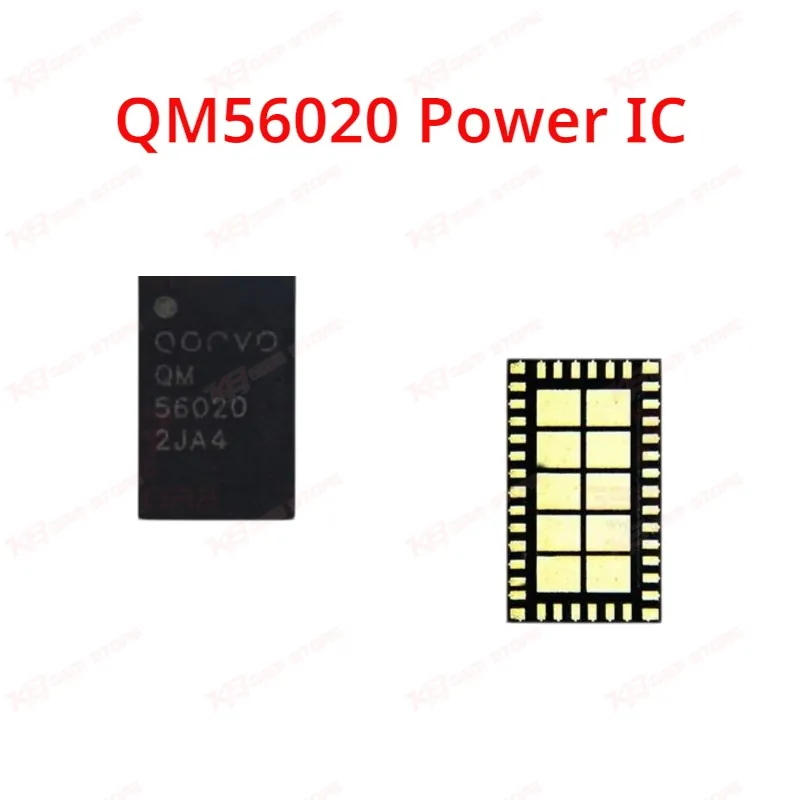
The QM56020 is a Qorvo RF power amplifier IC used across several Xiaomi, Oppo, Vivo, and Huawei boards to drive signal transmission strength. When a phone shows network issue, weak signal, or no network after a drop or moisture damage, this PA chip is often the root cause. Built in a BGA package, it mounts directly on the motherboard near the RF section. Pakistani GSM technicians stock this IC for network repair jobs where reballing and precise placement decide whether the fix holds. Genuine, tested stock for your repair bench.
⚖️ Weight: 0.01 kg
SKU:MST-IC-215
- Safe & Secure Payment
- Fast Delivery
- WhatsApp Support


Description
FAQ
What is the product name?
The product name is QM56020 Power Amplifier IC.
What is the brand of this product?
The brand of this product is Qorvo.
What is the model of this product?
The model of this product is QM56020.
What is this product used for?
This product is used for replacing a failed RF power amplifier stage on mobile phone boards affected by network or signal issues.
Which devices are compatible with this product?
This product is verified for use on select Xiaomi, Oppo, Vivo, and Huawei device boards; exact board placement should be confirmed against the device schematic.
Who should use this product?
This product is suitable for mobile repair technicians, repair shops, service centers, and professional users.
Does the QM56020 require special tools for installation?
Yes, it requires a hot air rework station and BGA reballing tools since it comes in a BGA package that cannot be soldered with a standard iron.
What supply voltage does the QM56020 operate on?
The QM56020 operates within a 1.0V to 6V supply voltage range.