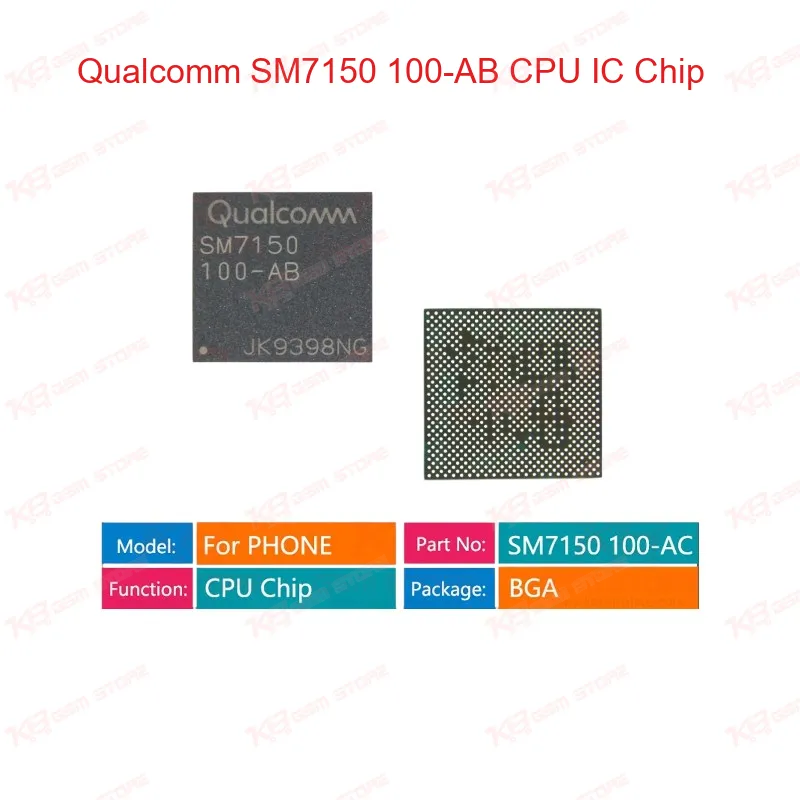
The Qualcomm SM7150-AB sits at the center of every Snapdragon 730G-powered smartphone, functioning as both the application processor and the LTE baseband in a single BGA package. When a technician opens a Snapdragon 730G device with dead phone symptoms, cracked CPU balls, or corrosion damage from liquid exposure, this IC is almost always the first component to inspect under the microscope. Built on an 8nm FinFET process, the SM7150-AB runs an octa-core Kryo 470 configuration split into two performance clusters: two Gold cores clocked at 2.2GHz for heavy workloads and six Silver cores clocked at 1.8GHz for background tasks. This big.LITTLE design keeps power draw manageable, which matters directly in the repair workshop because CPU damage often traces back to power delivery faults on the PMIC side feeding this exact IC. When you diagnose a board with abnormal current draw and short circuits pointing toward the CPU rail, checking the SM7150-AB solder joints becomes the next logical step. Graphics processing runs through the integrated Adreno 618 GPU clocked at 700MHz, handling display rendering and GPU-accelerated tasks without a separate graphics chip. The Spectra 350 image signal processor manages camera pipeline duties, so a device with camera failure alongside display or performance issues often points back to a compromised CPU IC rather than the camera module itself. The Hexagon 688 DSP runs AI and sensor-hub workloads in parallel, and the built-in Snapdragon X15 LTE modem handles cellular connectivity, supporting download speeds up to 800 Mbps and upload speeds up to 150 Mbps. Because the modem lives inside this same chip, network issue complaints on Snapdragon 730G boards frequently trace back to CPU IC damage rather than a separate RF component. The chip pairs with LPDDR4X memory over a dual 16-bit interface running at 1866MHz, and it includes 1MB of Level 3 cache to support multitasking performance. FastConnect 6200 handles Wi-Fi and Bluetooth connectivity, though this runs as a companion chip rather than being fully integrated into the SM7150-AB die itself. In the repair workshop, this IC comes up most often in three scenarios. First, dead after flash cases where a board shows no boot response even after successful software flashing — a strong indicator that the CPU IC itself has failed rather than corrupted firmware. Second, hang on logo situations following liquid damage, where corrosion under the BGA balls creates intermittent connections that only full IC reballing resolves. Third, boards with visible physical damage to the CPU footprint after a drop or impact, where pad lifting or cracked traces around the SM7150-AB require chip removal and reballing with a fresh stencil. Handling this IC correctly during removal and reballing protects the board from further damage. Use controlled hot air temperature profiles matched to the BGA ball composition, and always verify pad condition before reballing to avoid repeat failures. A proper reballing stencil matched to the SM7150-AB ball pattern keeps solder joint spacing accurate and reduces the risk of bridging during reflow. Sourcing a genuine SM7150-AB matters because counterfeit or remarked chips fail early and waste both the technician's time and the customer's trust. KB GSM Store supplies tested, verified CPU ICs for technicians working on Snapdragon 730G board-level repair across Pakistan's mobile repair market, giving your workshop a reliable component for CPU replacement jobs without guesswork on chip authenticity.