


Brand:
QUICK
QUICK TS1 Smart Portable Soldering Iron With 3 Tips
QUICK TS1 Smart Portable Soldering Iron With 3 Tips
Regular price
Rs.6,500.00 PKR
Regular price
Rs.8,500.00 PKR
Sale price
Rs.6,500.00 PKR
Shipping calculated at checkout.
Quantity
Couldn't load pickup availability
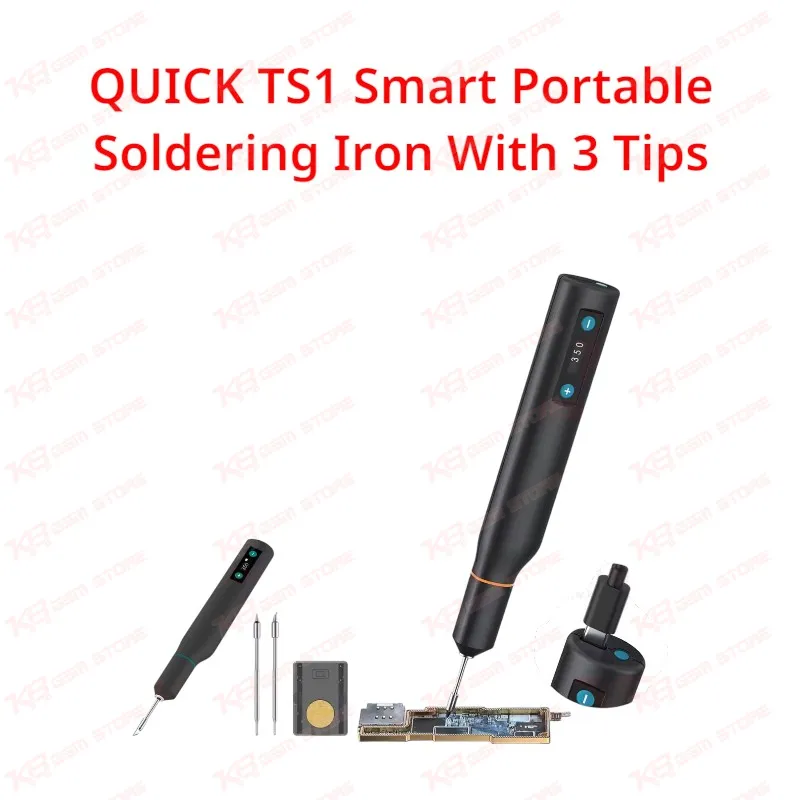
The QUICK TS1 is a battery-powered portable soldering iron built for mobile phone motherboard and PCB repair work. It runs on a built-in 2600mAh lithium battery, heats up fast, and gives you precise temperature control from 100°C to 420°C through a clear OLED display. With three interchangeable tip types and Type-C charging, it's a compact tool that fits easily into a repair bench setup or a mobile toolkit, letting you solder without being tied to a wall outlet.
SKU:MST-SOLDERING-ACCESSORIES-833
⚖️ Weight: 0.7 kg
- Safe & Secure Payment
- Fast Delivery
- WhatsApp Support


Description
FAQ
What is the product name?
The product name is the QUICK TS1 Smart Portable Soldering Iron.
What is the brand of this product?
The brand of this product is QUICK.
What is the model of this product?
The model is QUICK TS1.
What is this product used for?
This product is used for portable, battery-powered soldering on mobile phone motherboards and general PCB/SMD repair work.
Which devices are compatible with this product?
This tool is compatible on a general PCB/SMD level with mobile phone motherboards across Android and iPhone repair work — it is not tied to a specific device model.
Who should use this product?
This product is suitable for mobile repair technicians, PCB repair specialists, repair shops, service centers, and field technicians needing a portable soldering solution.
How long does the QUICK TS1 run on a single charge?
The built-in 2600mAh battery provides approximately 30 minutes of continuous soldering before the low-battery indicator appears.
Which soldering tips are compatible with the QUICK TS1?
The QUICK TS1 supports three tip types — SS1-J, SS1-B, and SS1-SK — which can be swapped without tools.