


RELIFE
Relife Cutting Blade Grinding Head
Relife Cutting Blade Grinding Head
Brand:
RELIFE
Regular price
Rs.150.00 PKR
Regular price
Sale price
Rs.150.00 PKR
Shipping calculated at checkout.
Quantity
Couldn't load pickup availability
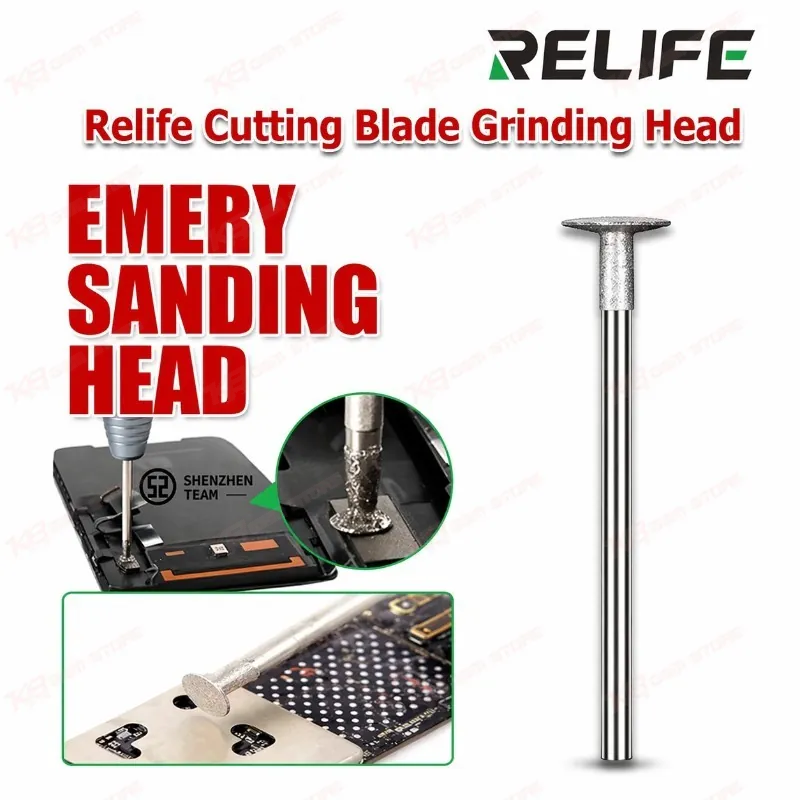
The RELIFE Cutting Blade Grinding Head handles one of the toughest jobs on a repair bench: cutting through iron EMI shields on mobile phone motherboards without damaging the ICs underneath. Mount it on your rotary grinding pen and you get controlled, precise cuts along the shield edge instead of risky manual prying with a blade. Technicians working on dead phone, board level repair, or IC change jobs use this head to open sealed shields quickly and safely. It works across motherboard brands and models, since shield removal is a universal repair step rather than a device-specific one. A compact, replaceable accessory every GSM workshop should keep in stock.


Description
FAQ
What is the product name?
The product name is RELIFE Cutting Blade Grinding Head.
What is the brand of this product?
The brand of this product is RELIFE.
What is this product used for?
This product is used for cutting and removing iron EMI shields from mobile phone motherboards to access the ICs underneath.
Which devices are compatible with this product?
This product is universal and works across motherboard brands and models, since shield cutting is not a device-specific repair step.
Who should use this product?
This product is suitable for mobile repair technicians, repair shops, service centers, and professional users.
What tool does this grinding head attach to?
It mounts on a standard rotary grinding pen or mini polishing tool, the same type of rotary tool already common on a GSM repair bench.
Does this head reduce the risk of damaging ICs during shield removal?
Yes, the shaped cutting edge tracks along the shield wall in a controlled cut, which lowers the risk of cracked ICs, lifted pads, or bent shields compared to manual blade cutting.