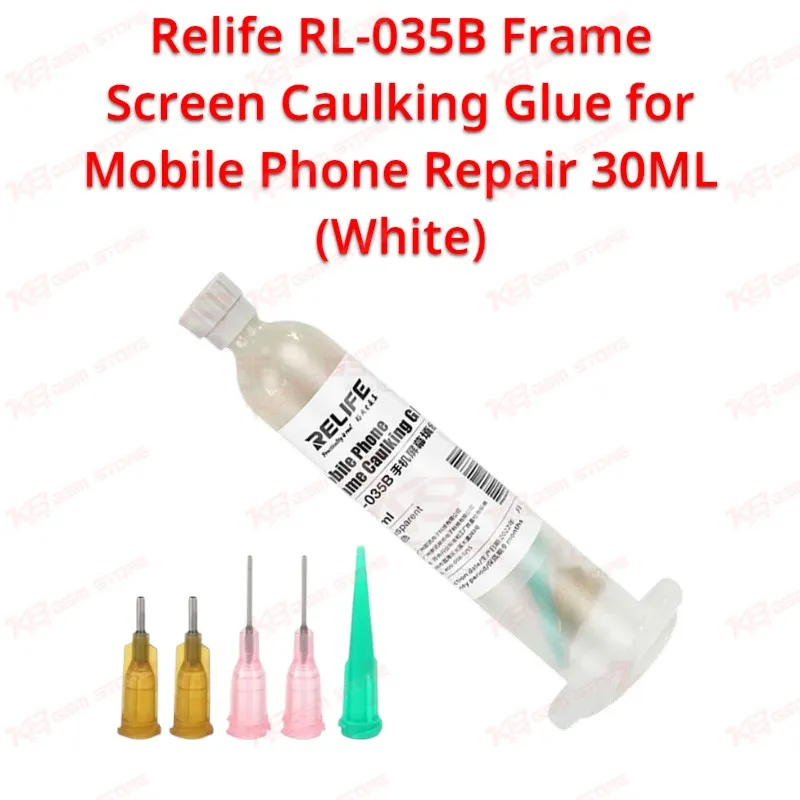
Frame gaps and light leakage are one of the most common comebacks on curved-screen repairs, and Relife RL-035B exists to close that gap permanently. When a screen sits slightly proud of the mid-frame after a digitizer swap, or when the original factory seal has broken down after a drop, this caulking glue fills the seam and locks it down so the display stops leaking backlight and the phone stops taking in moisture through the border. It's a white-pigmented formula in this variant, so the cured line blends cleanly into light-colored frames instead of showing a visible dark seam. On your repair bench, you load the syringe, pick the right needle from the 5 included in the box, and run a thin controlled bead directly along the border gap — the narrow needles are what you want for tight curved-glass edges on flagship phones, while the wider ones suit flatter frame gaps on budget devices. The initial cure sets in 10 minutes, which is fast enough that you're not holding the unit in a clamp for an hour, and full pressure retention completes in 20 minutes, after which the seal is stable enough to move on to the next repair. Once fully cured, the glue turns rubberized and elastic rather than brittle, so it flexes with the frame instead of cracking under normal handling, and it holds up against repeated exposure to moisture without degumming — a common failure point with cheaper caulking compounds that dry out and peel after a few weeks. RL-035B is a universal repair compound, not tied to one brand or chipset, so it fits Android and iPhone alike, and it's specifically called out for HW, OP, VI, and MI curved-screen border work where the display edge wraps around the frame and standard adhesive strips can't reach the seam. Beyond sealing new screen installs, you'll reach for this on jobs where the phone comes in with visible screen warping at the edges, cracked frame gaps from a drop, or a customer complaint about water getting in after a self-repair attempt somewhere else. It also handles cosmetic seam beautification — closing a gap that's structurally fine but looks bad because the original adhesive shrank over time. For a workshop doing volume screen replacements, keeping RL-035B on the bench means you're not sending frame-seal jobs out or telling a customer their phone can't be waterproofed again after a repair. Pair it with a UV curing glue for BGA and solder-pad work and a separate frame adhesive strip for full digitizer reseating, and you've got the caulking step covered without buying a dedicated tool for every seam width — the 5-needle set does that job on its own. Store the syringe upright with the cap on between jobs so the tip doesn't dry and clog, since a partially cured nozzle is the main reason technicians think the glue "went bad" when it's actually just a blocked needle.