Skip to product information
1 of 4
Brand: RELIFE

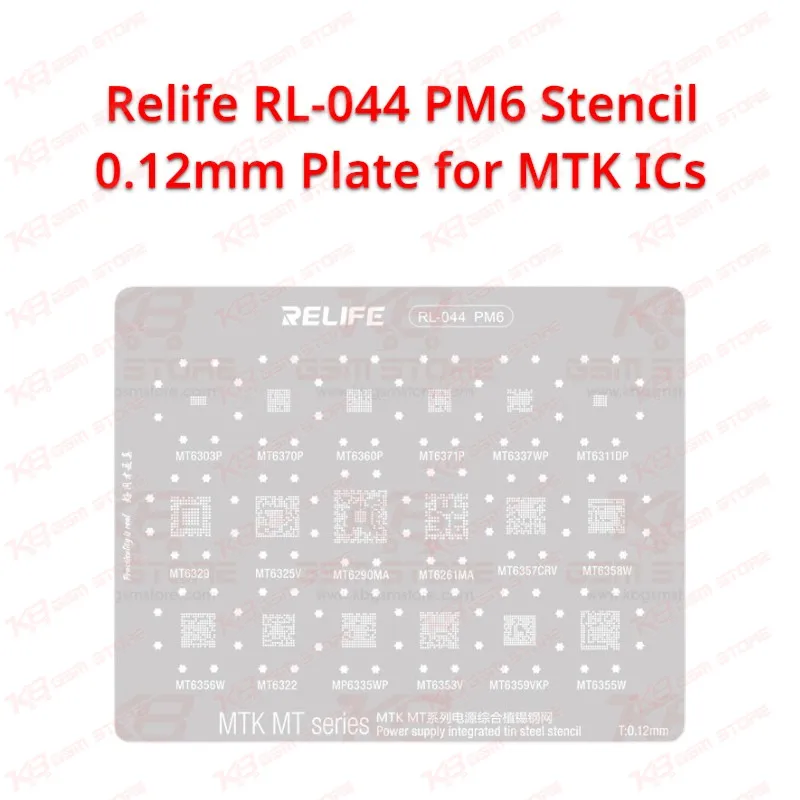
Relife RL-044 PM6 Stencil 0.12mm Plate for MTK ICs

Relife RL-044 PM6 Stencil 0.12mm Plate for MTK ICs

Regular price Rs.600.00 PKR
Regular price Sale price Rs.600.00 PKR
Sale Sold out
Shipping calculated at checkout.
Quantity

The Relife RL-044 PM6 Stencil 0.12mm Plate for MTK ICs gives you a fast, accurate way to rebuild solder balls on MediaTek power IC footprints without guesswork. Cut from ultra-thin 0.12mm steel, the plate lines up directly over the PM6 chip pattern so solder paste sits exactly where it belongs before reflow. You skip the shaky freehand paste jobs that cause bridging or missing balls, and you get consistent results job after job on your repair bench. Built for technicians who handle MTK-based boards regularly, this stencil turns a fiddly reballing step into a repeatable one, cutting rework time and reducing the chance of a second failure after you close the board back up.

SKU:MST-SOLDERING-TOOLS-545

⚖️ Weight: 0.01 kg

  • Safe & Secure Payment
  • Fast Delivery
  • WhatsApp Support
View full details

Description

When a phone comes in dead after flash or stuck on hang-on-logo and you trace the fault back to the power IC, you need a stencil that matches the ball pattern exactly, and the Relife RL-044 PM6 Stencil 0.12mm Plate for MTK ICs is built for that exact job on MediaTek power management chips. The plate uses a 0.12mm laser-cut steel sheet, thin enough to sit flush against the PCB pads yet rigid enough to hold its shape through repeated heat cycles on your hot air station, so you avoid the warping that ruins cheaper mesh stencils after a handful of uses. Each hole is positioned to match the PM6 power IC footprint, which means you place the stencil, drop your solder paste or balls across the surface, drag a card over it once, and lift it away with the paste sitting cleanly on every pad instead of smeared across neighboring tracks. That precision matters most on power IC jobs because a bridged pad or a missing ball on the PM line often shows up later as a charging issue, a boot loop issue, or a board that powers on and then dies again within minutes, so getting the reballing step right the first time saves you a repeat visit and a frustrated customer. You get a stencil that works whether you are reballing after removing a suspected faulty IC for testing, refreshing balls before reattaching a known-good chip, or rebuilding a pad that got damaged during a previous repair attempt with a soldering iron rather than proper hot air. The rounded and square hole geometry on the plate helps solder paste release evenly instead of clumping, so you end up with uniform ball height across the whole IC footprint, which is exactly what you need for a clean reflow with no shorts and no open joints once the chip goes back down. Technicians running high volumes of MTK repair jobs will notice the plate stays flat through normal handling and storage, so it keeps producing accurate results across many boards rather than degrading after the first few sessions the way thinner, poorly cut alternatives tend to. Because the stencil is sized to the PM6 footprint specifically, you place it in seconds under a microscope or magnifier without hunting for alignment marks, which keeps your workflow moving on a busy repair bench where every extra minute per board adds up. This kind of tool sits at the reballing and power IC repair stage of your workflow, right after IC removal and pad cleaning and right before reflow and functional testing, so it works alongside your hot air station, flux, solder balls or paste, and PCB holder as part of a complete MTK power IC repair process. If your shop handles MediaTek boards regularly, whether for dead phone diagnosis, hardware fault isolation, or straightforward IC change karna jobs, having a stencil matched to the exact chip pattern removes one of the most error-prone manual steps in the entire repair and gives you a result you can trust without redoing the job twice.

Key Features

Ultra-thin 0.12mm laser-cut steel construction

Hole pattern matched precisely to the MTK PM6 power IC footprint

Rounded and square hole design for even solder paste release

Heat-resistant plate that holds its shape through repeated hot air cycles

Enables uniform solder ball height across the full IC footprint

Fits directly over the chip pad layout for fast, accurate placement

Reusable across multiple reballing jobs with proper handling

Compact, lightweight design suited to daily repair bench use

Specifications

Brand Entity Relife
Product Entity RL-044 PM6 BGA reballing stencil plate
Technology Entity Laser-cut ultra-thin steel stencil / BGA reballing technology
Compatible Device Entities MediaTek (MTK) PM6 power IC chipset family
Repair Process Entity Power IC reballing, PCB rework, solder ball reconstruction
Industry Entity Mobile phone repair and GSM technician industry

Compatible Devices

MediaTek (MTK) PM6-series power management IC footprint

Boards built around the MTK PM6 power IC platform

Chipset-family specific — not verified against individual phone brand or model lists

Common Repair Uses

Solder ball reballing on MTK PM6 power IC after chip removal

Rebuilding pads damaged during a previous soldering iron repair attempt

Restoring boards with charging issue, dead after flash, or repeated power failure linked to the PM IC

Precision solder paste stenciling before reflow on power IC repair jobs

FAQ

What is the product name?
The product name is Relife RL-044 PM6 Stencil 0.12mm Plate for MTK ICs.
What is the brand of this product?
The brand of this product is Relife.
What is the model of this product?
The model of this product is RL-044 PM6.
What is this product used for?
This product is used for stenciling solder paste and rebuilding solder balls on MediaTek PM6 power IC footprints during BGA reballing.
Which devices are compatible with this product?
This product is compatible with boards built around the MediaTek (MTK) PM6 power IC chipset family.
Who should use this product?
This product is suitable for mobile repair technicians, repair shops, service centers, and professional users.
Does this stencil match the exact MTK PM6 power IC ball pattern?
Yes, the hole layout is positioned to align directly with the PM6 power IC footprint for accurate solder ball placement.
Why does this stencil use a 0.12mm steel thickness instead of a thicker plate?
The 0.12mm thickness keeps the plate thin enough to sit flush against the PCB pads while staying rigid enough to resist warping under repeated heat exposure.

Ask any Query