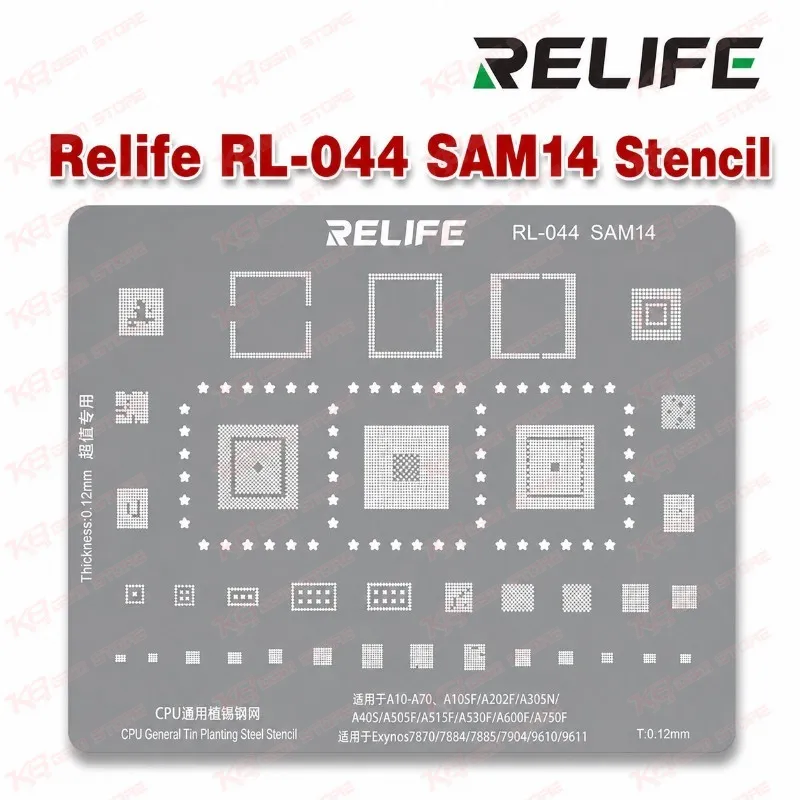
The Relife RL-044 SAM14 Stencil is one of the dedicated Samsung layouts inside Relife's RL-044 SAM1–SAM15 stencil series, and it exists to solve one specific bench problem: getting solder balls onto a reballed Samsung chip in exactly the right spot, every single time. Build and Material — the stencil is cut from ultra-thin, high-quality stainless steel using a laser process that keeps every hole edge sharp and consistent, which matters because a warped or uneven stencil ruins ball height before you even reach the reflow stage. Relife applies a half-etching technique around the perimeter so certain grooves sit flush with adjacent components on the board, protecting them from heat transfer while you rework the target IC. Hole Design and Solder Flow — the SAM14 layout uses round-square holes rather than plain circles, a small design choice that has a real effect on your workflow: solder paste or pre-formed balls drop off the steel cleanly instead of sticking, which cuts down on smudging and uneven ball formation across the grid. This is the difference between a reball job that boots first try and one that comes back with a dead phone complaint a week later. Thermal Management — patented cooling holes are worked into the mesh so heat escapes during hot air rework instead of building up under the stencil, which reduces the risk of warping the steel or scorching nearby passives. For technicians running hot air stations at higher temperatures on multilayer Samsung boards, this cooling behavior keeps the stencil flat and reusable across many jobs rather than degrading after a handful of uses. Where It Fits in the Repair Workflow — you place the SAM14 stencil after removing the faulty IC, cleaning the pads, and prepping the board surface; align the holes over the pad grid, apply solder paste or drop pre-cut balls, run the reflow pass, then lift the stencil to check ball uniformity before repositioning and soldering the chip back down. It sits squarely in the reballing stage of the broader PCB repair process, between IC removal and final chip remounting, and pairs naturally with a hot air station, a BGA rework fixture, and a decent microscope for post-reflow inspection. Packaging and Durability — the SAM14 stencil ships in blister packaging with a stiffened backing card specifically so the mesh arrives flat; bent stencils are a common complaint with cheaper alternatives, and Relife's packaging choice is a direct response to that failure point. Handled correctly, the steel resists corrosion and holds its shape through repeated reflow cycles, so one stencil covers a realistic volume of repair jobs before replacement. Who This Is For — this tool is built for GSM technicians, mobile repair shop owners, and service center staff who take on board-level Samsung repairs rather than only screen and battery swaps. If your bench already handles IC change karna, jumper lagana, or hardware fault diagnosis on Samsung devices, the Relife RL-044 SAM14 Stencil gives you a repeatable, purpose-cut layout instead of guessing hole spacing with a universal plate. It's a small, inexpensive tool, but in professional reballing work, stencil accuracy is often the single biggest factor separating a clean repair from a rework comeback.