Skip to product information
1 of 4
Brand: RELIFE

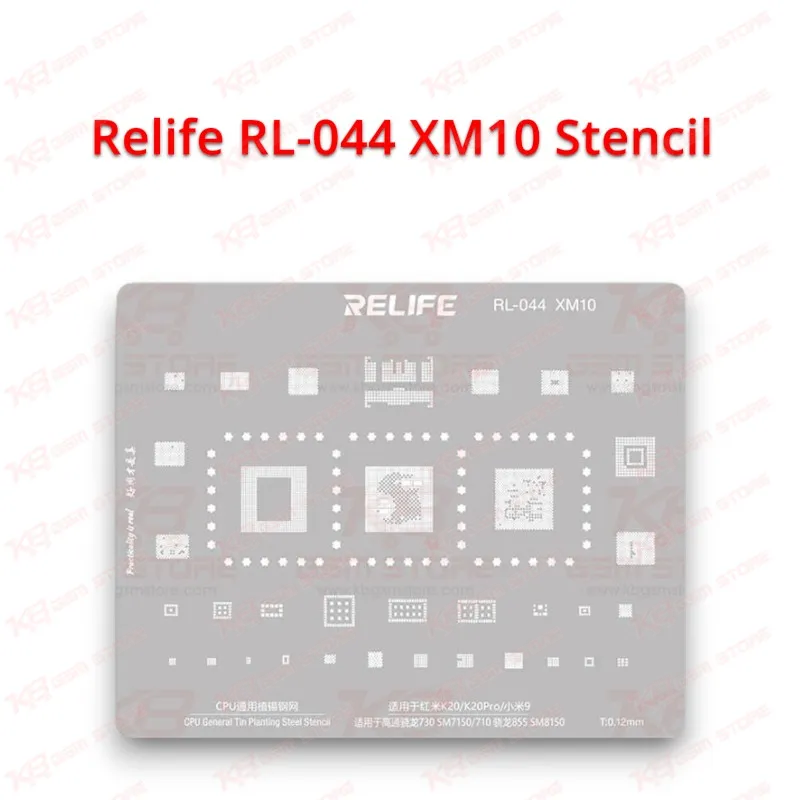
Relife RL-044 XM10 Stencil

Relife RL-044 XM10 Stencil

Regular price Rs.599.00 PKR
Regular price Sale price Rs.599.00 PKR
Sale Sold out
Shipping calculated at checkout.
Quantity

The Relife RL-044 XM10 Stencil gives your repair bench a laser-cut, precision-aligned template built for CPU and BGA pad reballing on mobile phone motherboards. You place it directly over the chip footprint, drop your solder balls or paste, and get even, bridge-free coverage instead of guessing pad positions by hand. The thin, flexible steel construction sits flat against the board so balls seat cleanly without shifting during reflow. For technicians doing daily dead-board, boot loop, and hardware fault diagnosis, the Relife RL-044 XM10 Stencil cuts your reballing time down and protects you from the rework losses that come with a warped or misaligned stencil.

SKU:MST-SOLDERING-TOOLS-555

⚖️ Weight: 0.01 kg

  • Safe & Secure Payment
  • Fast Delivery
  • WhatsApp Support
View full details

Description

When a board comes in dead after flash or stuck on boot loop and your diagnosis points to a CPU or BGA-side hardware fault, the tool you reball with decides whether that chip goes back on clean or you end up reworking it twice, and the Relife RL-044 XM10 Stencil is built specifically to remove that risk from your bench. It uses precision laser cutting to hold every aperture in exact position over the chip's pad layout, so when you lay solder balls or paste through it you get uniform, evenly distributed contact points instead of the uneven blobs that cause bridging or dry joints later. The steel sheet is thin enough to sit flat and flush against the board surface without gaps, which matters more than most technicians realize because even a slight lift at the edges lets paste smear sideways and ruins pad spacing before you even get to reflow. You get a stencil that resists warping under repeated heat cycles, so it stays usable job after job on your bench instead of degrading after a handful of rebuilds like cheaper stamped-metal alternatives. In a typical workflow, you'd clean the board pads first with wick or braid, flux the site, seat the Relife RL-044 XM10 Stencil directly over the footprint using its designed alignment, apply your solder balls, and reflow with your hot air station before lifting the stencil away cleanly. Because the holes are cut rather than punched, there's no burring or rough edges catching stray solder, which keeps your finished ball grid tighter and reduces the chance of a short once the chip goes back down. This kind of consistency is what separates a workshop that can take on CPU-side and IC-side reballing jobs confidently from one that keeps sending them out or risking board damage on a bad rework attempt. It fits naturally into your existing diagnostic and rework chain — after ISP-mode testing or eMMC diagnosis rules out a software marna fix and points to a physical solder joint failure, this is the tool that lets you act on that finding instead of stalling the repair. Shops running high volumes of dead-after-flash or hang-on-logo cases benefit from keeping a stencil like this on hand permanently rather than sourcing one per job, since board layouts across many devices reuse similar chip footprints. Pair it with a decent hot air rework station, a stable preheater, and a magnifier or microscope for pad inspection, and you've got a complete micro-soldering setup capable of handling CPU reballing, IC removal and reinstallation, and general BGA rework without outsourcing the delicate steps. The Relife RL-044 XM10 Stencil is priced and built for that kind of repeated professional use rather than one-off hobby repairs, and keeping it flat-stored and free of leftover solder residue between jobs will extend how many reflow cycles it holds precise alignment for.

Key Features

  • Precision laser-cut apertures for accurate pad alignment
  • Thin, flexible steel body sits flush against the motherboard
  • Resists warping and heat deformation across repeated reflow cycles
  • Clean-cut holes reduce solder bridging and uneven ball formation
  • Reusable across multiple reballing jobs without losing accuracy
  • Compatible with standard solder ball and solder paste application methods
  • Supports faster turnaround on CPU and IC-side reballing work
  • Fits standard hot air rework and reflow workflows

Specifications

Brand Entity Relife
Product Entity RL-044 XM10 Stencil
Technology Entity Laser-cut CPU/BGA reballing stencil
Compatible Device Entities Mobile phone motherboards (CPU/BGA pad-level, universal scope)
Repair Process Entity CPU reballing, BGA rework, motherboard micro-soldering
Industry Entity Mobile repair, GSM technician workshops, PCB repair

Compatible Devices

  • Universal — not device-specific; designed for CPU/BGA pad-level reballing across supported mobile phone motherboards
  • Suited to boards where standard CPU/IC ball-grid footprints match the stencil's aperture layout

Common Repair Uses

  • CPU reballing after dead board or boot loop diagnosis
  • BGA chip reballing during IC repair
  • Solder paste application before chip reflow
  • Pad-level cleanup and rework on the motherboard prior to reinstalling a component

FAQ

What is the product name?
The product name is Relife RL-044 XM10 Stencil.
What is the brand of this product?
The brand of this product is Relife.
What is the model of this product?
The model of this product is RL-044 XM10.
What is this product used for?
This product is used for CPU and BGA reballing during mobile motherboard repair.
Which devices are compatible with this product?
This stencil is compatible at the CPU/BGA pad level with mobile phone motherboards matching its footprint layout; it is not restricted to a single device model.
Who should use this product?
This product is suitable for mobile repair technicians, repair shops, service centers, and professional micro-soldering technicians.
Does this stencil work with both solder balls and solder paste?
Yes, the laser-cut apertures accommodate either solder ball placement or paste application before reflow.
Will repeated heat exposure warp this stencil?
The steel construction is built to resist deformation across multiple reflow cycles, keeping alignment consistent over repeated use.

Ask any Query