


Brand:
RELIFE
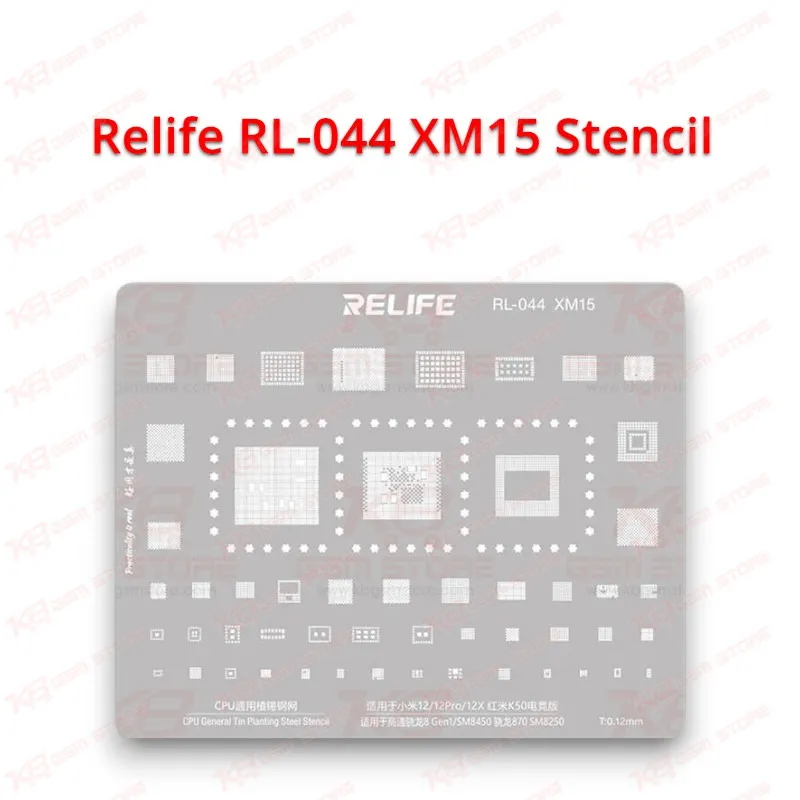
Relife RL-044 XM15 Stencil
Relife RL-044 XM15 Stencil
Regular price
Rs.599.00 PKR
Regular price
Sale price
Rs.599.00 PKR
Shipping calculated at checkout.
Quantity
Couldn't load pickup availability
The Relife RL-044 XM15 Stencil gives you a laser-cut, high-precision template built for BGA chip reballing on mobile phone motherboards. Made from thin, flexible stainless steel, it holds its shape under hot air rework heat instead of warping mid-job, so your solder balls land evenly every time. You place it directly over the IC pad area, apply solder paste or balls, and lift it clean without smearing — cutting rework time on your bench. It's a straightforward addition to any reballing station setup, built for technicians who reball chips regularly and need a tool that survives daily workshop use, not a one-job disposable.
SKU:MST-SOLDERING-TOOLS-559
⚖️ Weight: 0.01 kg
- Safe & Secure Payment
- Fast Delivery
- WhatsApp Support


Description
FAQ
What is the product name?
The product name is Relife RL-044 XM15 Stencil.
What is the brand of this product?
The brand of this product is Relife.
What is the model of this product?
The model of this product is RL-044 XM15.
What is this product used for?
This product is used for BGA chip reballing and IC repair on mobile phone motherboards.
Which devices are compatible with this product?
This product is a universal chip-level reballing tool and is not tied to a specific phone model.
Who should use this product?
This product is suitable for mobile repair technicians, repair shops, service centers, and professional users.
Can this stencil be reused for multiple reballing jobs?
Yes, the stainless steel build is made for repeated use across many boards without losing its shape.
Does the stencil hold up under repeated hot air exposure?
Yes, the steel resists heat-induced warping, keeping hole alignment consistent job after job.