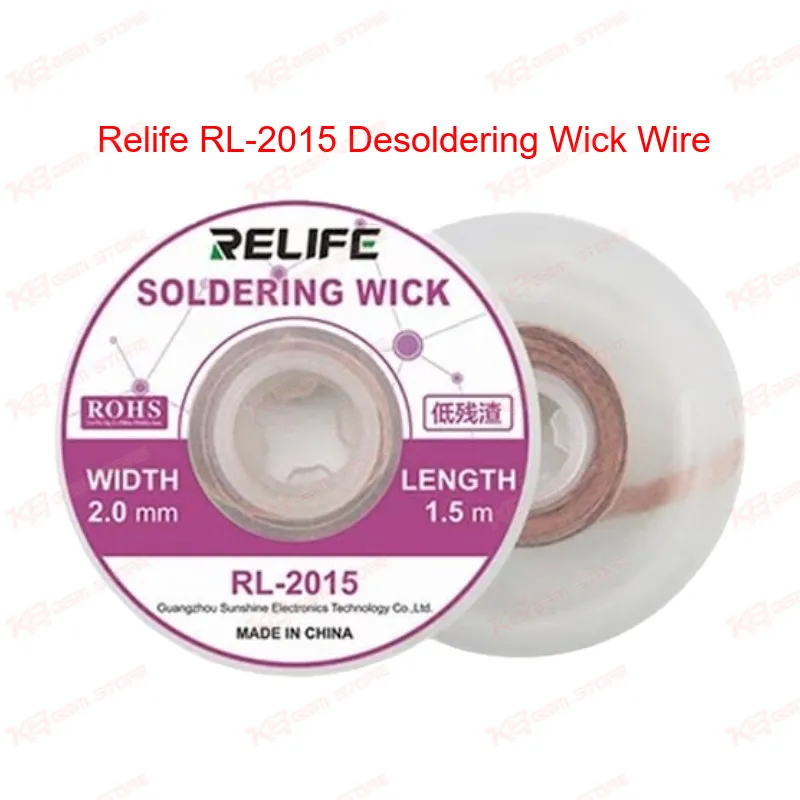
Removing excess solder cleanly is one of the most repetitive tasks on a mobile repair bench, and the tool you use for it directly affects how safe the board stays afterward. The Relife RL-2015 Desoldering Wick handles this job with a 2.0mm wide, 1.5-meter long braid made from pure oxygen-free copper wire. This copper composition gives the wick strong capillary action, pulling molten solder up and away from pads, pins, and traces instead of leaving it pooled or bridged across nearby components. On a typical repair bench, dead phone diagnosis often leads straight to board-level work — an IC change, a jumper wire repair, or cleaning up a pad after a failed reballing attempt. In all these cases, leftover solder is the enemy. Bridged pins cause short circuits, uneven pads prevent proper IC reseating, and sloppy cleanup makes the next repair step harder than it needs to be. The RL-2015 addresses this directly with a low-residue design that lifts solder efficiently while minimizing the flux buildup left on the board surface. The wick's oxygen-free copper construction matters more than it might seem at first glance. Regular copper wire oxidizes faster, which reduces how well it wicks solder over time and can leave a dull, less predictable result. Oxygen-free copper resists this degradation, so the wick performs consistently from the first use to the last few centimeters of the spool. Technicians working through high repair volumes — where every desoldering pass needs to be fast and clean — benefit from that consistency, since it cuts down on rework and re-cleaning cycles. Width is another practical detail that affects usability. At 2.0mm, the RL-2015 sits in a comfortable middle range: wide enough to lift solder efficiently from IC pads and connector points, but narrow enough to work in tight spaces around densely packed components on modern smartphone motherboards. This makes it a good fit for charging port repair, display connector cleanup, and general board-level solder extraction where space around the target area is limited. Beyond IC and connector work, this wick is also useful for cleaning BGA thermal bonding pads before reballing, removing solder bridges after a failed jumper attempt, and general PCB maintenance during diagnostic teardown. Because it works with a standard soldering iron tip, there's no need for additional desoldering equipment or vacuum-based tools for smaller jobs — press the wick against the solder joint, apply heat through the iron, and let capillary action do the work as the copper braid absorbs the melted solder. Handling matters here too. Only the grip section of the wick pack should be touched during use, since the working end heats up quickly once it contacts a soldering iron tip. Keeping the wick and iron away from combustible materials or explosive environments is standard practice, and applying gentle pressure rather than forcing the tip against the wick protects both the tool and the board underneath it. For a repair shop running through dozens of boards a week, a reliable desoldering wick isn't a luxury item — it's part of what keeps board-level repair fast, clean, and repeatable. The Relife RL-2015 fits into that workflow as a straightforward, dependable consumable that does its one job well: lifting solder cleanly without adding new problems to the board.