


Brand:
RELIFE
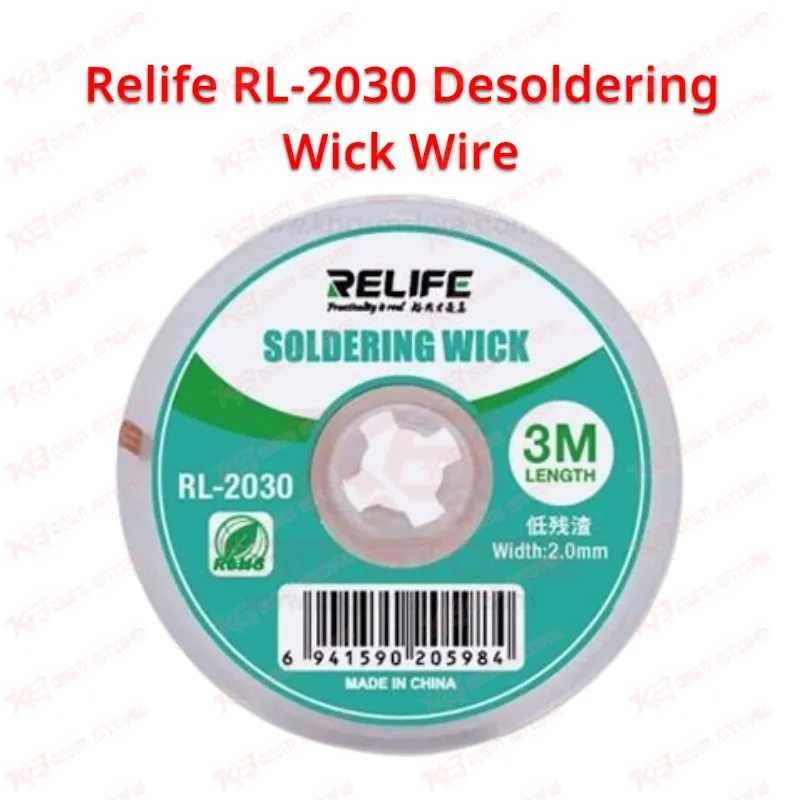
Relife RL-2030 Desoldering Wick Wire
Relife RL-2030 Desoldering Wick Wire
Regular price
Rs.1.00 PKR
Regular price
Sale price
Rs.1.00 PKR
Shipping calculated at checkout.
Quantity
Couldn't load pickup availability
The Relife RL-2030 desoldering wick gives you a 2.0mm wide, 3-meter copper braid built for clean, fast tin removal on mobile mainboards and PCBs. Made from refined pure copper with a special chemical formula, it resists oxidation and corrosion while pulling solder off pads quickly. Fast heat conduction means less time with your iron sitting on the board, so you cut the risk of lifting pads or damaging nearby components. It's a straightforward bench consumable every GSM technician keeps within reach — for IC removal, board cleaning, and general rework where you need the joint clean before you move to the next step.
SKU:MST-SOLDERING-ACCESSORIES-300
⚖️ Weight: 0.01 kg
- Safe & Secure Payment
- Fast Delivery
- WhatsApp Support


Description
FAQ
What is the product name?
The product name is Relife RL-2030 Desoldering Wick Wire.
What is the brand of this product?
The brand of this product is RELIFE.
What is the model of this product?
The model of this product is RL-2030.
What is this product used for?
This product is used for removing excess solder from PCB pads and mobile mainboards during IC removal, board cleaning, and general rework.
Which devices are compatible with this product?
This product is universal and works on any mobile phone, tablet, or PCB mainboard — it's not tied to a specific brand or chipset.
Who should use this product?
This product is suitable for mobile repair technicians, repair shops, service centers, and professional users.
What is the wire width and length of the RL-2030 desoldering wick?
The RL-2030 has a 2.0mm width braid and comes on a 3-meter length spool.
Is the RL-2030 suitable for IC removal on mobile mainboards?
Yes, the 2.0mm width fits IC pad clusters and general mainboard footprints, and the fast heat conduction keeps iron dwell time low to protect the board.