


Brand:
RELIFE
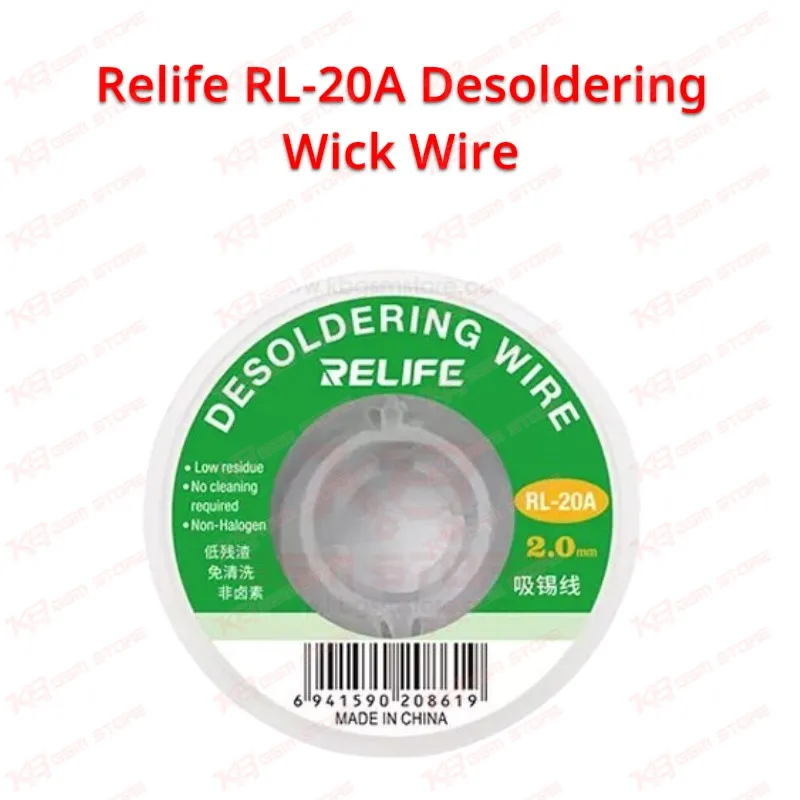
Relife RL-20A Desoldering Wick Wire
Relife RL-20A Desoldering Wick Wire
Regular price
Rs.180.00 PKR
Regular price
Sale price
Rs.180.00 PKR
Shipping calculated at checkout.
Quantity
Couldn't load pickup availability
The Relife RL-20A desoldering wick pulls molten solder off mobile PCBs fast, and it leaves almost no residue behind on the board. You get a 2.0mm pure copper braid built for tight spots around ICs, connectors, and charging ports where a bulky iron tip cannot reach cleanly. Technicians use it daily for IC removal, jumper cleanup, and pad prep before reballing. The no-clean flux coating means you skip the extra cleaning step after desoldering, so your repair bench moves faster. Pack it next to your hot air station and soldering iron as a core consumable for board-level mobile repair work in your workshop.
SKU:MST-SOLDERING-ACCESSORIES-299
⚖️ Weight: 0.02 kg
- Safe & Secure Payment
- Fast Delivery
- WhatsApp Support


Description
FAQ
What is the product name?
The product name is Relife RL-20A Desoldering Wick Wire.
What is the brand of this product?
The brand of this product is RELIFE.
What is the model of this product?
The model of this product is RL-20A.
What is this product used for?
This product is used for removing excess solder from mobile phone PCBs during IC removal, reballing prep, and board cleaning.
Which devices are compatible with this product?
This product works on any mobile phone motherboard or PCB and is not limited to a specific device or brand.
Who should use this product?
This product is suitable for mobile repair technicians, repair shops, service centers, and professional PCB rework users.
Does this wick leave residue that needs cleaning after use?
No, the RL-20A carries a low residue, no-clean flux coating, so pads stay clean without a separate alcohol wipe step.
Is the 2.0mm width suitable for BGA IC pad cleanup?
Yes, 2.0mm width fits standard IC and BGA footprints found on phone motherboards, giving enough coverage for pad cleanup without overlapping neighboring pins.