


Brand:
RELIFE
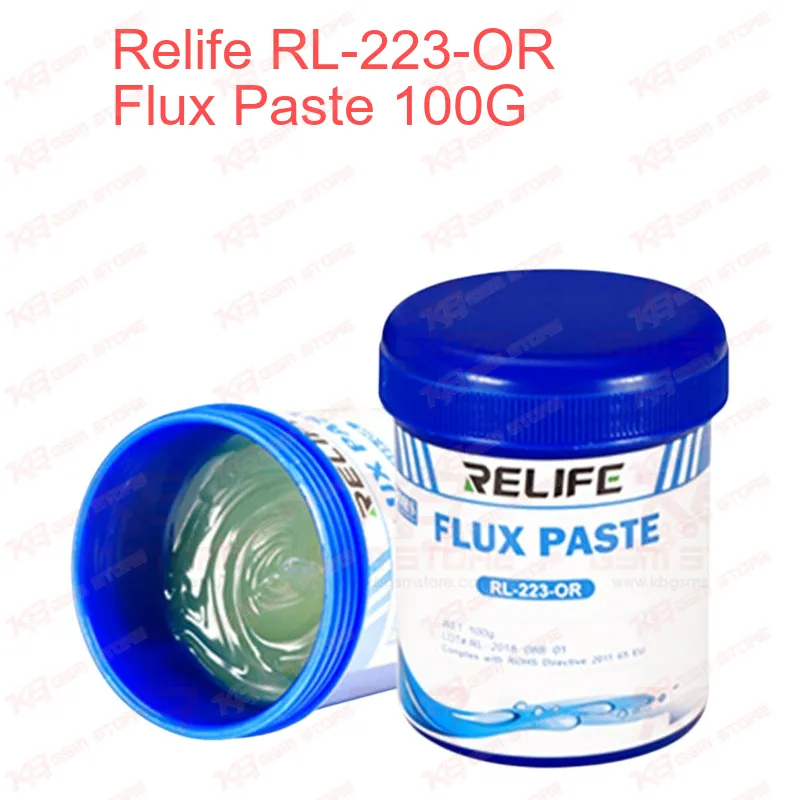
Relife RL-223-OR Flux Paste 100G
Relife RL-223-OR Flux Paste 100G
Regular price
Rs.2,000.00 PKR
Regular price
Sale price
Rs.2,000.00 PKR
Shipping calculated at checkout.
Quantity
Couldn't load pickup availability
RELIFE RL-223-OR is a lead-free flux paste built for BGA, PGA and SMD rework on mobile phone mainboards. Made from imported Japanese rosin, it gives you high viscosity, strong activity, and smooth tinning with minimal smoke. Technicians use it for IC reballing, chip soldering, and general PCB rework where a clean, no-residue finish matters. The 100g pack runs the whole workshop day without frequent refills, and the halogen-free formula keeps your bench safer during long repair sessions. If you handle dead phone boards, IC change, or reballing jobs daily, this paste holds up under repeated use.
SKU:MST-SOLDERING-ACCESSORIES-562
⚖️ Weight: 0.3 kg
- Safe & Secure Payment
- Fast Delivery
- WhatsApp Support


Description
FAQ
What is the product name?
The product name is RELIFE RL-223-OR Flux Paste 100g.
What is the brand of this product?
The brand of this product is RELIFE.
What is the model of this product?
The model of this product is RL-223-OR.
What is this product used for?
This product is used for BGA, PGA, and SMD soldering and reballing on mobile phone mainboards.
Which devices are compatible with this product?
This product works as a universal soldering flux across all mobile mainboards, including Qualcomm and MediaTek chipset boards.
Who should use this product?
This product is suitable for mobile repair technicians, GSM software technicians, repair shop owners, and professional service centers.
Does this flux paste work for CPU and EMMC reballing on dead phone boards?
Yes, RL-223-OR is formulated for BGA and CPU reballing work, including EMMC and PMIC IC reflow on dead phone boards.
Is RL-223-OR safe to use on tight-pitch ICs without bridging solder balls?
Yes, the paste's controlled viscosity holds solder balls in place during reflow, reducing bridging risk on fine-pitch 0.4mm and 0.35mm IC pads.