


Brand:
RELIFE
Relife RL-3015 Desoldering Wick Wire
Relife RL-3015 Desoldering Wick Wire
Regular price
Rs.300.00 PKR
Regular price
Sale price
Rs.300.00 PKR
Shipping calculated at checkout.
Quantity
Couldn't load pickup availability
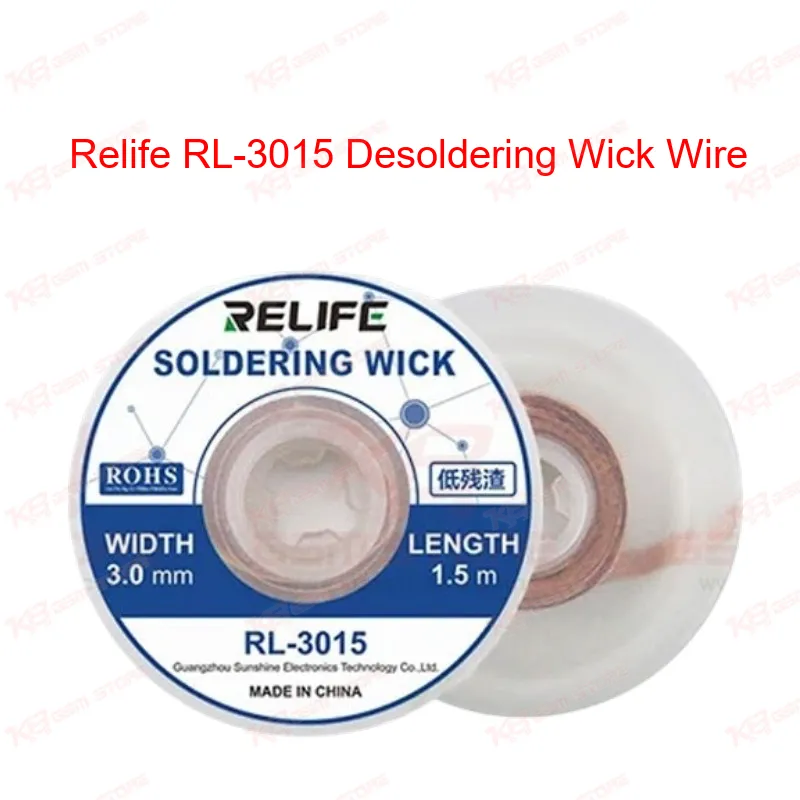
The Relife RL-3015 desoldering wick removes excess solder cleanly from mobile PCB boards during IC change, jumper lagana, and reballing jobs. Woven from oxygen-free copper wire and coated with no-clean flux, this 3.0mm wide, 1.5m long braid lifts solder fast without damaging pads or tracks. Technicians use it daily on the repair bench for cleaning solder joints before hardware fault diagnosis, board-level repair, and component replacement. It works with any soldering iron or hot air station and suits both beginner and professional GSM workshops looking for a reliable, low-residue desoldering solution.
SKU:MST-SOLDERING-ACCESSORIES-40
⚖️ Weight: 0.09 kg
- Safe & Secure Payment
- Fast Delivery
- WhatsApp Support


Description
FAQ
What is the product name?
The product name is Relife RL-3015 Desoldering Wick Wire.
What is the brand of this product?
The brand of this product is Relife.
What is the model of this product?
The model of this product is RL-3015.
What is this product used for?
This product is used for removing excess solder from PCB pads, connector pins, and component legs during board-level repair.
Which devices are compatible with this product?
This product is compatible with any mobile phone or PCB motherboard, since it works as a universal solder-removal consumable rather than a device-specific tool.
Who should use this product?
This product is suitable for mobile repair technicians, repair shops, service centers, and professional users.
Does the RL-3015 width work for both SMD components and larger connector pins?
Yes, at 3.0mm width, this wick handles medium-to-large solder joints such as connector pins and IC pads, though finer 1.5mm or 2.0mm widths suit denser SMD work better.
Will this wick leave flux residue that needs cleaning after use?
The no-clean flux coating leaves minimal residue, so most technicians can proceed directly to the next repair step without extra cleaning, though a quick isopropyl alcohol wipe is still good practice before soldering a new component.