


Brand:
RELIFE
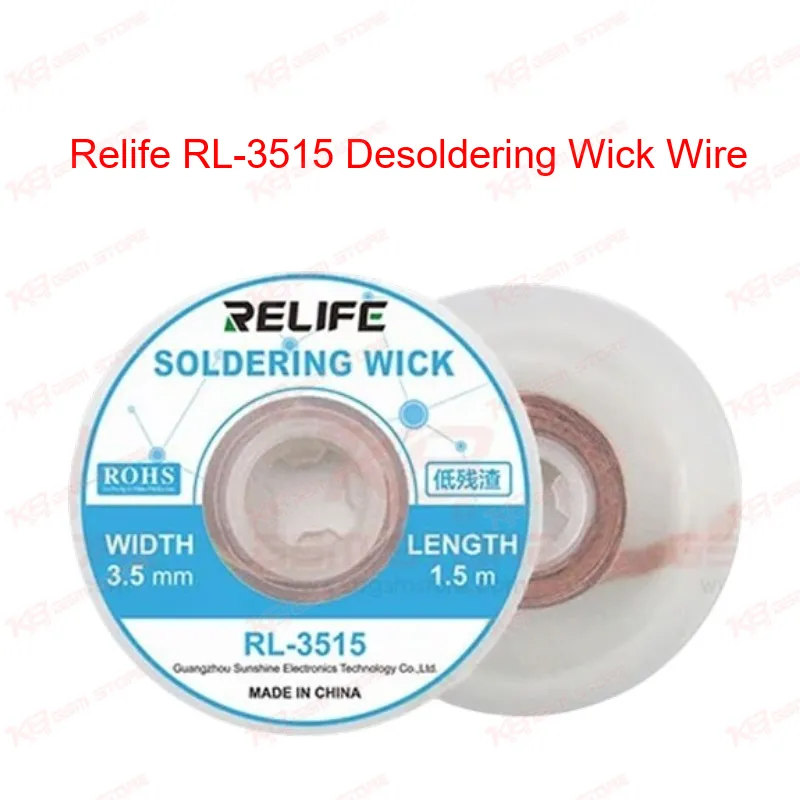
Relife RL-3515 Desoldering Wick Wire
Relife RL-3515 Desoldering Wick Wire
Regular price
Rs.1.00 PKR
Regular price
Sale price
Rs.1.00 PKR
Shipping calculated at checkout.
Quantity
Couldn't load pickup availability
The Relife RL-3515 is a 3.5mm wide, 1.5m long desoldering wick built from pure oxygen-free copper for fast, clean solder removal on mobile phone boards. It uses a unique weaving process that pulls excess tin off pads, pins, and BGA pads through strong capillary action. The no-clean flux formula leaves low, non-conductive residue behind, so you don't need extra cleaning steps after use. Technicians use it daily on the repair bench for IC change, board cleaning, and desoldering work where a clean pad is critical before rework or reballing.
SKU:MST-SOLDERING-ACCESSORIES-39
⚖️ Weight: 0.05 kg
- Safe & Secure Payment
- Fast Delivery
- WhatsApp Support


Description
FAQ
What is the product name?
The product name is Relife RL-3515 Desoldering Wick.
What is the brand of this product?
The brand of this product is RELIFE.
What is the model of this product?
The model of this product is RL-3515.
What is this product used for?
This product is used for removing excess solder from PCB pads, ICs, and connectors during mobile repair work.
Which devices are compatible with this product?
This product is universal and works on any mobile phone, tablet, or PCB board — it is not device-specific.
Who should use this product?
This product is suitable for mobile repair technicians, repair shops, service centers, and professional users.
Does this wick leave residue that needs cleaning?
No, the RL-3515 uses a no-clean, halide-free flux, so the residue left behind is non-conductive and doesn't require extra cleaning.
Is the 3.5mm width suitable for BGA reballing prep?
Yes, the 3.5mm width works well for clearing wider BGA pad clusters and connector footprints before reballing, though narrower widths like 1.5mm or 2.0mm give more control on single, tight pads.