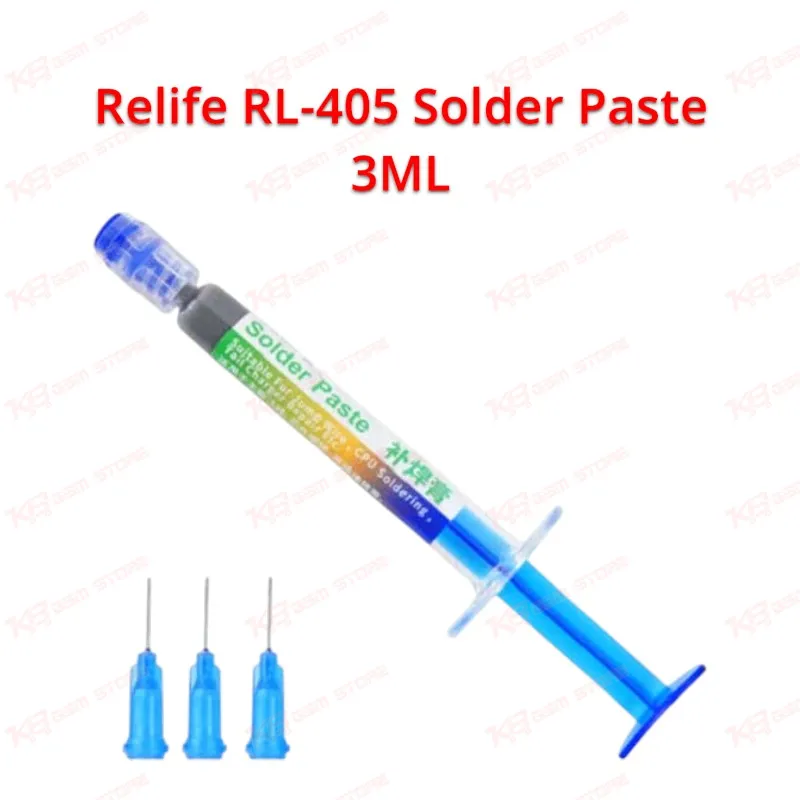
Solder paste quality directly decides whether a jump wire repair holds or fails within days, and the Relife RL-405 solves that problem with a formula built specifically for low-temperature, high-precision mobile repair work. You get a 138°C melting point, which sits well below standard lead-based paste, letting you rework CPU pads, tail charger ports, and FPC connectors without pushing heat into surrounding SMD components that can't handle a hard reflow. The paste is silver-free and shifts cleanly to the point of application, meaning it flows exactly where you place the needle rather than spreading across the board and contaminating nearby pads. This matters most on dense logic boards, where a stray blob of paste can bridge two IC legs and create a short that turns a simple charging issue into a full board-level dead phone. On your repair bench, you'll notice the tin plants without bubbling, which gives you a smoother, more reliable joint on the first attempt instead of forcing a rework because of pinholes or voids in the solder. The needle tube format is the real workflow advantage here. Instead of scooping paste with a spatula and guessing at quantity, you dispense a controlled amount directly onto the pad, cutting waste and keeping your work area clean, which matters when you're doing back-to-back jumper lagana jobs on multiple boards in a single shift. Each 3ML unit ships with three needles, so you're not stopping mid-job to swap tips or clean a clogged one. Technicians working ISP and UFS-related board repairs also use RL-405 for reattaching disconnected traces after a failed flash attempt, since a board that goes dead after flash often needs a fresh jumper wire soldered at a point too small for standard lead solder to handle cleanly. The lead-free composition is a practical safety upgrade too, reducing fume exposure during long soldering sessions, which adds up when you're running a hot air station and iron side by side for hours at a workshop. For hang on logo cases traced back to a cracked solder joint on the CPU or PMIC, this paste gives you enough control to touch up individual legs without reflowing the entire chip, saving time compared to a full IC change. Storage is straightforward: keep the syringe in a cool, dry place away from direct sunlight, and it holds its working consistency for extended shelf life, so a single order covers you through a busy repair season without spoilage concerns. Because the paste is universal in application rather than tied to one chipset or brand, it works the same whether you're jumpering a Qualcomm-based board, a MediaTek unit, or an iPhone logic board flying lead repair. Shops running high job volumes appreciate that consistency, since it removes the guesswork of matching paste type to device brand. Whether your bench handles network issue repairs that trace back to a broken antenna solder point, or you're doing routine board cleaning and reballing work, RL-405 fits into the same workflow you already use for hot air rework and manual iron soldering, making it a straightforward addition to a technician's existing toolkit rather than a specialty item reserved for rare jobs. For shops in Lahore, Karachi, and Islamabad handling steady walk-in repair traffic, having a dependable low-temperature paste on hand reduces the return-repair rate that comes from weak or bubbled solder joints, which directly protects your shop's reputation with regular customers.