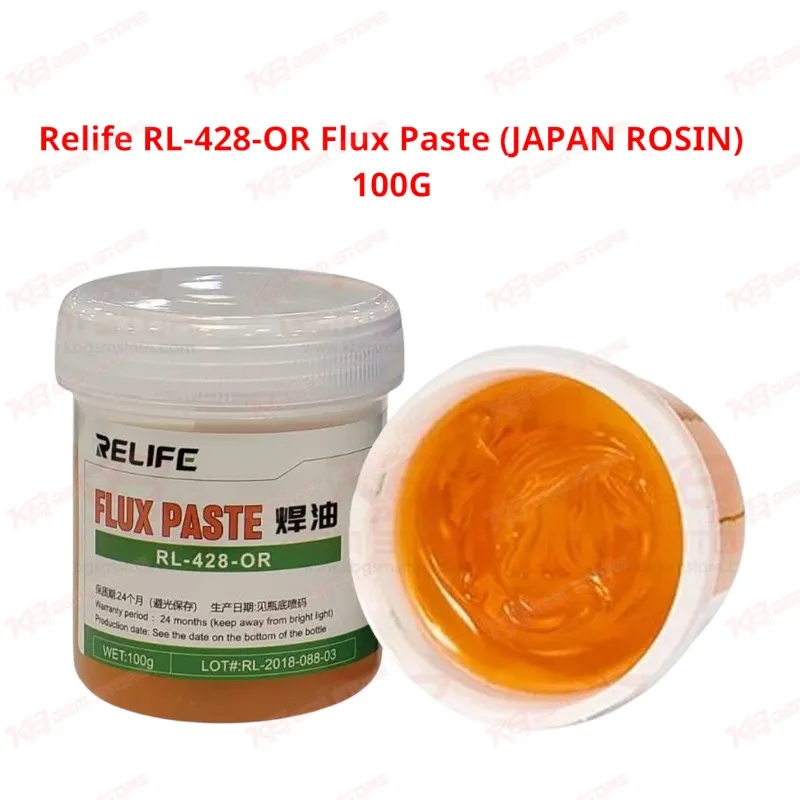
Flux quality decides how clean a reballing job comes out, and RELIFE RL-428-OR addresses that directly with imported Japanese rosin as its base. The rosin carries a pure, consistent color without impurities, so technicians see clean solder flow instead of the discoloration or grainy texture that comes from filler-heavy pastes. On a repair bench running back-to-back IC change jobs, that consistency saves time — you are not stopping to inspect every batch for quality drift. The paste has good activity paired with strong viscosity and fluidity. Activity determines how well the flux breaks down oxidation on pads and solder balls before reflow, and RL-428-OR keeps that activity level high enough for stubborn oxidized boards without becoming so aggressive that it damages surrounding components. The viscosity sits at a workable middle ground: thick enough to stay where you apply it during BGA reballing, yet fluid enough to spread evenly under hot air without pooling or dragging solder balls out of position. High insulation resistance is the property that matters most once the board is powered back on. Flux residue that conducts even slightly can cause a board to short, hang on logo, or develop an intermittent charging issue days after a repair. RL-428-OR is formulated to leave residue with strong insulation properties, reducing the risk of post-repair shorts on densely packed motherboards where trace spacing is already tight. This flux fits naturally into CPU repair, PMIC replacement, and NAND reballing workflows. During IC change, applying RL-428-OR before reflow helps solder balls seat evenly under the chip, which lowers the chance of cold joints that later cause boot loop or dead after flash symptoms. During board-level cleaning after a liquid damage repair, the halogen-free formula avoids introducing corrosive residue that would undermine the very cleaning process the technician just performed. Halogen-free formulation is not just an environmental checkbox — it directly protects the copper traces and pads on modern multilayer PCBs. Halogen-containing fluxes can leave behind chloride or bromide residue that slowly corrodes fine-pitch pads, which is a real risk on current-generation smartphone boards with tightly packed BGA footprints. RL-428-OR avoids that failure mode, making it a safer long-term choice for shops doing volume reballing work. Application is straightforward on any repair bench already set up for hot air rework. Technicians dip a probe or brush into the paste and apply a thin, even layer to the pad area or solder balls before positioning the chip under a hot air station or reballing platform. Because the paste holds its position without running, it works well alongside stencils and reballing jigs used for MediaTek, Qualcomm, and Apple-series board repairs. Each 100g container is sized for shop-level consumption rather than single-repair use, making it practical for service centers handling multiple boards per day. RELIFE ships every batch with QC sign-off and an inspection report, giving repair shop owners a documented basis for quality when sourcing consumables at scale. For technicians who depend on consistent solder joints to avoid repeat visits and warranty claims, a dependable rosin flux like this one is a basic requirement on the workbench, not an optional upgrade.