


Brand:
RELIFE
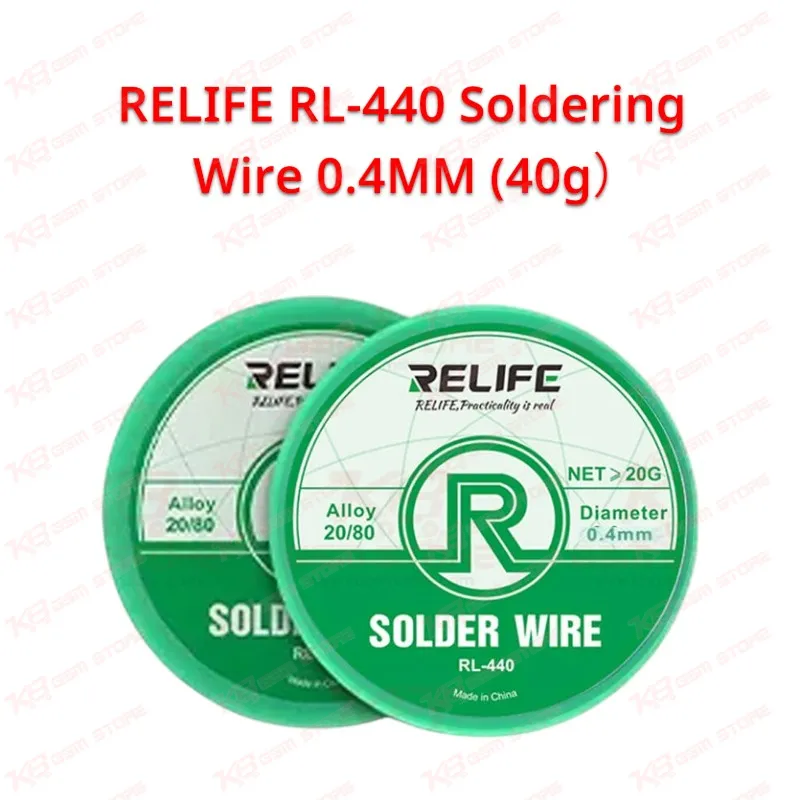
RELIFE RL-440 Soldering Wire 0.4MM (40g)
RELIFE RL-440 Soldering Wire 0.4MM (40g)
Regular price
Rs.450.00 PKR
Regular price
Sale price
Rs.450.00 PKR
Shipping calculated at checkout.
Quantity
Couldn't load pickup availability
The Relife RL-440 is a 0.4mm rosin core solder wire supplied in a 40g roll, built for board-level soldering on mobile phone motherboards and general electronic circuits. The Sn80/Pb20 alloy melts at a medium-low temperature, protecting delicate SMD components and IC pins from heat stress during rework. A built-in rosin flux core removes oxide film from pads and pins as you solder, producing bright, smooth joints without applying separate flux. Technicians use it for jumper wires, IC reballing prep, connector repair, and daily bench soldering where a fine, controllable wire diameter matters most.
SKU:MST-SOLDERING-ACCESSORIES-426
⚖️ Weight: 0.06 kg
- Safe & Secure Payment
- Fast Delivery
- WhatsApp Support


Description
FAQ
What is the product name?
The product name is Relife RL-440 Rosin Core Soldering Wire 0.4mm 40g.
What is the brand of this product?
The brand of this product is Relife.
What is the model of this product?
The model is RL-440.
What is this product used for?
This product is used for board-level soldering, desoldering, and rework on mobile phone motherboards and general electronic circuits.
Which devices are compatible with this product?
This product is compatible with mobile phone PCBs and motherboards across brands, since it is a universal soldering consumable rather than a device-specific tool.
Who should use this product?
This product is suitable for mobile repair technicians, repair shops, service centers, and professional electronics repair users.
Does the Relife RL-440 solder wire require separate flux during soldering?
No, the wire has a built-in rosin flux core that releases automatically as it melts, so technicians can solder directly without applying separate flux.
Is the 0.4mm RL-440 wire suitable for fine-pitch work like IC pins and jumper wires?
Yes, the 0.4mm diameter is sized for precision work such as IC pin resoldering, jumper wires, and small SMD component joints on mobile phone boards.