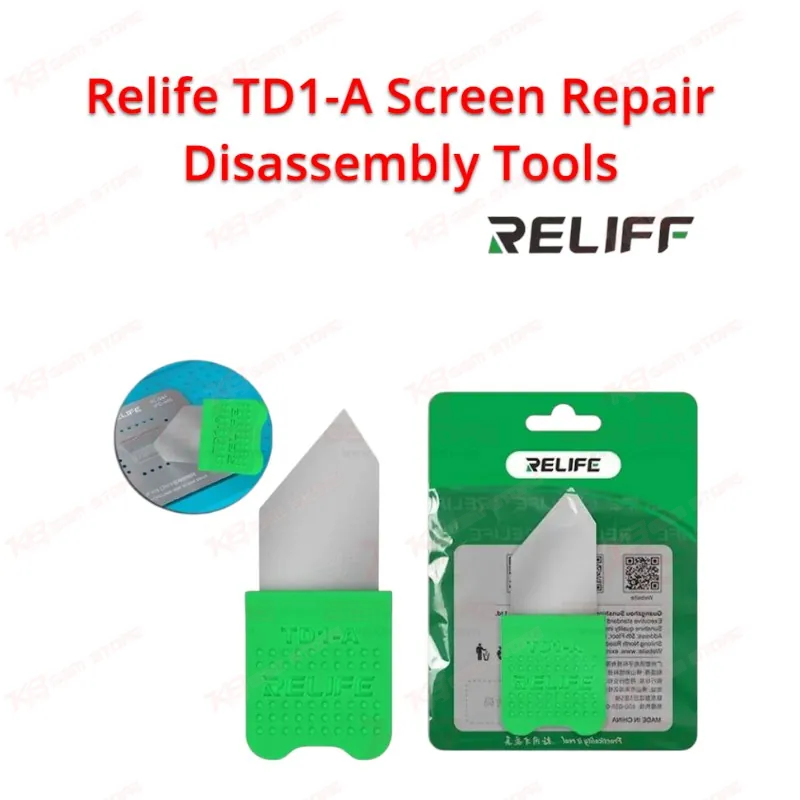
Screen separation is one of the most repeated tasks on a repair bench, and the tool you use for it decides whether the job goes smoothly or ends with a cracked frame and a customer complaint. The RELIFE TD1-A is built specifically for this job, combining a slim high-toughness steel blade with a silicone-wrapped grip that stays comfortable through long shifts of disassembly work. The steel used in the blade is selected for high rebound strength, so it flexes under prying pressure instead of bending permanently or snapping mid-job, which matters when you are working through a stack of dead phones with stuck adhesive on the screen. The blade edge carries a rounded profile rather than a sharp cutting edge, which lets you slide it between the display and the frame without gouging the chassis or scratching the mid-frame, a common issue with cheaper pry tools that leave visible marks on resale-grade units. The concave and convex texture on the silicone handle gives you a stable hold even when your hands are covered in flux residue or light sweat, and it absorbs some of the shock transmitted back through the blade when you hit a stubborn adhesive point, reducing hand fatigue over a full day of screen replacements. Technicians handling dead after flash cases, cracked display swaps, or battery replacements that require frame separation will find the thin profile useful for getting under tightly bonded panels without forcing the gap wider than necessary, which helps preserve the frame for reuse or resale. Beyond screen and frame separation, the same blade doubles as a multi-angle tinning tool, letting you scrape old solder off chip and CPU pads at different angles before reballing or IC change work, which cuts down on the number of separate tools you need to keep on the bench for board-level jobs. This crossover between screen disassembly and tinning work is where the TD1-A earns its place next to your hot air station and reballing kit rather than sitting in a drawer used only for one task. The tool fits naturally into a standard mobile repair workflow: after diagnosing a display problem or hang on logo issue, you reach for the TD1-A to open the unit cleanly, separate the screen or back glass without cracking it further, and if the fault traces back to a board-level IC, the same blade helps with tin scraping during the rework stage. For repair shop owners managing multiple technicians, having a consistent, reliable prying tool reduces the frame and glass breakage that eats into repair margins, since a bent or overly sharp blade often causes more collateral damage than the original crack it was meant to fix. The compact size of the TD1-A also means it stores easily in a tool roll or drawer without adding bulk, and its build quality holds up under the kind of repeated daily use that wears out plastic-only spudgers within weeks. Whether you run a single-technician workshop or a multi-bench service center, this tool addresses a task every phone and tablet repair job eventually requires, making it a practical rather than optional purchase for anyone doing hands-on hardware repair.