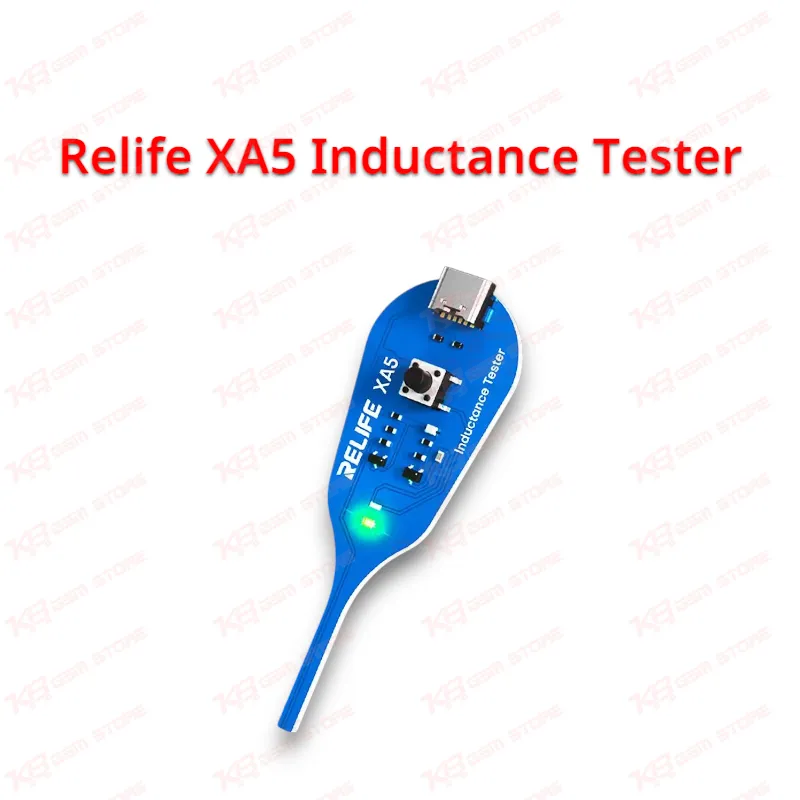
When a phone comes into the shop dead after flash or stuck in a boot loop, chasing down a faulty inductor by eye or with a multimeter wastes valuable bench time, and this is exactly the gap the RELIFE XA5 Inductance Tester is built to close by letting you scan a motherboard's inductors non-invasively and get a direct visual answer instead of guessing which coil is bad. The tool works on electromagnetic induction principles, meaning you place it near an inductor on the PCB without touching pads, lifting components, or applying jumper wires, and it reads the coil's electromagnetic response to determine whether the inductor is operating within normal parameters. A green light activates the moment the RELIFE XA5 Inductance Tester detects a healthy inductor, so hardware fault isolation on a mobile phone board becomes a matter of moving the tester across suspect components rather than pulling and testing each part individually on a bench meter. This non-contact approach protects fragile PCB pads from repeated probing damage, which matters when you are working through repeated hardware fault diagnosis on the same board and cannot afford to weaken solder points or lift traces during testing. Power comes through a Type-C connection, so you plug the tester into a USB power adapter, power bank, or a computer USB port and it is ready to work immediately, with no drivers, software installation, or calibration routine standing between you and the diagnosis. That plug-and-play design keeps the RELIFE XA5 Inductance Tester practical for shops running multiple repair stations, since any technician can pick it up, connect it, and start scanning a board within seconds. At 76×27×6mm, the tester is small enough to sit inside a tool pouch or a drawer compartment, and its compact shape means you can maneuver it into tight areas around a crowded motherboard where larger diagnostic equipment cannot reach. Strong stability during repeated use is a core design goal, so the readings stay consistent whether you are checking one board or running through a stack of dead units during a busy diagnostic session. In a typical repair workflow, you would reach for the RELIFE XA5 Inductance Tester after basic power-on checks rule out an obvious short, using it to narrow down whether a charging issue, display problem, or hang-on-logo symptom traces back to a failed power or signal inductor before committing to a full IC change or reballing job. This makes it a strong fit alongside ISP pinout tools, eMMC programmers, and hot air stations already on your bench, since inductance testing typically happens early in the diagnostic sequence, right after visual inspection and before board-level rework begins. For technicians who handle high volumes of dead phone repairs, network issue complaints, or FRP-related boards that also carry hardware symptoms, having a fast, non-destructive way to confirm or rule out inductor failure saves the disassembly time that would otherwise go into blind component swapping, and that time saved compounds across every board that passes through the shop.