


Brand:
RF4
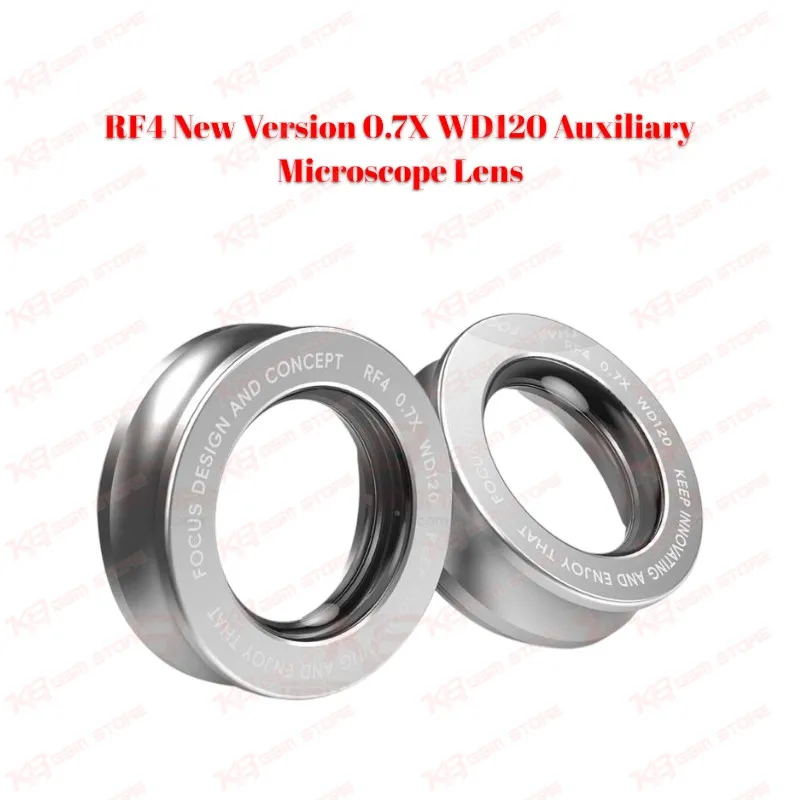
RF4 New Version 0.7X WD120 Auxiliary Microscope Lens
RF4 New Version 0.7X WD120 Auxiliary Microscope Lens
Regular price
Rs.1.00 PKR
Regular price
Sale price
Rs.1.00 PKR
Shipping calculated at checkout.
Quantity
Couldn't load pickup availability
The RF4 New Version 0.7X WD120 Auxiliary Microscope Lens screws onto the 48mm objective thread of your stereo zoom microscope and sets the working distance at 120mm. That extra clearance gives your soldering iron tip, hot air nozzle, and tweezers room to move under the scope without hitting the optics. The 0.7X Barlow design widens your field of view, so you see more of the motherboard while you remove ICs, reball chips, or trace a short. A metal housing with achromatic glass optics keeps the image clear and the lens durable on a busy repair bench.
⚖️ Weight: 0.15 kg
SKU:MST-MICROSCOPES-118
- Safe & Secure Payment
- Fast Delivery
- WhatsApp Support


Description
FAQ
What is the product name?
The product name is RF4 New Version 0.7X WD120 Auxiliary Microscope Lens.
What is the brand of this product?
The brand of this product is RF4.
What is the model of this product?
The model of this product is 0.7X WD120 (New Version).
What is this product used for?
This product is used for increasing the working distance and widening the field of view of a stereo zoom microscope during mobile phone and PCB repair.
Which devices are compatible with this product?
This product is compatible with binocular and trinocular stereo zoom microscopes that use a 48mm objective mounting thread.
Who should use this product?
This product is suitable for mobile repair technicians, repair shops, service centers, and professional users.
How does a 0.7X Barlow lens change my microscope's magnification?
It multiplies your existing magnification by 0.7, so a 7X–45X stereo microscope works at roughly 4.9X–31.5X with the lens fitted, giving you a wider view and more working distance.
What working distance does the 0.7X WD120 lens give for soldering and hot air work?
The lens sets a working distance of 120mm, which leaves enough space for soldering iron tips, hot air nozzles, and tweezers under the microscope.