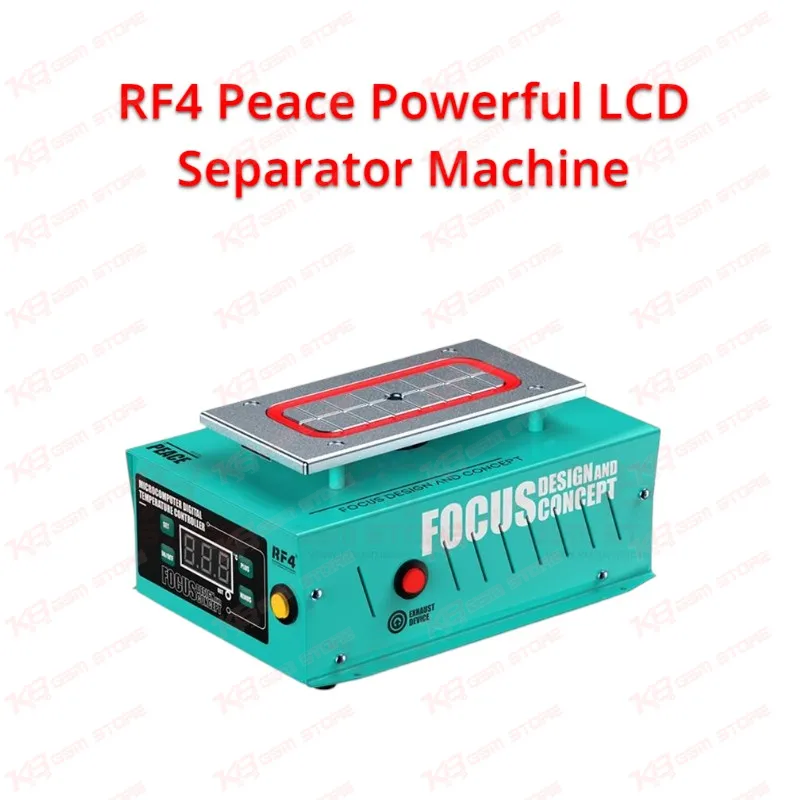
Screen refurbishment work in Pakistan moves fast, and the machine at the center of that work decides whether you finish a job in minutes or lose an expensive panel to slipping glass and an uneven cut. The RF4 Peace Powerful LCD Separator Machine gives your display bench a heated suction platform with its own built-in vacuum pump, so you separate cracked front glass from the LCD or touch panel without an external compressor, without clamps, and without the constant readjusting that ruins so many first attempts. RF4 builds this unit, model RF-PEACE, around a 7-inch working capacity, which covers the smartphones that come through a typical Pakistani repair shop every day, from compact iPhone models to large Samsung, Huawei and Xiaomi panels, along with smaller tablet-size assemblies that stay within that 7-inch limit. The core idea behind the Peace model sits in its bionic octopus-style suction cup surface. Instead of a flat rubber mat that grips only at the edges, the platform pulls the screen down across its whole face, so the assembly stays locked in place while you drag the cutting wire through the adhesive layer. That strong, even hold matters most at the exact moment the wire meets resistance: a weak vacuum lets the panel shift, the wire rides up into the display layer, and you end up with pressure marks, a torn polarizer or a dead line across the screen. The same suction surface conducts heat quickly into the glass, so the OCA glue softens evenly across the panel instead of staying hard at the corners and gummy in the middle. The heating side of the machine works on simple principles that every display technician already understands. You power on the unit, set the temperature, let the platform reach it, clean the broken glass surface, place the screen on the suction plate and switch on the vacuum. RF4 recommends around 80°C as the working temperature, and distributor guidance places the useful window between 80°C and 100°C; going higher gains you nothing and risks cooking the LCD, leaving black patches, a yellow tint or burnt spots that turn a simple glass change into a full display replacement. A short preheat of 10 to 20 seconds on the plate before cutting gives the adhesive time to release, and then you work the cutting wire slowly through the gap between the cover glass and the display, keeping the wire inside the glue layer the whole way across. Once the glass comes off, the vacuum exhaust system releases the panel cleanly. Older separators trap the screen under residual suction, and technicians end up prying the LCD off the plate with blades or cards, which bends flexible OLEDs and cracks thin LCDs at the flex end. The Peace model vents the vacuum when you finish, so you lift the display off the platform without force and move it straight to the glue removal stage. That one detail protects more panels over a month of daily work than almost any other feature on a separator. Safety and static protection round out the build. Distributor documentation describes an internal safety power system that guards against electric leakage, along with an anti-static body material that protects the LCD and its flex cable from static discharge during handling. For a shop running long hours on a shared bench, that means fewer mystery failures where a refurbished display tests fine on the machine but shows lines or no touch response after assembly. The machine accepts AC 110V to 220V input at 50Hz, so it runs directly on Pakistani mains supply without a step-down converter, and the built-in pump keeps operating noise low compared with setups that rely on a separate air compressor in the corner of the shop. Think about where the RF4 Peace Powerful LCD Separator Machine sits in the full display repair workflow. A customer walks in with shattered front glass but a working display underneath: touch still responds, the image still shows, and only the glass has failed. Replacing the whole combo costs far more than the customer wants to pay, especially on flagship Samsung and iPhone models. With this separator you remove the damaged glass, clean the old OCA off the panel, laminate new glass with fresh OCA, run the assembly through a bubble remover and send the phone out with its original display intact. That glass-only refurbishment path gives your shop a real price advantage and a higher margin per job, and it turns stacks of cracked but working displays into resalable refurbished stock. Technicians also rely on the heated vacuum platform to warm and hold panels while lifting old adhesive or preparing a screen for inspection when a customer reports a display problem, and a stable heated surface makes each of those steps cleaner than working with a loose heat gun. Your display bench rarely works alone. After separation you often move the phone to a hot air station for frame or connector rework, to a soldering station for flex connector or backlight line repair, and under a microscope to inspect the display connector pads for corrosion or broken traces. A good PCB holder keeps the board steady while you work, a multimeter confirms backlight voltage and connector continuity before you blame the new panel, and a reballing kit comes in when the fault traces back to an IC on the board rather than the screen itself. On the software side, the same shop that refurbishes glass usually runs test boxes, ISP pinout tools, eMMC programmers and UFS adapters for dead phone recovery, boot loop issues and phones that hang on logo, so the Peace fits into a complete service center setup rather than standing as a one-off gadget. If you currently separate screens on an older clamp-style machine, the upgrade comes down to control and consistency: stronger suction, even heat transfer and safe vacuum release cut the number of panels you lose per hundred jobs, and in display refurbishment that loss rate decides whether the work pays. A few practical habits get the most out of the machine. Keep the suction plate clean and free of glass dust and old glue, because any foreign particle breaks the vacuum seal and presses into the display from below. Place the screen flat and centered so the suction grips the full surface. Stay near the recommended temperature instead of pushing heat to speed things up, and let the preheat do its job before you start cutting. Use good-quality alloy cutting wire and replace it as soon as it frays, since a damaged wire snags inside the adhesive and drags on the polarizer. These habits cost nothing and protect every panel you put on the plate. For Pakistani repair shops, service centers and training institutes that handle daily glass changes, refurbishment batches and display diagnostics, the RF4 Peace Powerful LCD Separator Machine delivers what the job actually needs: a 7-inch heated platform, a built-in vacuum pump with strong and even hold, controlled temperature for LCD safety, clean release after separation and a mains-ready power supply. It turns cracked glass jobs into predictable, repeatable work, and it earns its place on any bench where screen repair brings in steady income.