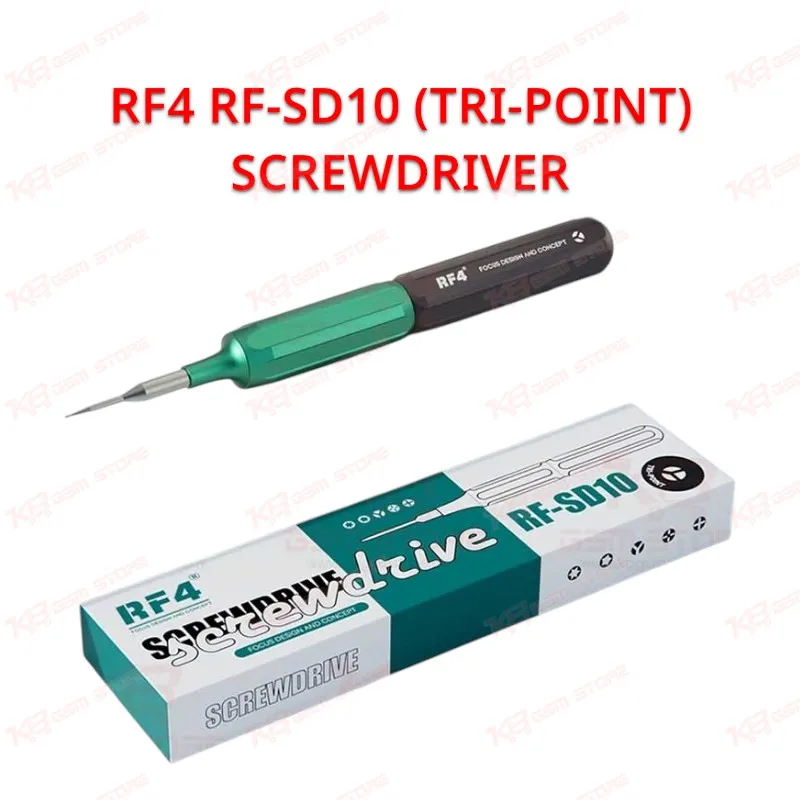
Tri-point screws show up constantly in modern device repair, and using the wrong tool on them strips the head fast, turning a simple screw removal into a frustrating extraction job. The RF4 RF-SD10 Tri-Point Screwdriver solves that with a precision-machined Y-shaped tip sized to match the tri-point screws found across smartphones, tablets, and laptops. You get a clean, tight fit on the screw head, so torque transfers directly into the screw instead of slipping and rounding it out. The bit is made from S2 steel, a tool steel known for holding an edge under repeated use. RF4 hardens this bit up to HRC 60, giving you a tip that resists wear even after hundreds of screw removals across your repair queue. S2 steel also carries better toughness than chromium molybdenum steel, so the tip absorbs stress from tight or corroded screws instead of chipping or snapping under pressure. That toughness translates into a longer service life on your bench, where a single screwdriver often gets used dozens of times a day. Magnetism matters more than most technicians expect when working with tri-point screws, since these fasteners are usually tiny and easy to lose inside a device chassis or drop onto a cluttered workbench. The RF-SD10 has a magnetized tip that holds the screw in place as you lift it out or lower it back into position, cutting down on the time you spend hunting for a screw that rolled off the desk mid-repair. Handle design plays a direct role in how much control you have during precision work. The RF-SD10 uses an embedded metal bearing inside the handle, letting it rotate 360 degrees smoothly while your fingers stay anchored in one position. This matters when you're working inside a tight device cavity where repositioning your hand mid-turn risks slipping the tip out of the screw head. The bearing keeps rotation silent and consistent, so you can drive screws in or out with steady, even pressure rather than jerky partial turns. The handle itself is built with a non-slip surface, which becomes important during longer repair sessions where hand fatigue and sweat can otherwise reduce your grip. Combined with the bearing-driven rotation, the design lets you maintain accuracy on repeated small-screw removal without straining your wrist or losing tip alignment on the screw head. This screwdriver fits naturally into everyday repair workflows. Technicians use it during back cover removal, battery connector screw extraction, and internal bracket disassembly on devices that use tri-point fasteners, most commonly seen on certain smartphone battery covers and select laptop chassis screws. Because it's a single-purpose precision tool rather than a bulky multi-bit driver, it's quick to grab mid-repair when you already know which screw type you're dealing with. For a repair shop or service center handling daily disassembly work, having a dedicated tri-point driver on hand means you're not forcing a Phillips or pentalobe bit into a screw head it wasn't designed for, a shortcut that damages screws and slows down reassembly. The RF-SD10 is a low-cost addition to your existing screwdriver set that closes that specific gap in bit coverage, and its build quality means it holds up under the volume of use a professional repair bench puts on hand tools.