Skip to product information
1 of 4
Brand: RF4

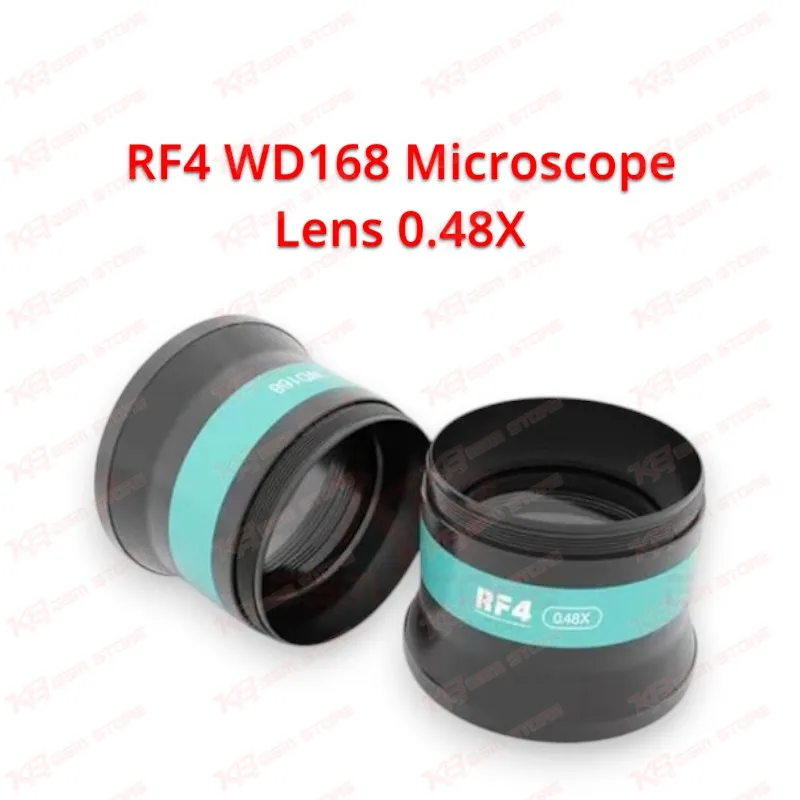
RF4 WD168 Microscope Lens 0.48X

RF4 WD168 Microscope Lens 0.48X

Regular price Rs.1.00 PKR
Regular price Sale price Rs.1.00 PKR
Sale Sold out
Shipping calculated at checkout.
Quantity

The RF4 WD168 Microscope Lens 0.48X is an achromatic auxiliary objective, commonly called a Barlow lens, that screws onto stereo zoom microscopes with a 48mm mounting thread. It scales your magnification to 0.48 times the scope's setting, widens the field of view, and extends the working distance to 168mm, giving you room to use hot air nozzles, soldering iron tips, and tweezers under the microscope without hitting the lens. A metal housing with glass optics delivers a clear, colour-accurate view for PMIC replacement, CPU reballing, jumper work, and short tracing on dead phone motherboards. It is a practical upgrade for Pakistani repair shops, service centers, and technicians who want more bench space from an existing microscope.

⚖️ Weight: 0.2 kg

SKU:MST-MICROSCOPES-132

  • Safe & Secure Payment
  • Fast Delivery
  • WhatsApp Support
View full details

Description

Every board-level technician knows the moment: the microscope shows a crisp view of a PMIC, but as soon as you bring a hot air nozzle or a soldering iron tip under the objective, the tool crowds the lens, flux smoke fogs the glass, and your hands have almost no room to move. The RF4 WD168 Microscope Lens 0.48X solves that exact problem on the repair bench. This auxiliary objective, known in the repair trade as a Barlow lens, screws onto the bottom of your stereo zoom microscope through a 48mm mounting thread and pushes the working distance out to 168mm. That extra gap between the objective and the PCB changes how you work. You can angle a hot air nozzle properly during IC removal, hold a soldering iron at a comfortable wrist position while you lay a jumper wire, and keep flux fumes and heat away from the main objective glass. The lens multiplies your microscope's magnification by 0.48, so a scope set at 10X gives you roughly 4.8X at the bench, and the field of view grows to around twice the width you had before. For a technician diagnosing a dead phone, that wider view matters: you see the whole charging circuit, the PMIC area, and the surrounding capacitors in one frame, then zoom in on the microscope to inspect a single cracked solder joint without swapping anything. The optical build pairs glass elements with a metal housing and an achromatic design, which keeps colour fringing under control so solder joints, corrosion marks, and burnt components look true to colour, an important detail when you judge whether a shorted capacitor shows heat damage or just leftover residue. Lower magnification also gives you more depth of field, which helps when you inspect stacked iPhone logic boards, underfill around a CPU, or the edge of an eMMC or UFS chip during reballing. Think about where this lens sits in a typical Pakistani repair shop workflow. A customer brings in a phone with a charging issue or a hang on logo complaint, and once the software side rules out a boot loop that flashing can fix, the fault moves to hardware. You mount the board in a PCB holder, check rails with a multimeter, locate the short, and then remove or replace the faulty component under the microscope. At each of those stages, the RF4 WD168 Microscope Lens 0.48X gives you a longer working distance and a broader view, so tool changes feel natural rather than cramped. Technicians who handle network issue repairs, where RF ICs and shielded sections need careful heat control, gain the room to position a hot air nozzle without touching the lens. The same benefit applies to display problem repairs involving backlight circuits and FPC connector rework. On a trinocular setup with a camera for recording or training, the lower magnification and wider field of view help you frame an entire board section for students or customers. This lens pairs naturally with other tools across the KB GSM Store catalog. If you already own one of our microscopes, the 0.48X lens extends its practical range without replacing the scope. Hot air stations and soldering stations become easier to use under it, reballing kits work better with the extra height for stencil alignment, and PCB holders keep the board steady at the new focal plane. When your repair moves into data recovery or chip-off work with eMMC programmers, UFS adapters, and ISP pinout tools, the wider view helps you trace test points and solder fine ISP wires with steady access, while test boxes and multimeters cover the diagnostic side before you pick up any rework tool. Keep in mind that the lens fits microscopes with a 48mm objective thread only, and that you need to refocus after installation because the focal distance shifts to about 168mm, so check your stand column or boom arm height range before you order. For shops that handle motherboard work every day, this upgrade offers one of the simplest ways to make an existing microscope more comfortable and more productive.

Key Features

  • Screws directly onto the microscope objective through a standard 48mm mounting thread, so installation takes seconds with no tools
  • Extends working distance to 168mm, giving hot air nozzles and soldering iron tips clear room under the objective
  • Scales magnification to 0.48X of your microscope setting for a wide overview of the motherboard
  • Roughly doubles the visible field of view, letting you see a full circuit section in one frame
  • Achromatic optical design keeps colour fringing low for accurate inspection of solder joints and heat damage
  • Metal housing with glass lens elements for long bench life
  • Keeps flux smoke and hot air further away from your main objective glass
  • Works on trinocular setups with cameras for recording, live streaming, and technician training

Specifications

Brand Entity RF4
Product Entity RF4 WD168 0.48X Auxiliary Objective (Barlow) Lens
Technology Entity Achromatic auxiliary objective optics, 48mm objective mounting thread, 168mm working distance
Compatible Device Entities Stereo zoom microscopes (binocular and trinocular) with 48mm objective thread
Repair Process Entity PCB inspection, BGA soldering, IC removal and replacement, CPU/eMMC/UFS reballing, jumper wire repair
Industry Entity Mobile phone board-level repair and electronics rework

Compatible Devices

  • Stereo zoom microscopes with a 48mm objective mounting thread
  • RF4 trinocular and binocular stereo zoom microscopes with 48mm objective thread
  • Universal for all phone brands under repair — not device-specific (the lens attaches to the microscope, not the phone)

Common Repair Uses

  • IC removal and replacement with hot air (PMIC, charging IC, audio IC, RF IC)
  • CPU, eMMC, and UFS reballing and stencil alignment
  • Jumper wire repair on broken traces and damaged pads
  • Short circuit tracing and capacitor replacement on dead phone boards
  • ISP test point soldering for data recovery and programming
  • Board inspection for corrosion, liquid damage, and cracked solder joints
  • Recording and teaching board repairs through a trinocular camera

FAQ

What is the product name?
The product name is RF4 WD168 Microscope Lens 0.48X.
What is the brand of this product?
The brand of this product is RF4.
What is the model of this product?
The model of this product is WD168 0.48X.
What is this product used for?
This product is used for extending the working distance and widening the field of view of a stereo zoom microscope during mobile phone PCB repair and soldering.
Which devices are compatible with this product?
This product is compatible with stereo zoom microscopes that use a 48mm objective mounting thread.
Who should use this product?
This product is suitable for mobile repair technicians, repair shops, service centers, and professional users.
How does the 0.48X lens change my microscope's magnification and working distance?
It multiplies your microscope's magnification by 0.48 and sets the working distance to 168mm. For example, a 7–45X zoom range becomes roughly 3.4–21.6X, with a much larger gap between the lens and the board.
Do I need to adjust my microscope after fitting the WD168 lens?
Yes. The focal plane moves to about 168mm, so you need to raise the microscope head on its stand or boom arm and refocus. Check that your stand has enough height range before installation.

Ask any Query