


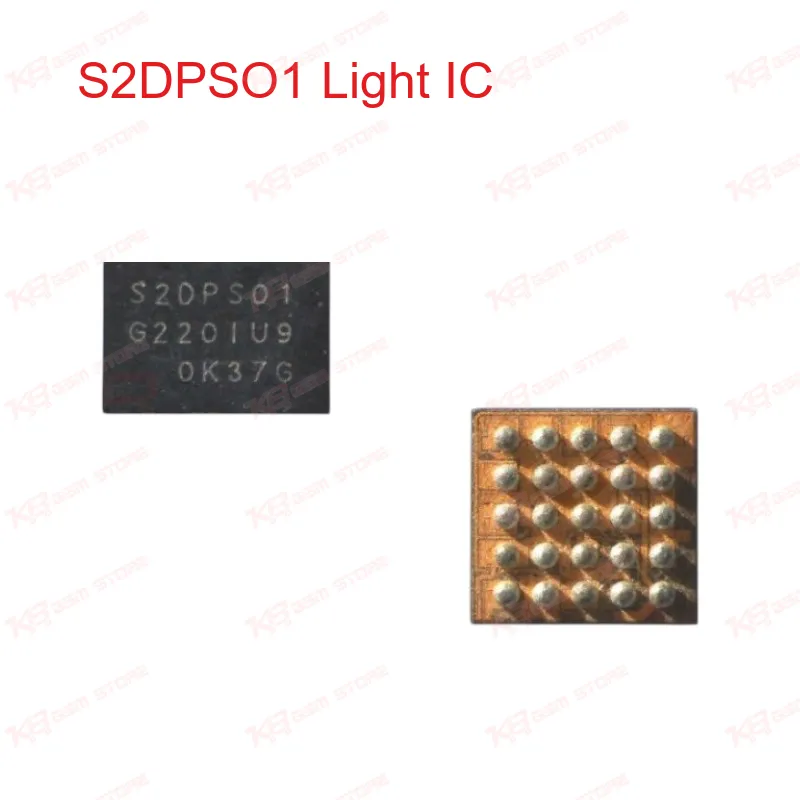
S2DPSO1 Light IC
S2DPSO1 Light IC
Regular price
Rs.350.00 PKR
Regular price
Sale price
Rs.350.00 PKR
Shipping calculated at checkout.
Quantity
Couldn't load pickup availability
The S2DPS01 Light IC is a BGA backlight driver chip used on multiple Samsung Galaxy boards to control display lighting. When a phone comes in with no backlight, dim display, or "display problem" after a drop or liquid damage, this IC is often the fault. It runs on a 1.0–6V supply range with 0.6W dissipation power, making it a compact, low-power component built for board-level rework. Technicians reballing or replacing this chip use it to restore normal screen brightness without swapping the full display module, saving both cost and repair time on the bench.
⚖️ Weight: 0.01 kg
SKU:MST-IC-384
- Safe & Secure Payment
- Fast Delivery
- WhatsApp Support


Description
FAQ
What is the product name?
The product name is S2DPS01 Light IC.
What is the brand of this product?
This IC is used on Samsung Galaxy boards.
What is the model of this product?
The model is S2DPS01.
What is this product used for?
It's used to control backlight power on the display circuit and is replaced when a phone shows no backlight or dim display.
Which devices are compatible with this product?
It's verified for use on Samsung Galaxy A-series boards including SM-A102, SM-A202, SM-A260, and SM-A260F.
Who should use this product?
This IC is suitable for mobile repair technicians, repair shops, service centers, and professional GSM technicians.
Does this IC need a specific hot air temperature for reballing?
Yes, use a controlled hot air rework station with a stencil matched to the BGA ball pitch, since overheating nearby components on Galaxy A-series boards is a common cause of repeat backlight faults.
Can a bad S2DPS01 IC cause "dead after flash" style symptoms?
Yes, if the panel tests fine on another board but backlight stays off after reflashing, the S2DPS01 is one of the first components to check before reballing the PMIC.