


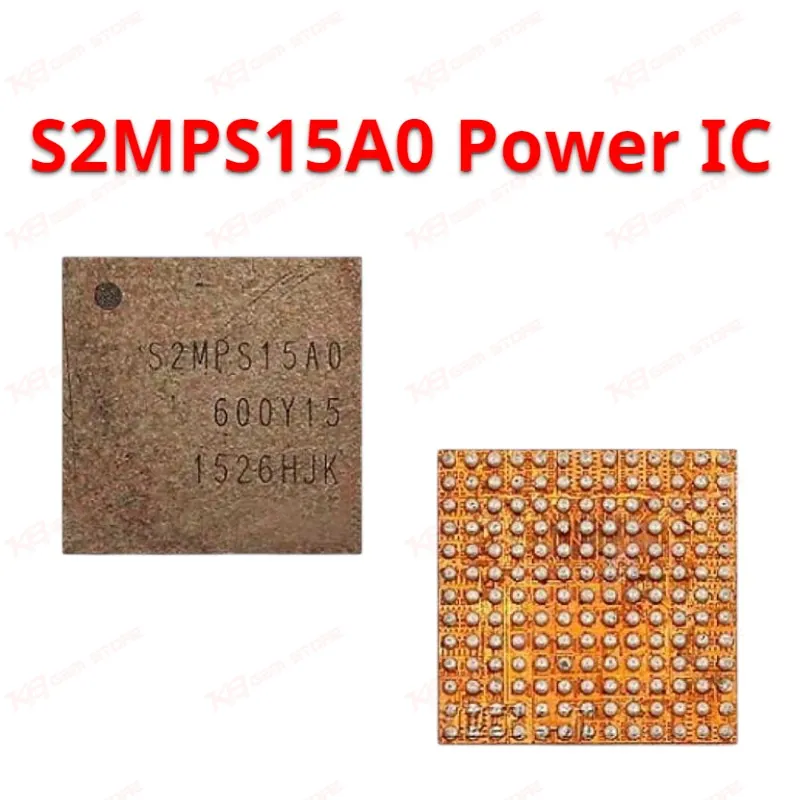
S2MPS15A0 Power IC
S2MPS15A0 Power IC
Regular price
Rs.450.00 PKR
Regular price
Sale price
Rs.450.00 PKR
Shipping calculated at checkout.
Quantity
Couldn't load pickup availability
The S2MPS15A0 is the main Power Management IC used on Samsung Galaxy S6, S6 Edge, S6 Edge Plus, and Note 5 board layouts. This BGA chip controls voltage regulation, battery charging, and power distribution across the motherboard. When a phone shows dead symptoms, no charging response, or hangs on logo after a board-level fault, this IC is one of the first suspects on the power rail. Suitable for GSM technicians doing board-level diagnosis, IC reballing, and power section repair on Samsung S6 series boards.
⚖️ Weight: 0.01 kg
SKU:MST-IC-146
- Safe & Secure Payment
- Fast Delivery
- WhatsApp Support


Description
FAQ
What is the product name?
The product name is S2MPS15A0 Power IC.
What is the brand of this product?
The brand of this product is Samsung.
What is the model of this product?
The model of this product is S2MPS15A0.
What is this product used for?
This product regulates voltage and manages battery charging on Samsung Galaxy S6-series motherboards.
Which devices are compatible with this product?
This IC is compatible with Samsung Galaxy S6, S6 Edge, S6 Edge Plus, and Galaxy Note 5.
Who should use this product?
This product is suitable for mobile repair technicians, repair shops, service centers, and professional board-level repair workers.
Does a dead Galaxy S6 always need this IC replaced?
Not always — check power rail readings and current draw first, since CPU or other board-level faults can cause identical dead symptoms.
Can this IC be installed without a hot air rework station?
No — this is a BGA component and needs a hot air station with proper reballing for a reliable installation.