


S537 Power IC
S537 Power IC
Regular price
Rs.250.00 PKR
Regular price
Sale price
Rs.250.00 PKR
Shipping calculated at checkout.
Quantity
Couldn't load pickup availability
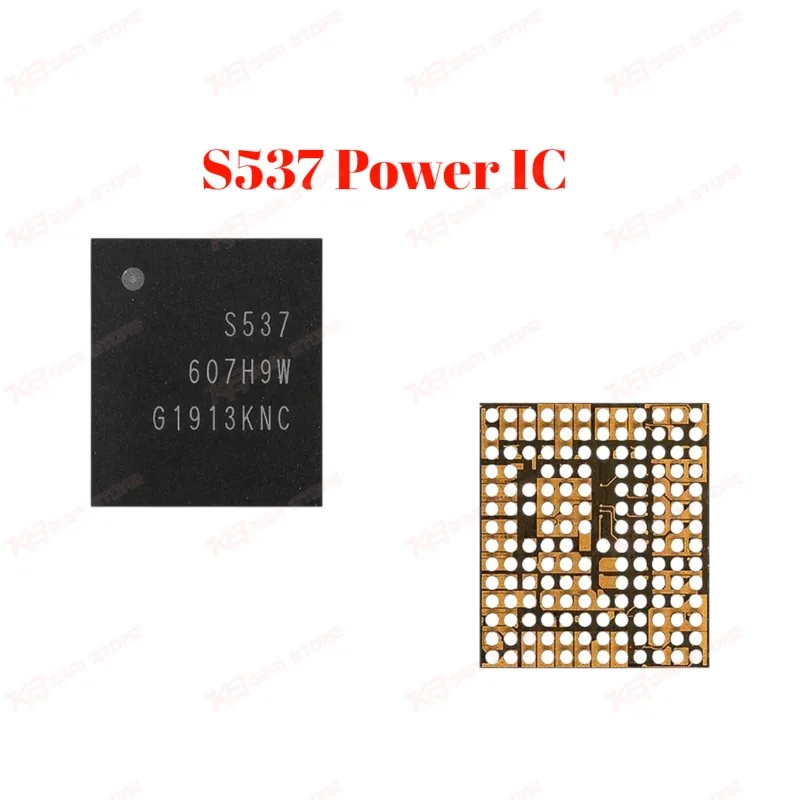
The S537 power supervisor IC, also marked 1203-009224, handles power distribution and supervisory functions on Samsung Galaxy motherboards. Technicians reach for this chip when a board shows dead symptoms, no power, or unstable boot behavior tied to the power rail. Built in a BGA package for direct motherboard reflow, it restores proper voltage sequencing across A-series and S10-series boards. A dead phone that won't power on despite a good battery and charging port often points straight to this IC. Stock this component if you handle Samsung hardware repairs regularly on your bench.
⚖️ Weight: 0.01 kg
SKU:MST-IC-94
- Safe & Secure Payment
- Fast Delivery
- WhatsApp Support


Description
FAQ
What is the product name?
The product name is the S537 Power Supervisor IC (1203-009224).
What is the brand of this product?
This IC is manufactured for Samsung Galaxy motherboards.
What is the model of this product?
The model number is S537, also marked 1203-009224.
What is this product used for?
It's used to restore power supervisor function on a dead or no-power Samsung motherboard.
Which devices are compatible with this product?
It fits Galaxy A50, A51, A60, A70, M21, M30, M30S, M31, M31S, Tab S6 Lite, and S10/S10+ boards.
Who should use this product?
Mobile repair technicians, GSM hardware engineers, and Samsung-focused repair shops.
Does this IC fix a phone that shows no signs of life?
Yes — when the battery and charging port test fine but the phone stays dead, this chip is the next check on A-series and S10-series boards.
Can this IC be reballed instead of bought pre-balled?
Yes, if you run a reballing station with a matching stencil, reballing this chip in-house is standard practice and cuts cost per repair.