


SDR845 Network/Frequency iC
SDR845 Network/Frequency iC
Regular price
Rs.250.00 PKR
Regular price
Sale price
Rs.250.00 PKR
Shipping calculated at checkout.
Quantity
Couldn't load pickup availability
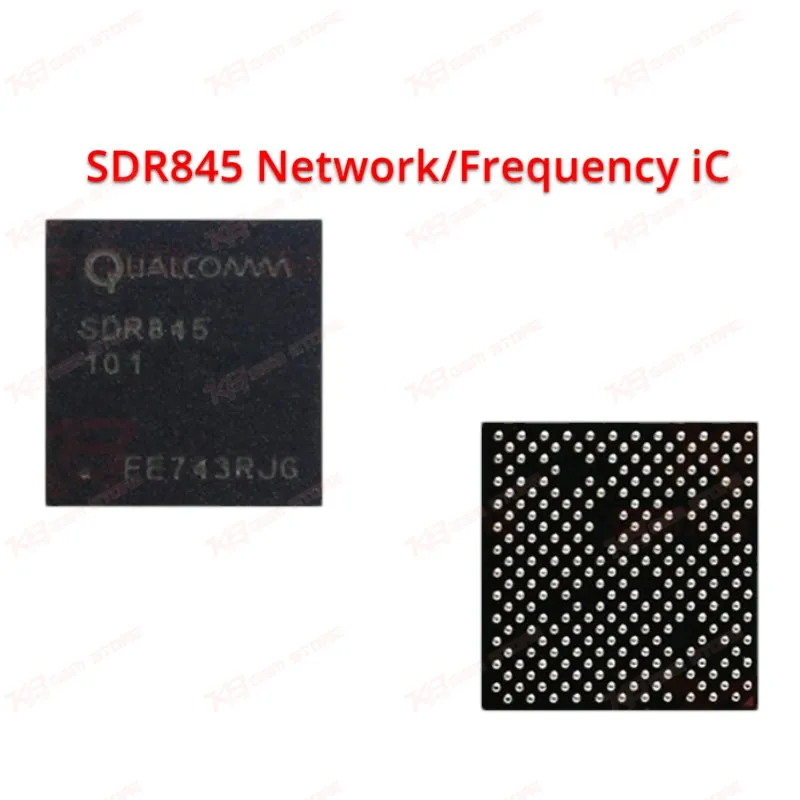
The SDR845-101 is the Qualcomm RF transceiver IC built for Snapdragon 845 (SDM845) powered smartphones. It handles the baseband-to-antenna RF signal path, controlling cellular network reception, signal strength, and modem connectivity on the board. Technicians reach for this IC when a Snapdragon 845 device shows no network, weak signal, or intermittent network drop that a software reset can't fix. Common in Samsung Galaxy S9/S9+, Note 8, Note 9, and Xiaomi Mi 8 boards, this BGA-packaged chip restores stable network function after IC-level board damage, moisture corrosion, or a failed reflow.
⚖️ Weight: 0.01 kg
SKU:MST-IC-345
- Safe & Secure Payment
- Fast Delivery
- WhatsApp Support


Description
FAQ
What is the product name?
The product name is SDR845-101 Network IC.
What is the brand of this product?
The brand of this product is Qualcomm.
What is the model of this product?
The model of this product is SDR845-101.
What is this product used for?
This product is used to repair no-network, weak signal, and network drop faults on Snapdragon 845 motherboards.
Which devices are compatible with this product?
This IC is compatible with Samsung Galaxy S9/S9+, Note 8, Note 9, Xiaomi Mi 8, and other Snapdragon 845 (SDM845) devices.
Who should use this product?
This product is suitable for mobile repair technicians, repair shops, service centers, and professional GSM technicians.
Does this IC fix no-network issues after liquid damage on Snapdragon 845 boards?
Yes, when the fault is confirmed at the RF transceiver stage rather than the antenna path or PA module, replacing this IC restores network function.
Can this IC be reballed using a standard hot air BGA station?
Yes, it uses a BGA package and can be reballed with a hot air station using controlled temperature profiling and matched solder ball size.