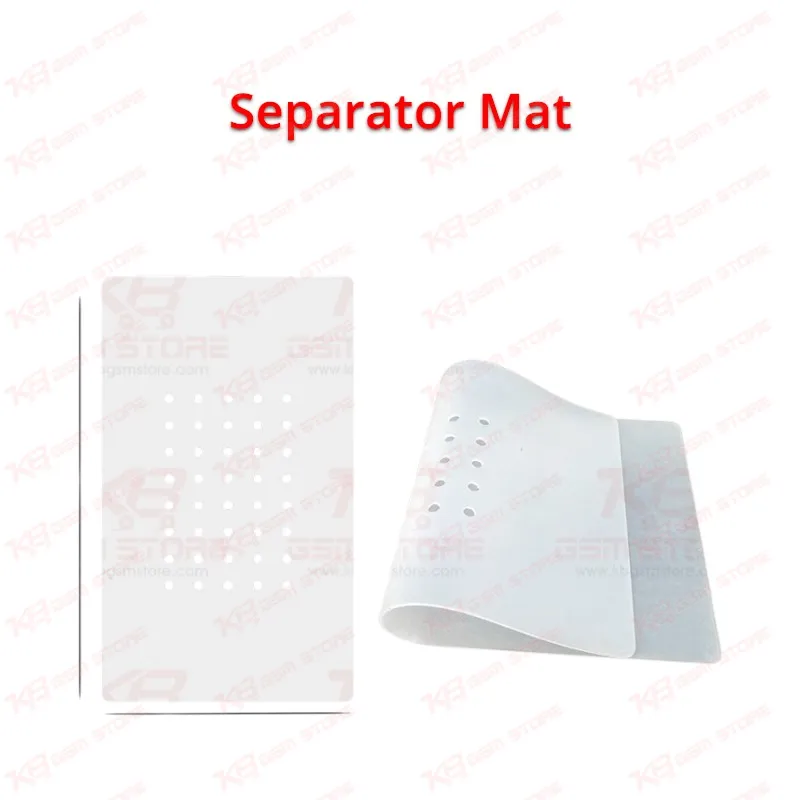
Screen separation is one of the most delicate stages in mobile repair, and the surface the display rests on during heating plays a direct role in how safely the job goes, which is exactly where the Separator Mat earns its place on the bench. Made from soft, heat-resistant silicone, this mat sits between the phone's glass or LCD panel and the heating plate of your separator machine, absorbing and distributing heat evenly so the OCA adhesive softens without creating hot spots that stress or crack the glass. Pakistani technicians dealing with dead phone screen jobs, hang on logo cases that need a board pull, or straightforward glass-only replacements all rely on a stable, non-slip surface during the heat soak stage, and this mat delivers exactly that grip without marking or scratching the display. The silicone material stays flexible even after repeated heating cycles, so it does not stiffen, crack, or lose its adsorption properties the way cheaper rubber substitutes do after a few uses. You place the device screen-down on the mat once the separator plate reaches the target temperature, typically in the 70–90°C range for most Android and iOS glass removal jobs, and the mat's surface holds the phone in place while you work a pry tool or separation wire around the edges to lift the glass away from the frame or LCD. Because the mat cushions the panel against the rigid heating plate, it reduces the chance of pressure cracks that often happen when glass sits directly on a hard metal surface during separation. This makes it a practical layer of protection for shops handling high volumes of screen replacement work, where one cracked LCD from a bare heating plate can wipe out the margin on several completed jobs. The mat's compact, low-profile design means it fits directly onto most 7-inch and 8-inch LCD separator machines without needing any adjustment, and its washable surface lets you wipe away adhesive residue or dust between jobs rather than replacing the mat outright. For technicians running glass-only repairs, OCA lamination prep, or LCD-to-frame separation on damaged units, having a dedicated silicone mat also keeps the main heating plate cleaner over time, since adhesive residue sticks to the mat instead of baking directly onto the machine's surface. This extends the working life of the separator machine itself and keeps heat transfer consistent job after job. The mat works as a companion accessory across ISP-based repair workflows too, since many boards pulled for jumper work or IC reballing come from phones that first needed screen separation to access the motherboard. In a busy repair shop, this kind of small but frequently used accessory often gets overlooked until it is missing, and a worn-out or missing mat leads to inconsistent heat distribution, slower separation times, and a higher risk of damaging an otherwise repairable screen. Stocking a reliable separator mat as a standard consumable on the bench keeps screen removal jobs predictable, protects your inventory of glass and LCD stock, and reduces the rework that comes from avoidable cracks during the heating stage. Whether you run a single-technician repair counter or a full-service center processing dozens of screen jobs a week, this mat is one of those small tools that directly affects your first-time success rate on glass separation work.