


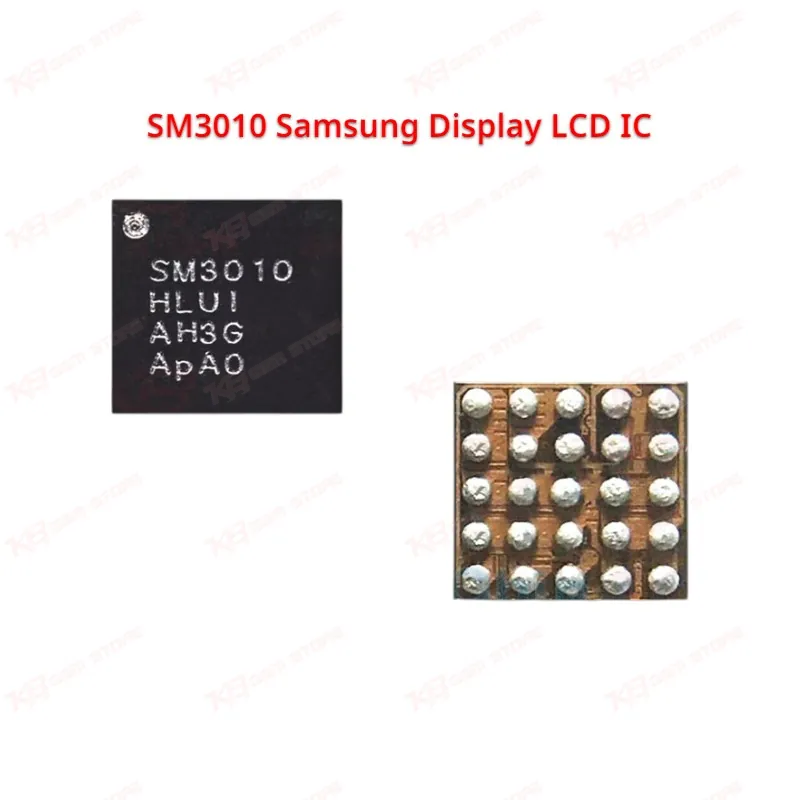
SM3010 Samsung Display LCD IC – Compatible with S10, A10,A50
SM3010 Samsung Display LCD IC – Compatible with S10, A10,A50
Regular price
Rs.150.00 PKR
Regular price
Sale price
Rs.150.00 PKR
Shipping calculated at checkout.
Quantity
Couldn't load pickup availability
The SM3010 is the display power IC used on Samsung Galaxy S10, S10+, A10, A30, and A50 boards. Technicians commonly call it the "light IC" because it controls power delivery to the display module. When a board shows a white screen, blank display, backlight failure, or flickering after a drop or short, this chip is the usual suspect. It's a surface-mount part that goes straight onto the motherboard with a hot air station and microscope. Stock this one if you handle Samsung board-level repair — it comes up often on S10 and A-series units brought in for dead-display complaints.
⚖️ Weight: 0.01 kg
SKU:MST-IC-122
- Safe & Secure Payment
- Fast Delivery
- WhatsApp Support


Description
FAQ
What is the product name?
The product name is SM3010 Samsung Display LCD IC.
What is the model of this product?
The model is SM3010.
What is this product used for?
It replaces the faulty display power IC on affected Samsung boards, fixing white screen, blank display, and backlight faults.
Which devices are compatible with this product?
It fits Samsung Galaxy S10, S10+, A10, A30, and A50.
Who should use this product?
Mobile repair technicians, board-level repair shops, and Samsung service centers handling display power faults.
Does this IC need soldering to install?
Yes, it's a surface-mount chip that needs hot air removal and reballing or direct soldering under a microscope.
Can the SM3010 fault look like a software issue after flashing?
Yes, a dead SM3010 can leave the display dark after a flash attempt even when the firmware itself is fine, so check the IC before repeated reflashing.