


SM5504 Charging IC (18 Pins) for Samsung G7200
SM5504 Charging IC (18 Pins) for Samsung G7200
Regular price
Rs.150.00 PKR
Regular price
Sale price
Rs.150.00 PKR
Shipping calculated at checkout.
Quantity
Couldn't load pickup availability
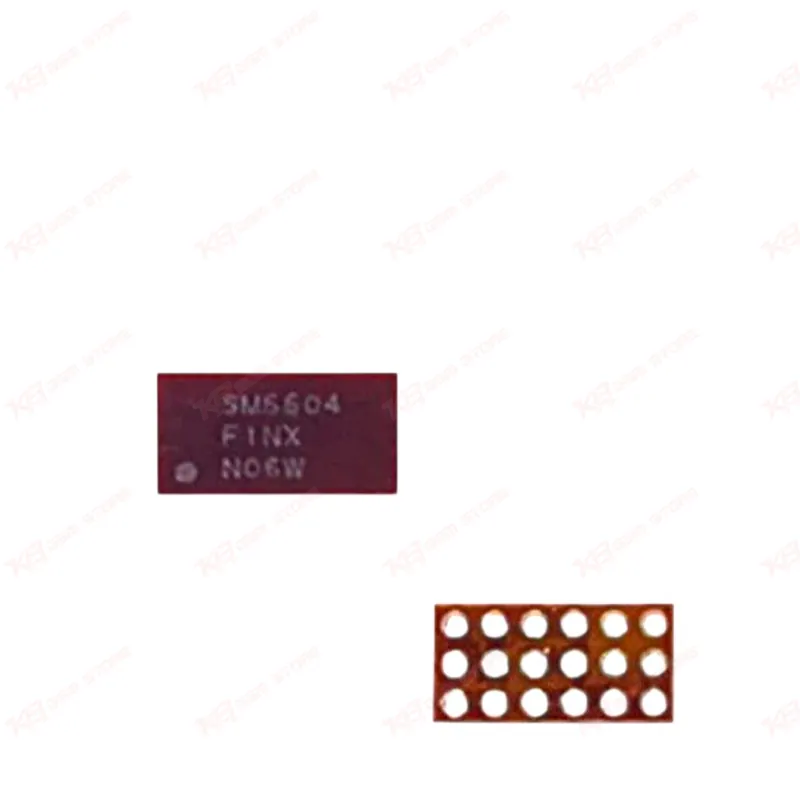
The SM5504 is an 18-pin BGA charging and USB control IC from Silicon Mitus, built for Samsung Galaxy Grand 3 (G7200) and Galaxy Core Prime (G360H/DS) boards. This chip handles USB accessory detection and charging control on the motherboard, so when a phone shows no charging response, USB not detected, or intermittent charging after liquid damage, this IC is one of the first suspects on your bench. Pakistani technicians replace this part when the board fails a charging line continuity test or shows a dead charging port after a drop or water exposure. Genuine BGA18 package, ready for reballing and reflow.
⚖️ Weight: 0.01 kg
SKU:MST-IC-55
- Safe & Secure Payment
- Fast Delivery
- WhatsApp Support


Description
FAQ
What is the product name?
The product name is SM5504 Charging IC (18 Pins) for Samsung G7200.
What is the brand of this product?
The brand of this product is Silicon Mitus.
What is the model of this product?
The model of this product is SM5504.
What is this product used for?
This IC controls USB accessory detection and charging on the phone's motherboard, and technicians use it to fix no-charging and USB detection faults.
Which devices are compatible with this product?
This IC is compatible with the Samsung Galaxy Grand 3 (G7200) and Galaxy Core Prime (G360H/DS).
Who should use this product?
This product is suitable for mobile repair technicians, repair shops, service centers, and professional users.
Which Samsung models actually use the SM5504 IC on their board?
The SM5504 is used on the Samsung Galaxy Grand 3 (G7200) and Galaxy Core Prime (G360H/DS) boards for charging and USB control functions.
Does replacing the SM5504 fix a "USB not detected" issue on the Grand 3?
Yes, if your continuity test shows the fault traces back to this IC's footprint rather than the charging port itself, reballing the SM5504 resolves USB-not-detected and no-charging symptoms on the G7200.