


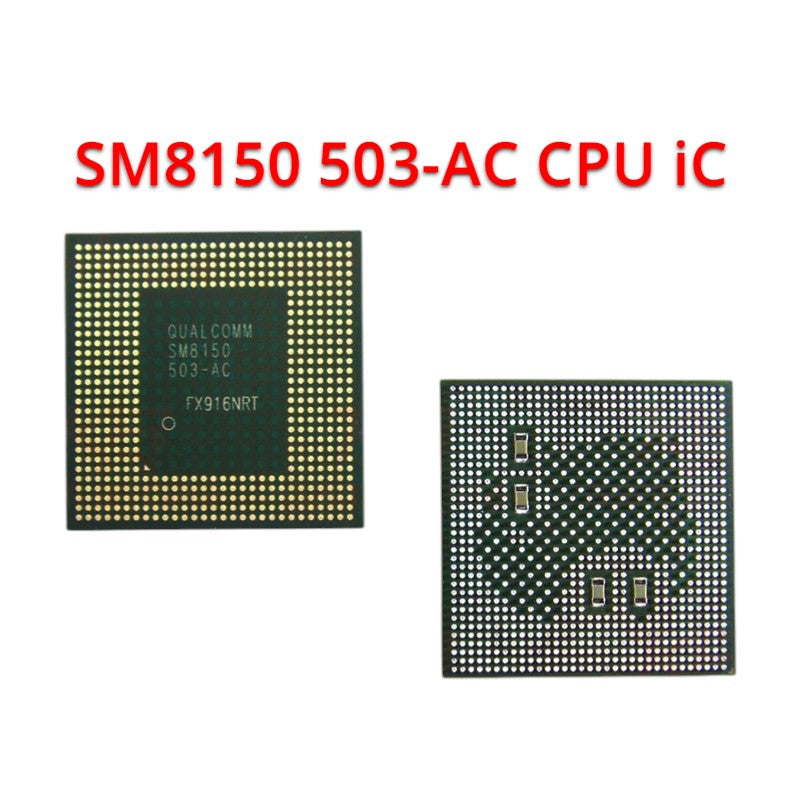
SM8150 503-AC CPU iC
SM8150 503-AC CPU iC
Regular price
Rs.5,200.00 PKR
Regular price
Sale price
Rs.5,200.00 PKR
Shipping calculated at checkout.
Quantity
Couldn't load pickup availability
The SM8150 503-AC CPU IC is the Qualcomm Snapdragon 855 processor chip found on boards like Mi9, Mi9T Pro, POCO X3 Pro, and Blackshark 2. You reach for this IC when a board comes in dead after flash, stuck on logo, or showing no power at all and diagnosis points straight to the CPU. Techs use it for direct IC replacement or reballing on Xiaomi, Realme, Oppo, and Vivo boards that share the SM8150 platform. Original, tested stock — no shortcuts, no guesswork on your bench.
⚖️ Weight: 0.01 kg
SKU:MST-IC-341
- Safe & Secure Payment
- Fast Delivery
- WhatsApp Support


Description
FAQ
What is the product name?
The product name is SM8150 503-AC CPU IC.
What is the brand of this product?
This is a Qualcomm SM8150 series CPU IC.
What is the model of this product?
The model is SM8150 503-AC.
What is this product used for?
It's used for CPU IC replacement and reballing on boards with a dead-after-flash, boot loop, or no-power fault traced to the processor.
Which devices are compatible with this product?
It's compatible with Mi9, Mi9T Pro, POCO X3 Pro, Black Shark 2, and other boards built on the Qualcomm SM8150 (Snapdragon 855) platform.
Who should use this product?
This product is suitable for mobile repair technicians, repair shops, service centers, and professional users.
Is SM8150 503-AC the same as SM8150 103-AC or 103-AB variants?
No. These are different revision codes on the same SM8150 platform, and mixing them can cause boot failure even after a proper reball, so match the exact code on the faulty board before ordering.
Does this CPU IC need reballing or can it be soldered directly?
It's a BGA chip, so it needs proper reballing with matching solder balls and a hot air station — direct soldering without reballing won't give reliable joints on this package.