


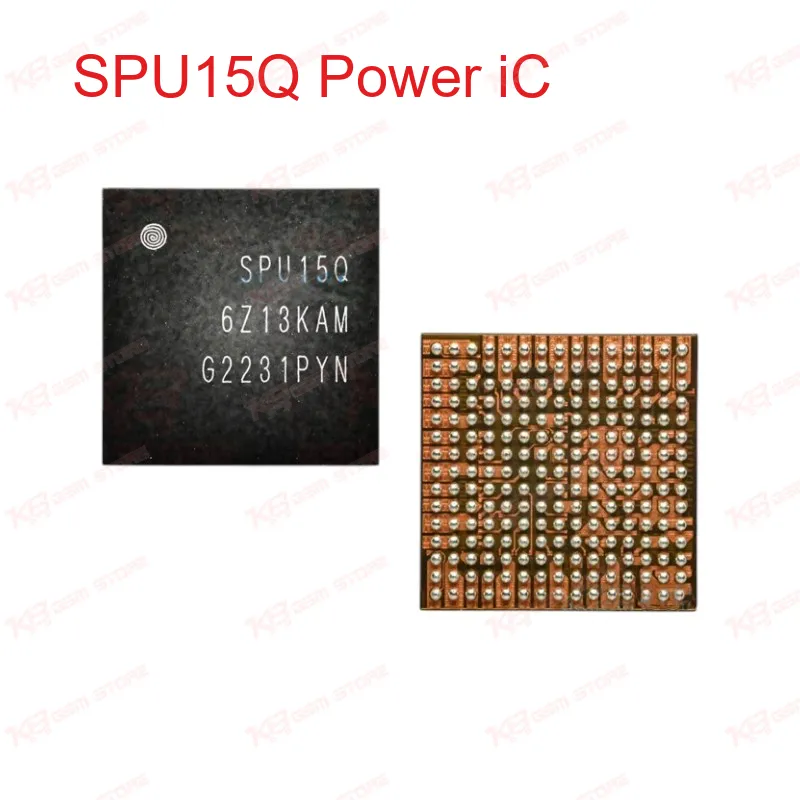
SPU15Q Power iC
SPU15Q Power iC
Regular price
Rs.1,500.00 PKR
Regular price
Sale price
Rs.1,500.00 PKR
Shipping calculated at checkout.
Quantity
Couldn't load pickup availability
SPU15Q power IC ek dedicated power management chip hai jo Samsung Galaxy A54 5G, Galaxy A14, aur Google Pixel 7/8 ke motherboard par voltage regulation aur power distribution handle karta hai. Jab board par dead phone, no power, ya boot loop issue nazar aaye aur diagnostic checks PMIC failure ki taraf point karein, yeh IC replacement ke tor par use hoti hai. GSM technicians ke liye yeh chip board-level power fault repair ka core component hai, jisay reballing station aur hot air ke sath change kiya ja sakta hai.
⚖️ Weight: 0.01 kg
SKU:MST-IC-369
- Safe & Secure Payment
- Fast Delivery
- WhatsApp Support


Description
FAQ
What is the product name?
The product name is SPU15Q Power Management IC.
What is this product used for?
This product is used for regulating and distributing voltage to critical components on the motherboard.
Which devices are compatible with this product?
This product is compatible with Samsung Galaxy A54 5G, Galaxy A14, Google Pixel 7, and Google Pixel 8.
Who should use this product?
This product is suitable for mobile repair technicians, repair shops, service centers, and professional users.
Does SPU15Q fix a dead phone with no power issue?
Yes, technicians replace this IC when diagnostics confirm a power management fault causing no power or dead phone symptoms.
Can this IC cause a boot loop issue if faulty?
Yes, a failing SPU15Q can cause a boot loop issue or hang on logo symptoms due to unstable voltage output to the CPU and memory circuits.