


Brand:
SUNSHINE
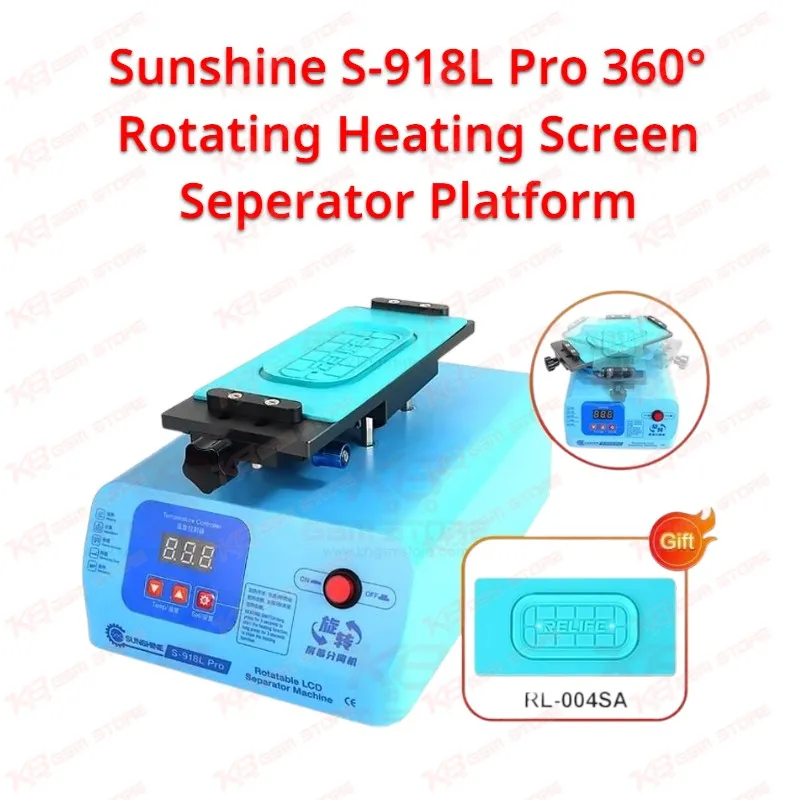
Sunshine S-918L Pro 360° Rotating Heating Screen Seperator Platform
Sunshine S-918L Pro 360° Rotating Heating Screen Seperator Platform
Regular price
Rs.7,000.00 PKR
Regular price
Sale price
Rs.7,000.00 PKR
Shipping calculated at checkout.
Quantity
Couldn't load pickup availability
Sunshine S-918L Pro 360° Rotating Heating Screen Seperator Platform for Safe LCD Screen Separation The Sunshine S-918L Pro 360° Rotating Heating Screen Seperator Platform heats and holds a phone screen so you separate the glass from the frame without forcing it. A built-in vacuum pump grips the screen, a PTC heating sheet softens the adhesive, and the digital panel sets any temperature from 50°C to 130°C. The platform spins 360° on precision bearings, so you turn the phone instead of twisting your wrists. With an 8.5-inch work area for LCD screens under 8 inches, a rear fuse for overheating protection, and glue remover compatibility, it suits repair shops that handle daily display problem jobs on iPhone and Android phones.
SKU:MST-SOLDERING-TOOLS-293
⚖️ Weight: 3.0 kg
- Safe & Secure Payment
- Fast Delivery
- WhatsApp Support


Description
FAQ
What is the product name?
The product name is Sunshine S-918L Pro 360° Rotating Heating Screen Seperator Platform.
What is the brand of this product?
The brand of this product is Sunshine.
What is the model of this product?
The model of this product is S-918L Pro.
What is this product used for?
This product heats and holds a phone screen so you separate the LCD screen from the frame, remove the frame glue, and clean the frame with a glue remover.
Which devices are compatible with this product?
This product supports LCD screen separation on iPhone and Android phones with screens under 8 inches, and it offers an 8.5-inch work area.
Who should use this product?
This product is suitable for mobile repair technicians, repair shops, service centers, and professional users.
What temperature range does the Sunshine S-918L Pro support?
The digital control panel adjusts the platform temperature from 50°C to 130°C, and the heat comes from a PTC heating sheet.
Does the S-918L Pro work on 220V in Pakistan?
The machine runs on AC 110V/220V supply with a rated power of 400W, so you check that your unit matches the 220V version before you power it on.