


Brand:
SUNSHINE
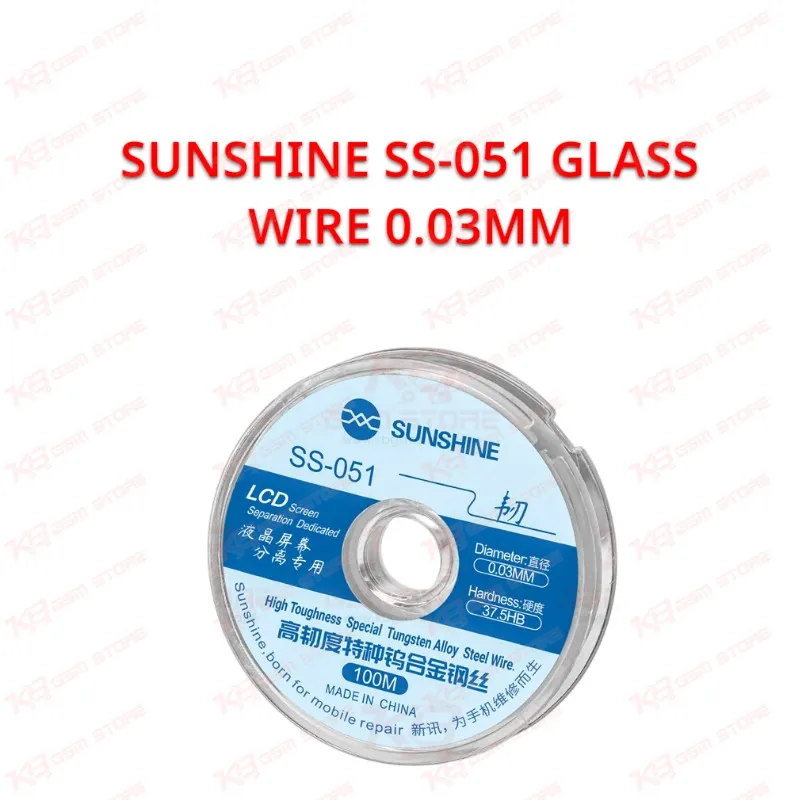
SUNSHINE SS-051 GLASS WIRE 0.03MM
SUNSHINE SS-051 GLASS WIRE 0.03MM
Regular price
Rs.400.00 PKR
Regular price
Sale price
Rs.400.00 PKR
Shipping calculated at checkout.
Quantity
Couldn't load pickup availability
The Sunshine SS-051 is an ultrafine tungsten alloy cutting wire built for OLED and LCD screen separation work. At just 0.03mm in diameter, it cuts through screen adhesive layers cleanly without damaging the glass or the panel underneath. Tungsten alloy forging gives you a wire that resists snapping under tension, so you don't lose time re-threading mid-job. Technicians handling frequent screen replacement work rely on this wire because thicker molybdenum alternatives tend to stick and wear out fast during OLED edge separation. Each roll gives you 100 meters, enough for dozens of separation jobs on a busy repair bench.
SKU:MST-SOLDERING-ACCESSORIES-179
⚖️ Weight: 0.01 kg
- Safe & Secure Payment
- Fast Delivery
- WhatsApp Support


Description
FAQ
What is the product name?
The product name is Sunshine SS-051 LCD Screen Separation Wire.
What is the brand of this product?
The brand of this product is Sunshine.
What is the model of this product?
The model of this product is SS-051.
What is this product used for?
This product is used for separating OLED and LCD screens from their frame during screen replacement and repair work.
Which devices are compatible with this product?
This product is universal and works on OLED and LCD screens across smartphone and tablet brands, since it separates the adhesive layer rather than device-specific parts.
Who should use this product?
This product is suitable for mobile repair technicians, repair shops, service centers, and professional users.
Does this wire work on OLED edge screens without cracking them?
Yes, the 0.03mm tungsten alloy construction is built specifically for OLED edge separation, cutting the adhesive bond cleanly without applying pressure that cracks the glass.
How does this wire compare to molybdenum separation wire in daily repair use?
Tungsten alloy holds up to more separation cycles before breaking compared to molybdenum, which wears down and snaps faster under repeated tension in high-volume repair shops.