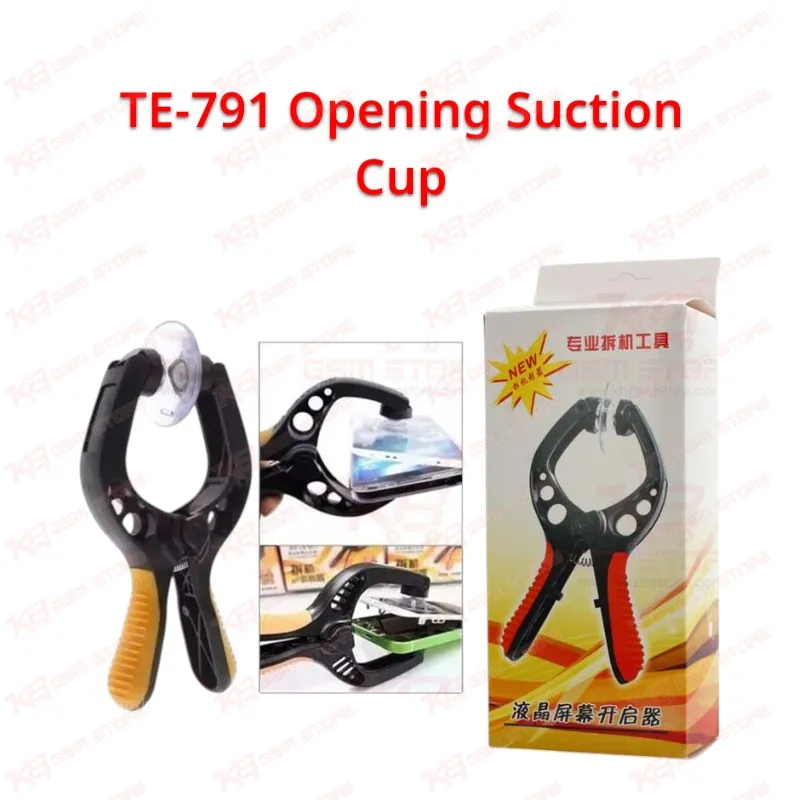
Screen removal is one of the most delicate steps in mobile phone repair, and the tool used for that first lift often determines whether the job goes smoothly or turns into a cracked-glass problem. The TE-791 Opening Suction Cup Pliers are built around a simple but effective idea: instead of relying on a single suction cup that can slip or create uneven stress on one side of the display, this tool uses two suction cups mounted on a plier-style handle, so pulling force is distributed across two points at once. For a technician working through dead phone repairs, battery replacements, or screen swaps every day, that difference in grip stability matters, especially on devices where the display is bonded tightly to the frame or chassis. The plier mechanism means the technician squeezes the handle to apply consistent lifting tension rather than pulling by hand feel alone, which lowers the risk of the suction cup popping off mid-lift and cracking the panel or damaging the digitizer underneath. This becomes especially useful on screens with old, sun-hardened adhesive or units that have been previously repaired and resealed, where a single suction cup often fails to get enough hold to break the seal cleanly. The suction cups themselves sit on a plastic body, keeping the tool light in the hand for repeated use across a full day of bench work, and the compact size means it does not take up much space in a tool roll or drawer alongside separators, spudgers, and pry tools. In a typical repair workflow, the TE-791 is used right after heating or separating the display edge, whether that heat comes from a heat gun, a hot plate, or an LCD separator machine. Once the adhesive along the frame has softened enough, the technician places both suction cups near the top or bottom edge of the screen and squeezes the plier grip to create a firm double-point hold, then lifts steadily to begin peeling the display away from the housing. Because the pulling force is spread across two cups rather than one, technicians get a cleaner initial gap to insert a pry tool or guitar pick without forcing the glass or flexing the panel unnecessarily, which is particularly important on OLED and AMOLED screens where flex damage can cause visible pressure marks or dead pixel lines. This tool is not limited to one brand or chipset family since screen removal is a mechanical task rather than a software or hardware-specific one, so it sees use across Android and iOS repair benches alike, wherever a suction-based lift is the safer opening method compared to plastic pry tools alone on the first step. It is a practical fit for repair shop owners building out a basic-to-intermediate toolkit, GSM technicians handling walk-in screen replacement jobs, and training institutes teaching proper disassembly technique, since the double suction cup design also serves as a good demonstration of why single-point pulling is riskier on modern sealed displays. For Pakistani repair shops handling high daily volume of screen replacement and glass change jobs, having a reliable suction plier on the bench cuts down on cracked digitizers and reduces rework caused by rushed single-cup pulls. The TE-791 pairs naturally with other opening tools already common on a repair bench, including plastic pry tools, metal spudgers, and screen separator machines, forming part of the standard disassembly toolkit rather than replacing any single step in the process. Maintenance is minimal: keeping the suction cup surfaces clean and free of dust or oil preserves grip strength over repeated use, since suction performance depends on a clean seal against the glass surface. Overall, this tool addresses a specific and recurring pain point in phone repair, the risk of losing grip or applying uneven force while lifting a bonded screen, and it does so with a straightforward mechanical design rather than anything overly complex, making it accessible even for technicians early in their repair career while still being useful on a busy professional bench.