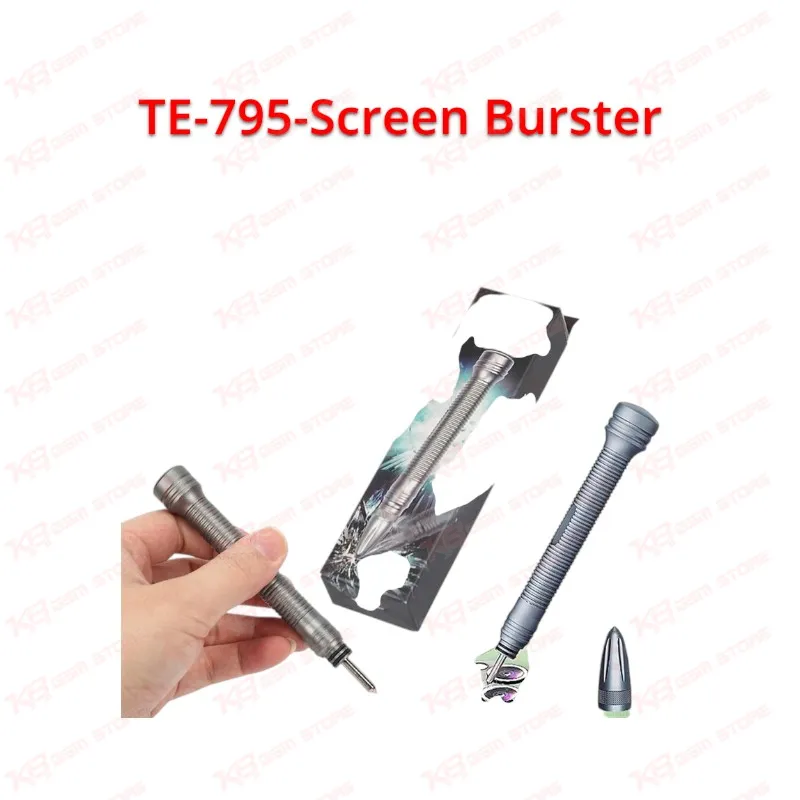
When a customer walks in with a shattered back glass panel and an otherwise healthy phone, the biggest risk in the repair isn't cracking the glass further — it's damaging the frame, camera housing, or wireless charging coil underneath while you try to get the old glass off. The TE-795 Glass Breaking Pen solves this by giving you a controlled, adjustable way to initiate a clean break in the rear glass so it lifts away in manageable pieces instead of shattering unpredictably under a heat gun and pry tool alone. You load the pen, position the tip against the glass at a chosen strike point, usually near a corner or edge away from the camera module, and trigger a calibrated impact that fractures the glass locally without transmitting shock through the whole back panel. The adjustable strength setting is what separates this from a basic center punch: too little force and the glass barely marks, too much and you risk denting the frame or cracking the display from the other side, so being able to tune the impact per device thickness and glass type matters on a busy repair bench where you're moving between an iPhone, a Samsung, and a budget Android back cover in the same hour. Body construction is aluminum alloy, which keeps the tool durable against daily drops and knocks in a workshop drawer while keeping the overall weight low enough for extended one-handed use during high-volume back-glass jobs. The waterproof and dustproof housing means it holds up in a typical GSM shop environment where flux residue, adhesive dust, and glass shards are a normal part of the workflow, and you don't need to baby the tool between repairs. In practice, most technicians pair the TE-795 with a low-heat hot air station to soften the adhesive layer first, then use the pen to create a controlled fracture point before working a pry tool or suction cup under the glass to lift it free in sections — this sequence reduces the chance of cracking the display assembly underneath, which is the most common mistake when someone tries to remove back glass with just a heat gun and a blade. It's equally useful for isolating a cracked camera lens cover for replacement without pulling the entire rear panel, which saves time and part cost on jobs where only the lens glass is damaged. Because the tool works on the mechanical structure of glass rather than any specific chipset or software, it fits into almost any back-glass or camera-glass repair job regardless of phone brand, provided the rear panel is glass rather than plastic or metal. For a repair shop doing regular back-glass replacements, this tool cuts down the time spent per job and reduces the scrap rate on frames and boards that would otherwise get nicked or cracked during a rushed glass removal with improvised tools. It's a small, inexpensive addition to the bench, but it directly protects the more expensive components sitting under that broken glass panel — which is really what pays for itself over a month of walk-in repairs.