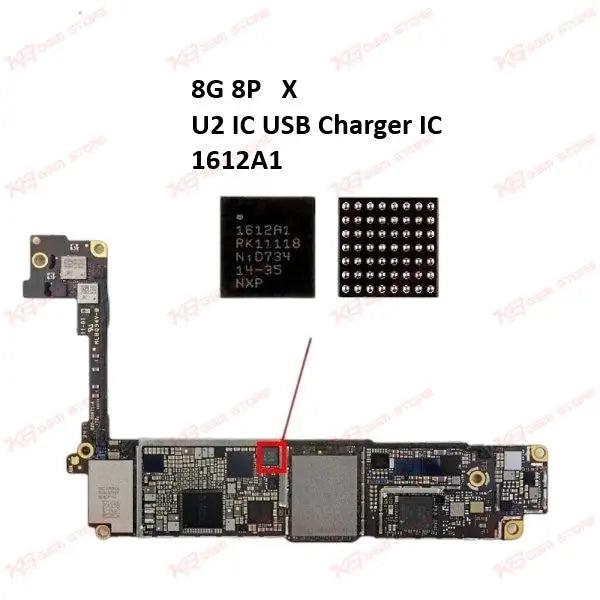
Charging complaints are one of the most common iPhone repair jobs on any workshop bench, and on the iPhone 8, iPhone 8 Plus, and iPhone X, a large share of those complaints trace back to one chip: the U2, known by its part number 1612A1 and cross-referenced as U6300 in board schematics. This IC sits directly on the charging line between the Lightning connector and the battery management system, and it handles USB data detection, charge current negotiation, and power routing to the rest of the board. When a customer brings in a dead phone that shows the Apple logo when plugged into a computer but never charges, or a phone that only charges when the cable is held at an angle, the U2 IC is usually one of the first suspects after you've ruled out the charging port and cable. A shorted or damaged U2 can also pull the charging line low, which shows as a phone that gets warm near the connector or drains the charger without registering any charge at all. Board-level technicians typically confirm the fault with a diode mode check on the charging line before committing to an IC change. If the line reads a dead short and reflowing or cleaning the connector doesn't clear it, replacing the 1612A1 is the standard fix. This isn't a beginner-level repair — it's a 56-pin BGA component, so you need a hot air rework station with accurate temperature control, proper flux, and a steady hand under the microscope. Rushing the reflow or using too much heat risks lifting nearby pads, which turns a simple IC change into a much bigger board repair. Stocking genuine 1612A1 chips matters more than it might seem. A large share of repeat charging complaints on these models comes from technicians reusing a pulled chip from a donor board or fitting a low-quality clone IC. Both can pass a quick charge test on the bench and then fail again within a week once the phone is back in daily use. Keeping verified, new stock of this IC on hand cuts down on comeback jobs and protects your shop's reputation for board-level work. This chip is relevant across several repair workflows beyond straightforward "no charge" complaints. It comes up in liquid damage recovery, where corrosion around the charging IC is common and often needs a full removal and clean before deciding whether the original chip can be reused or needs replacing. It's also relevant in cases where a phone was previously repaired with a wrong-value or salvaged part and is now showing intermittent charging again. For a repair shop handling iPhone 8, 8 Plus, and X volume regularly, this IC belongs in the same parts drawer as your charging port flex cables, battery connectors, and Tristar/U2-series ICs for other iPhone generations. Having it in stock means a charging complaint on these three models can usually move from diagnosis to completed repair the same day, without waiting on a supplier order or pulling a chip off a donor board of uncertain quality.