Skip to product information
1 of 5

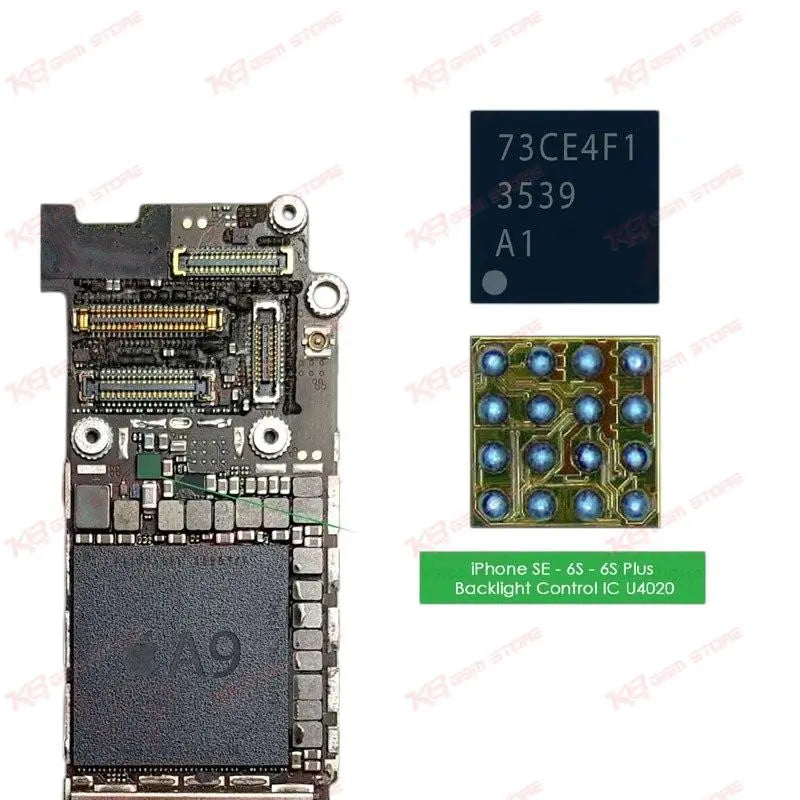
U4020 U4050 Backlight IC Boost Control Driver Chip iPhone 6S, 6S Plus iPhone SE

U4020 U4050 Backlight IC Boost Control Driver Chip iPhone 6S, 6S Plus iPhone SE

Regular price Rs.800.00 PKR
Regular price Sale price Rs.800.00 PKR
Sale Sold out
Shipping calculated at checkout.
Quantity

The U4020 U4050 backlight boost driver IC controls display backlight power on iPhone 6S, iPhone 6S Plus, and iPhone SE logic boards. Marked 3539-A0 with a 16 pin BGA package, this chip regulates boost voltage output to the backlight circuit and is the common point of failure behind no backlight, dim display, and flickering screen issues after liquid damage or drop damage. Reballing and replacing this IC restores backlight function without needing a full screen or board replacement. Suitable for GSM repair shops handling iPhone 6S series board level faults in Lahore, Karachi, and Islamabad. Requires BGA rework skills, hot air station, and reballing stencil for correct installation. A cost effective fix compared to full logic board replacement or screen swap when the actual fault lies in backlight power delivery rather than the display panel itself.

⚖️ Weight: 0.01 kg

SKU:MST-IC-7

  • Safe & Secure Payment
  • Fast Delivery
  • WhatsApp Support
View full details

Description

When an iPhone 6S, 6S Plus, or SE comes to your bench with a black screen but the phone still rings or vibrates on incoming calls, the backlight circuit is usually the first thing to check before you condemn the screen. The U4020 U4050 backlight boost driver IC sits right in that power path. It takes battery voltage and boosts it to the level the display backlight LEDs need to actually light up. When this chip fails, you get a phone that boots, shows signs of life through vibration or sound, but the screen stays completely dark or only shows a faint image under strong light. This IC carries the marking 3539-A0 and comes in a 16 pin package. On the iPhone SE and 6S board, you will find it designated as U4020. On the 6S Plus board, technicians reference it as U4020/U4050 depending on board revision. Knowing this naming difference matters when you are pulling a donor board or cross-referencing a schematic, since some techs get confused thinking these are two separate chips when they are actually the same backlight driver family used across these three models. In a typical repair scenario, backlight failure shows up after water damage, drop damage, or after a customer says the phone screen "chali gayi achanak" while everything else on the phone works fine. Before jumping to IC replacement, check the backlight filter and backlight diodes near the LCD connector, test continuity on the boost inductor, and confirm you are actually getting output voltage from this IC with a multimeter. If input voltage is present but boost output is missing or unstable, that confirms the IC itself needs replacement rather than a jumper fix. Replacing this chip is a microsoldering job. You need a hot air rework station set to the correct temperature profile for a 16 pin BGA package, flux, and a matching reballing stencil sized for this IC footprint. Skipping proper reballing and trying to jumper pins directly onto the pads is a common shortcut that leads to repeat failures within weeks, so if you are doing volume board repair work, keep a proper stencil and reballing setup on your bench rather than relying on hand soldering alone. This part is commonly used across dead backlight cases, hang on logo cases where the screen backlight cuts out mid boot, and cases where the display flickers on and off intermittently after a repair shop already changed the screen and the fault persisted. If a customer already replaced their screen elsewhere and the phone still shows no backlight, this IC is the next logical suspect before you tell them the board is dead. For shops running high volume iPhone 6S series board repair in Pakistan, stocking this IC alongside your existing backlight diode and filter stock lets you close out backlight complaints in one visit instead of sending boards out for external board level repair. Pair it with a hot air station and a 16 pin stencil already in your toolkit, and this becomes a straightforward same day fix rather than a multi day board repair job.

Key Features

  • Restores backlight function on iPhone 6S, 6S Plus, and SE logic boards.
  • Marked 3539-A0 for easy identification during board inspection.
  • 16-pin BGA package designed for direct board-level replacement.
  • Fixes no backlight, dim screen, and flickering backlight faults.
  • Common solution for backlight failure caused by liquid or drop damage.
  • Works alongside backlight diode and filter replacement for complete circuit repair.
  • Requires a hot air rework station and matching reballing stencil for installation.
  • Cost-effective alternative to full logic board or screen replacement.

Specifications

Brand Entity Unbranded/Generic Aftermarket
Product Entity U4020 U4050 Backlight Boost Driver IC
Technology Entity Boost Converter IC, BGA Package
Compatible Device Entities iPhone SE, iPhone 6S, iPhone 6S Plus
Repair Process Entity BGA Reballing, Backlight Circuit Repair, Board Level Repair
Industry Entity Mobile Phone Repair, PCB Repair, GSM Repair Pakistan

FAQ

What is the product name?
The product name is U4020 U4050 Backlight Boost Driver IC.
What is the brand of this product?
This is an unbranded aftermarket replacement chip commonly used in the mobile repair industry.
What is the model of this product?
The chip is marked 3539-A0 and designated U4020 on iPhone SE and 6S boards, and U4020/U4050 on 6S Plus boards.
What is this product used for?
This IC is used to repair backlight failure, dim screen, and flickering display faults on affected iPhone models.
Which devices are compatible with this product?
This product is compatible with iPhone SE, iPhone 6S, and iPhone 6S Plus.
Who should use this product?
This product is suitable for mobile repair technicians, repair shops, service centers, and professional board level repair technicians.
Does this IC require BGA reballing for installation?
Yes, this IC requires a hot air rework station and a matching 16 pin reballing stencil for proper board level installation.
What symptoms indicate this IC has failed rather than the display panel itself?
A phone that powers on, rings, and vibrates normally but shows no backlight or a dim flickering screen typically points to this IC rather than the LCD panel.

Ask any Query