


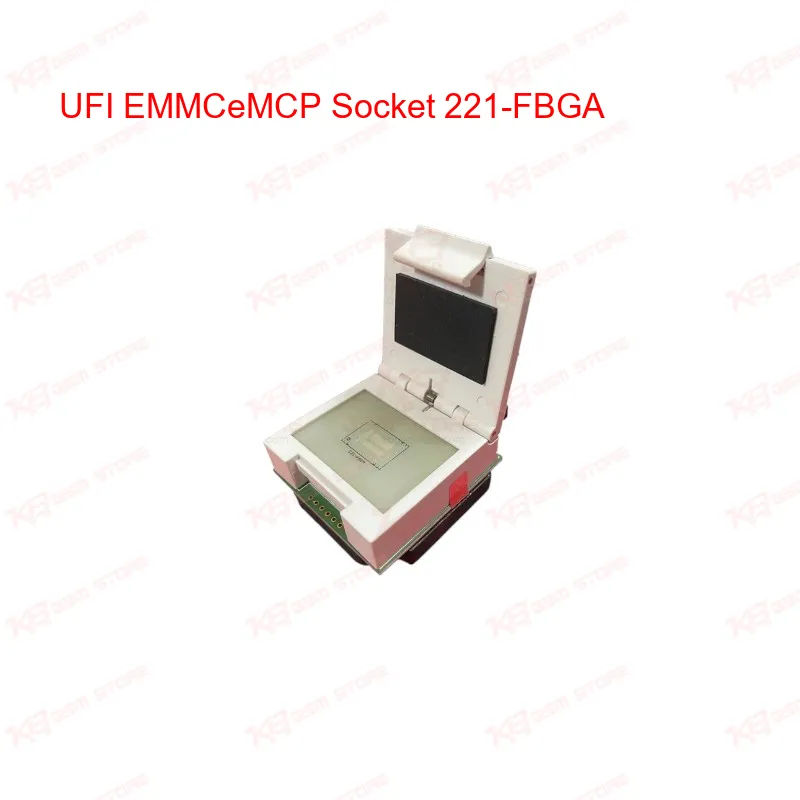
UFI EMMCeMCP Socket 221-FBGA
UFI EMMCeMCP Socket 221-FBGA
Regular price
Rs.4,500.00 PKR
Regular price
Sale price
Rs.4,500.00 PKR
Shipping calculated at checkout.
Quantity
Couldn't load pickup availability
The UFI EMMC/eMCP Socket 221-FBGA adapter is a dedicated BGA221 test socket built for use with the UFI-Box eMMC service tool. It lets technicians mount a BGA221 eMMC or eMCP chip directly for reading, repairing, and reprogramming without soldering it onto the board first. This adapter supports eMMC ICs from brands like Samsung, SK Hynix, Toshiba, Kingston, and Micron, making it a practical addition for any GSM repair bench dealing with dead phone, boot loop, or software marna cases where the eMMC needs direct chip-level access.
SKU:MST-SOCKET-22
⚖️ Weight: 0.1 kg
- Safe & Secure Payment
- Fast Delivery
- WhatsApp Support


Description
FAQ
What is the product name?
The product name is UFI EMMC/eMCP Socket 221-FBGA Test Adapter.
What is the brand of this product?
The brand of this product is UFI.
What is this product used for?
This product is used for chip-off testing, reading, and repairing eMMC/eMCP chips using UFI-Box.
Which devices are compatible with this product?
This adapter is compatible with eMMC/eMCP chips in the BGA221 (221-FBGA) package from brands like Samsung, SK Hynix, Toshiba, Kingston, and Micron.
Who should use this product?
This product is suitable for mobile repair technicians, GSM software technicians, repair shops, and service centers doing eMMC chip-off work.
Does this socket support ISP mode for dead phones?
This socket is built for chip-off (off-board) eMMC work; ISP-mode repairs on dead phones use a separate UFI-Box ISP pinout tool, not this socket.
Can this adapter be used with any eMMC programmer box other than UFI-Box?
No, this socket is built specifically for compatibility with UFI-Box and is not confirmed to work with other eMMC programmer boxes.