

UMP510G5 iC
UMP510G5 iC
Regular price
Rs.450.00 PKR
Regular price
Sale price
Rs.450.00 PKR
Shipping calculated at checkout.
Quantity
Couldn't load pickup availability
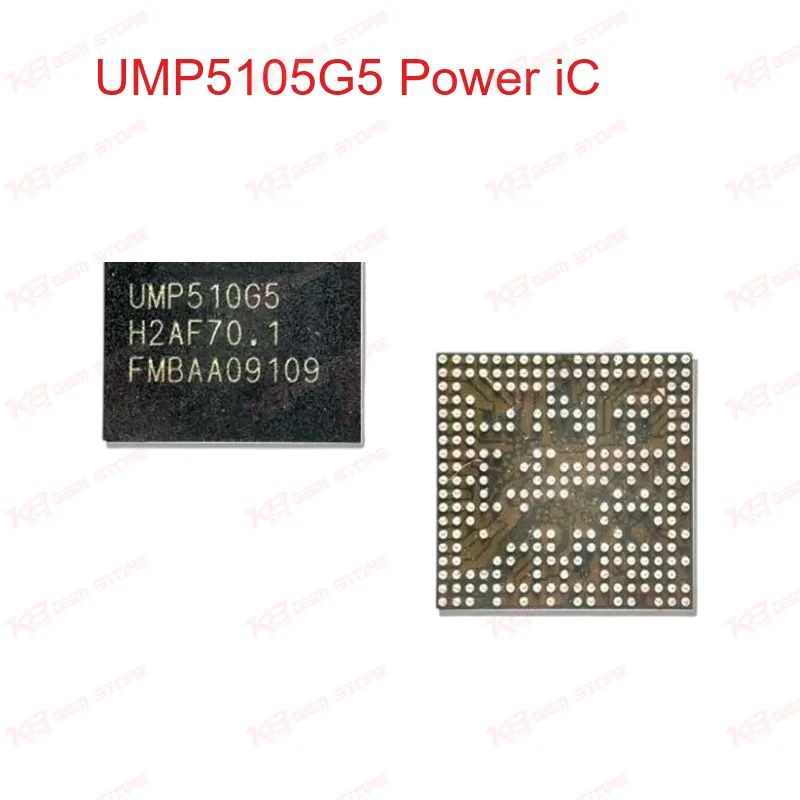
The UMP510G5 is an original UNISOC Power Management IC (PMIC) designed for mobile phone motherboard-level repair. This chip handles core power distribution functions on UNISOC Spreadtrum platform devices, making it the go-to solution when you face charging issues, dead phone conditions, or power fault hardware problems. If your phone is dead after flash or stuck due to a power rail failure, IC change karna with the UMP510G5 restores full board functionality. Trusted by workshop technicians across Pakistan, this genuine PMIC chip delivers reliable, verified performance for professional motherboard repair.
⚖️ Weight: 0.01 kg
SKU:MST-IC-380
- Safe & Secure Payment
- Fast Delivery
- WhatsApp Support
Description
FAQ
What is the product name?
The product name is UMP510G5 UNISOC Power Management IC (PMIC).
What is the brand of this product?
The brand of this product is UNISOC, formerly known as Spreadtrum Communications.
What is the model of this product?
The model of this product is UMP510G5.
What is this product used for?
This product is used for motherboard-level power fault repair on UNISOC Spreadtrum platform mobile phones, resolving dead phone, charging issue, and power rail failure conditions through IC replacement.
Which devices are compatible with this product?
This product is compatible with mobile phones built on the UNISOC Spreadtrum platform, including devices from Transsion group brands such as Itel, Tecno, and Infinix that use the UMP510 PMIC series.
Who should use this product?
This product is suitable for mobile repair technicians, hardware engineers, GSM workshop owners, service centers, and professional PCB repair specialists.
What symptoms on a UNISOC phone confirm that the UMP510G5 PMIC needs replacement?
The clearest signs are a phone that is completely dead with zero current draw on a DC power supply, no charging response despite a confirmed-good port and battery, or a board that fails to enter any boot stage. These are hardware fault conditions caused by PMIC failure — not fixable through software or box chalana — and require IC change karna directly on the UMP510G5.
Can the UMP510G5 be installed without a BGA rework setup, and what tools are required for proper replacement?
No — the UMP510G5 uses a BGA package that requires a hot air rework station for controlled chip removal and reflow, a soldering station for pad preparation, copper desoldering wick and flux for cleanup, a BGA reballing kit for solder ball application, and a microscope for precise chip alignment before reflow. Attempting this replacement without proper rework equipment risks pad damage and board loss.