


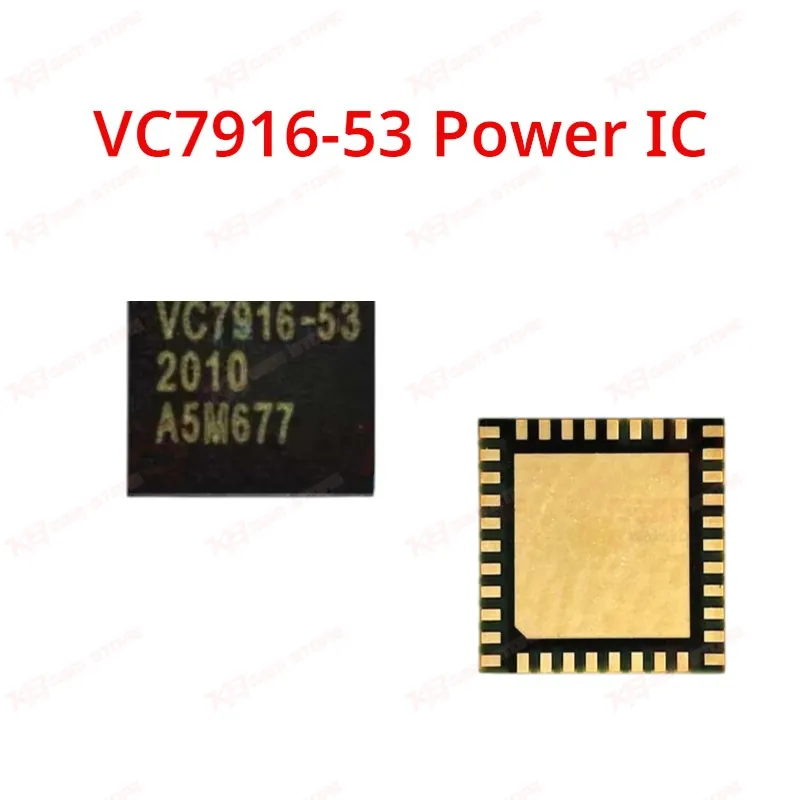
VC7916-53 Power IC
VC7916-53 Power IC
Regular price
Rs.350.00 PKR
Regular price
Sale price
Rs.350.00 PKR
Shipping calculated at checkout.
Quantity
Couldn't load pickup availability
The VC7916-53 is a power amplifier IC used in the RF signal section of Samsung, Oppo, Realme, and Xiaomi devices. Technicians use this chip to fix network issues, weak signal, no network, and PA-related complaints on affected boards. It sits directly in the RF path and boosts the transmit signal before it reaches the antenna. Built for board-level repair work, this IC gives a reliable fix when a phone shows network drop, signal loss, or "no service" after a fall, moisture exposure, or board fault. Available at KB GSM Store for technicians and repair shops across Pakistan who need a genuine replacement part for RF troubleshooting.
⚖️ Weight: 0.01 kg
SKU:MST-IC-236
- Safe & Secure Payment
- Fast Delivery
- WhatsApp Support


Description
FAQ
What is the product name?
The product name is VC7916-53 Power Amplifier IC.
What is the model of this product?
The model is VC7916-53.
What is this product used for?
It is used to fix network drop, weak signal, and no-service complaints in the RF section of affected phones.
Which devices are compatible with this product?
It is compatible with Samsung, Oppo, Realme, and Xiaomi boards that use this PA circuit design, including Samsung Galaxy A10s and Oppo Realme 7i.
Who should use this product?
This product is suitable for mobile repair technicians, repair shops, service centers, and professional users.
Does this IC fix a "no network" issue directly?
Not on its own — you should first confirm the fault points to the PA section using a diagnostic box before replacing the IC.
Can VC7916-53 be reballed with a standard hot air station?
Yes, a standard hot air rework station works fine as long as temperature and pad cleaning are handled carefully.