


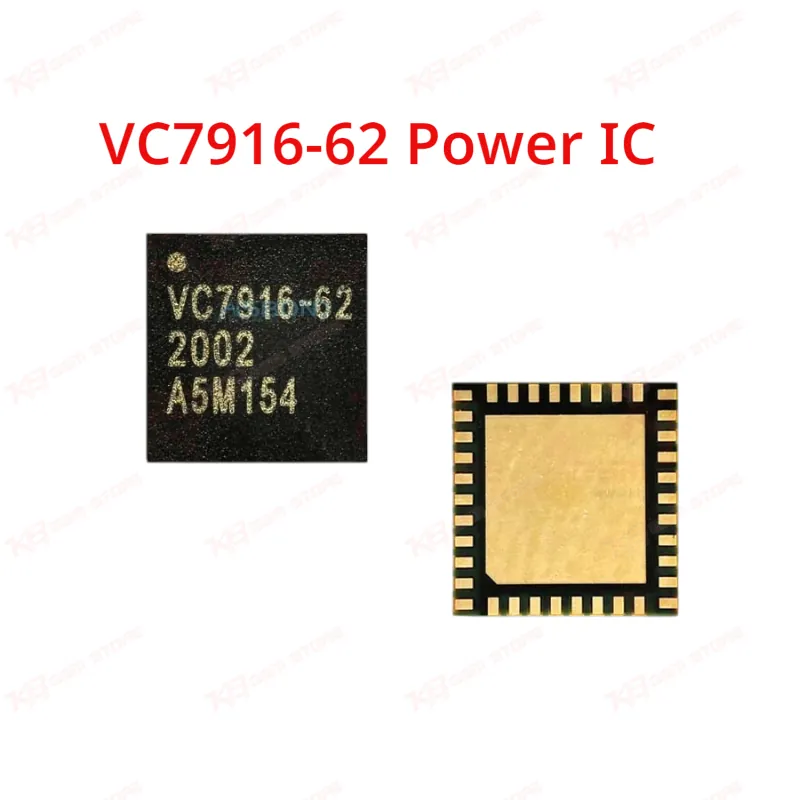
VC7916-62 Power IC
VC7916-62 Power IC
Regular price
Rs.300.00 PKR
Regular price
Sale price
Rs.300.00 PKR
Shipping calculated at checkout.
Quantity
Couldn't load pickup availability
The VC7916-62 is a Vanchip-series RF Power Amplifier IC used on Android motherboards to drive quad-band GSM/GPRS/EDGE and TD-SCDMA/TD-LTE signal output through an integrated antenna switch. Technicians reach for this chip when a phone shows no network, weak signal, or a network drop that traces back to the PA stage rather than the baseband or RF transceiver. Built for BGA-level board work, it suits repair shops and service centers that handle network and signal faults daily. KB GSM Store supplies this IC tested and ready for reballing on your repair bench.
⚖️ Weight: 0.01 kg
SKU:MST-IC-239
- Safe & Secure Payment
- Fast Delivery
- WhatsApp Support


Description
FAQ
What is the product name?
The product name is VC7916-62 Power Amplifier IC.
What is the brand of this product?
The brand of this product is Vanchip, sold under the VC Series IC designation.
What is the model of this product?
The model of this product is VC7916-62. What is this product used for?
Which devices are compatible with this product?
This product fits Android smartphones built around the Vanchip VC7916 series RF power amplifier stage across multiple brands, at a chipset-family level rather than a single confirmed device list.
Who should use this product?
This product is suitable for mobile repair technicians, repair shops, service centers, and professional users handling network and signal-related board repairs.
Does the VC7916-62 support both GSM/EDGE and TD-SCDMA/TD-LTE bands on one chip?
Yes, the underlying VC7916 design drives quad-band GSM/GPRS/EDGE output alongside TD-SCDMA and TD-LTE signal paths through the same package.
Does the VC7916-62 BGA package need a preheat station before hot air reballing?
A preheater reduces thermal stress on the board and surrounding components during reflow, and most technicians use one alongside a hot air station when reballing a BGA-package PA IC like this one.