


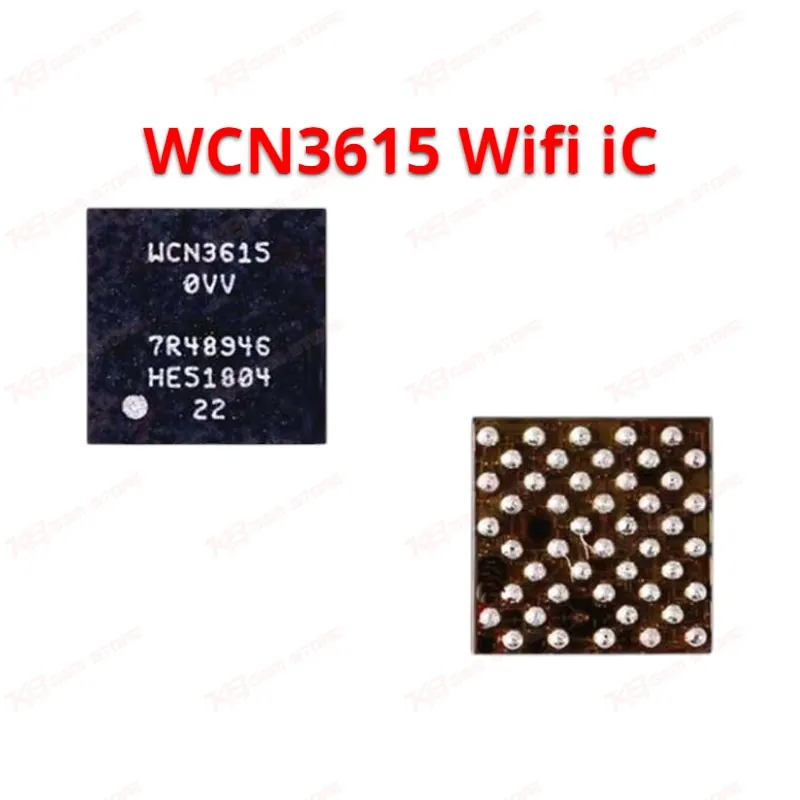
WCN3615 Wifi iC
WCN3615 Wifi iC
Regular price
Rs.350.00 PKR
Regular price
Sale price
Rs.350.00 PKR
Shipping calculated at checkout.
Quantity
Couldn't load pickup availability
The WCN3615 is a Qualcomm wireless connectivity IC that handles WiFi and Bluetooth on a wide range of budget and mid-range smartphones from Xiaomi, Samsung, Huawei, Infinix, and Motorola. Technicians reach for this chip when a phone shows no WiFi, weak signal, auto-disconnect, or a "WiFi hardware missing" error after a drop, liquid damage, or a bad flash. The IC comes in a compact WLNSP package built for board-level micro-soldering, so it drops straight into your existing reballing and hot air rework workflow. Stock this one for your ISP and board-repair bench — it is one of the most requested WiFi ICs on the Pakistani repair market.
⚖️ Weight: 0.01 kg
SKU:MST-IC-160
- Safe & Secure Payment
- Fast Delivery
- WhatsApp Support


Description
FAQ
What is the product name?
The product name is WCN3615 WiFi IC.
What is the brand of this product?
The brand of this product is Qualcomm.
What is the model of this product?
The model is WCN3615 (WCN-3615-0-47WLNSP).
What is this product used for?
This product handles WiFi and Bluetooth connectivity on the phone's motherboard and gets replaced when that connectivity fails at the hardware level.
Which devices are compatible with this product?
This IC fits Xiaomi Redmi, Samsung Galaxy A/J/M series, Huawei/Honor budget and mid-range models, Infinix Hot series, and Motorola E/G series boards that use this chip.
Who should use this product?
This product suits mobile repair technicians, repair shops, service centers, and other professional users doing board-level repair.
Does this IC fix a "WiFi hardware missing" error, or should I try a software fix first?
Try reflashing the WiFi/BT calibration partition first, since that error often traces back to corrupted NV data rather than a dead chip — reball the WCN3615 only after you've confirmed a genuine hardware fault.
What package type does this IC use, and does that change how I rework it?
It ships in a 47-terminal WLNSP package, so it needs a hot air station with controlled reflow temperature and a steady touch — standard soldering iron work isn't suited to this package size.